Growth Mindset – Fostering a Learning Culture Beyond Lip Service

Growth mindset is having a moment. In fact, it’s having several moments. Carol Dweck’s seminal work, which has long advocated for individuals to believe in the elasticity of their brains and their ability to develop new skills, has found its way from academia to the corporate world, and it shows no signs of weakening. And for good reason—the idea that individuals can grow and learn makes any learning and development advocate happy. What’s more, the belief, furthered by the growth mindset theory, that failures and setbacks are learning opportunities, makes those same advocates nearly giddy. Beyond learning and development professionals, the C-suite has also gotten on board.

It’s easy to support growth mindset at the senior levels when you limit that support to verbal endorsement. The concept is logical, positive, and helpful.   How, as a senior leader, could you not endorse the notion of an organization where your people can learn, grow, and, ultimately innovate?

It’s an entirely different thing, however, to champion an environment, and take the corresponding actions, to demonstrate support for “fail but learn.” BlessingWhite, a division of GP Strategies, conducted a survey for their Mindset to Skillset research. The leaders we surveyed repeatedly expressed skepticism, and reflected the skepticism of those they lead, that their executives are truly behind what’s required to establish a growth oriented environment.  Put simply, in the words of one respondent, “It is extremely difficult for a leader to demonstrate and implement a growth mindset if senior leadership and company culture doesn’t foster and reward this type of leadership.”

We’ve put our leaders in an impossible situation—asking them to believe in the “fail fast and learn fast” concept, but then backing that up with hiring practices, performance management systems, and compensation plans that reward accomplishment and punish failure. Our leaders struggle to take the actions that correlate with a growth-oriented leadership approach, thereby preventing a learning culture to flourish. A vicious cycle that reinforces a fixed mindset, one in which leaders and individuals stick to what they know, becomes increasingly entrenched.

Our research highlighted several big challenges to growth mindset, including:

  • Lack of time – Leaders indicate they can’t coach for growth because they simply need to deliver results. Stopping and finding teachable moments has the potential to compromise deadlines and deliverables, and these leaders, and their people, are unwilling to fail. “Cultivating skills and behaviors, in oneself and in others, requires time to learn, to practice, to reflect, and to question. The biggest challenge for me is balancing the need to deliver increasingly complicated deliverables in increasingly shorter time with the investment in time required to cultivate growth.”
  • Risk adversity – Because failure isn’t perceived as a step to learning, but rather a non-desirable outcome, leaders and their teams are unwilling to take risks and try something new. “Getting the belief that taking a calculated risk is acceptable is a struggle these days. Failure is too often seen as an absolute. It’s not; it’s part of the route to success.”
  • Self-limiting beliefs – Leaders cited their team’s lack of confidence and motivation around their own skills and abilities as a struggle and are unsure how to alter this thinking. Instead of having the performance, career, and coaching conversations required, it’s simply easier for leaders to work with their confident and known “go to” people rather than coach others to success. “Cultivating the same sense in the team members that they can change and grow themselves through a continuous process of learning and development.”

Knowing that these are the challenges in creating this culture, what can senior leaders do to walk the talk?

Share personal stories – Take the opportunity to share authentically your own personal and professional journey – not just your accomplishments, but the places where you failed and learned and how that impacted your growth.

Acknowledge – Appreciate appropriate risk-taking within your organization. Recognize not just those who succeeded, but those who tried something new regardless of the outcome. Without risk-taking, innovation is not possible. Recognize, and reward, places where someone stepped out on a limb to try something new.

Talk to your frontline and mid-level leaders – Find out what your leaders need to help themselves cultivate a growth mindset and learn the skills necessary to develop, coach, and inspire others. Coaches and mentors who support leadership development can be excellent advocates to prompt self-reflection and push leaders out of their fixed mindset comfort zone.

Consider your culture – Consider what culture you are fostering at all levels of the organization. Is the message that you are sending from the top, sounding and feeling the same as it trickles out and down to others? What is the character and personality of your organization, and what can change in order for a learning culture to be supported both in words and actions?

A growth mindset isn’t something you accomplish or achieve and then you are done. It’s also not something you declare and it happens. It takes practice; it takes encouragement. By definition it is a process—a process of trying new things, pushing the boundaries of what you think is possible, and then learning from that outcome, good or bad, to help you to grow and get better with your next effort. If learning professionals and senior executives are earnest in their desire for growth, they will engage in that process—through not only their words, but also their actions—demonstrating a true commitment to a culture of learning.

About the Authors

Leah Clark
Leah Clark is the Leadership Practice Lead at GP Strategies, as well as an author and the founder of LeaderConnect. With over 28 years of experience in her field, Leah brings a unique perspective on the mindsets and skillset that are critical to leadership success to her coaching and consulting. Her clients benefit from her collaborative approach to crafting a well-connected and thoughtful leadership development strategy. Leah holds a Master of Arts; Organizational Psychology, Columbia University and a Bachelor of Arts; English and Sociology, Boston College.

Get in touch.

Learn more about our talent transformation solutions.

Transformation doesn’t happen overnight if you’re doing it right. We continuously deliver measurable outcomes and help you stay the course – choose the right partner for your journey.

Our suite of offerings include:

  • Managed Learning Services
  • Learning Content Design & Development
  • Consulting
  • AI Readiness, Integration, & Support
  • Leadership & Inclusion Training
  • Technical Training
  • Learning Technologies & Implementation
  • Off-the-Shelf Training Courses


The 2020s are Calling. Is Your Organization Ready to Face the Future?

Resistance often comes from employees who are left in uncertainty.

As we move into a new decade, the pace of business is only going to move faster. Disruption will extend itself into every corner of your business. The ability for employees to lead themselves through change is paramount for any business to thrive in the 21st century.

The good news is that the ability to lead oneself through change can be learned and it’s a skill all organizations should focus on to ready the entire enterprise to thrive now and into the future.

Building an organization full of employees who can successfully lead themselves through change increases the organizations likelihood to achieve results of any change they take on. This leads to a positive organizational culture of change as well as an organizational reputation for being able to take on change successfully which is critical to keep employees proactively working through these highly disruptive times.

As we move ever deeper into disruption and the rapid pace of change, the way we approach and manage change becomes ever more important. We need to start developing those muscles now. Here are our five best change management tips to future-proof your organization and prepare it for whatever may come in the 2020s.

Get clear on intent.

The first step is to have a compelling reason behind the initiative. What business challenge are you trying to resolve? Why now, as opposed to next year or last year? What will happen if you don’t change? How will the future be different once the change has occurred? Getting clear on intent ensures there is no confusion left in the minds of executives, managers, employees, or any stakeholder involved in the initiative.

Be transparent.

Just as important as getting clear on intent is sharing every detail about the initiative, from the exciting and inspiriting elements to those that will be challenging. Many times, resistance comes from employees who are left in uncertainty. When people don’t have enough information, they tend to make things up in their heads. So communicate in a timely, transparent, and forthcoming way. Even if you have no further information to give, communicate that.

Employ R2P2.

The acronym R2P2 stands for reason, role, path, and partner. Those are the four things every leader and employee must have to be able to lead themselves and others through change. It is every leader’s role to help their people find these things, and every employee’s responsibility to ensure they understand the reason for change, the role they play in it, the path to achieving it, and the partners that can help them along the way. This approach ensures shared accountability. If an employee encounters obstacles along their path, it is their responsibility to communicate that and the leader’s responsibility to help mitigate it.

Amass the right support.

Support and buy-in are critical to successful change. Choosing who to involve in the process can make or break your initiative. Think about which business units have to make and support the change and who, among their leaders, has an aptitude for being an engaged advocate for change. The leaders you choose will be the conduit to all the employees engaged in the change. Can they communicate clearly? Can they remove obstacles to change? Can they move minds? Do they have the ear of management? Having the right people—not just the obvious people—engaged throughout the process is crucial to success.

Plan for what may go wrong.

Imagine your initiative has failed. What is likely to have happened to cause that failure? Going through all the risks and challenges before you design your initiative is paramount to your resilience later on. Have you involved your employees and stakeholders in the design of the change management solution? Have you looked at places where your plan might meet resistance? Does your solution solve problems for your business, your stakeholders, and your customers? This isn’t a time to wrap your solution in wings of hope. This is a time to take a good, hard look at issues that could topple your initiative and come up with ways of mitigating those risks before you even start working.

The act of change is more than just an initiative. It’s a psychology that involves both fear and hope for the future. People fall all over the spectrum between fear and hope, and an initiative can really only move as fast as its most fearful participant. So the final note here is to realize, as a manager, that resistance is tantamount to fear. Good change leaders know how to neutralize the fear; great change leaders know how to turn fear into reward. Do you have any change management tips? Share them below.

About the Authors

Erica Tetuan
Erica’s focus in helping leaders realize change in their organization is to be as preventive as possible, which means practicing change management with a lens of avoiding resistance from the start. This focus relies on the ability to be predictive and see around corners that others may be blind to. Erica also discusses having difficult conversations, being provocative when boundaries need to be pushed, and asking people to pause and think about enabling the organization to talk about uncomfortable things that may prevent them from achieving their goals. Erica has 20 years of experience in influencing stakeholders and working collaboratively to motivate diverse groups of people. She has developed change management methodologies, built internal change management practices, and led strategic organizational transformations. She has an MS in Organizational Development and Knowledge Management from George Mason University and a BA in Social Science from Nazareth College of Rochester.

Get in touch.

Learn more about our talent transformation solutions.

Transformation doesn’t happen overnight if you’re doing it right. We continuously deliver measurable outcomes and help you stay the course – choose the right partner for your journey.

Our suite of offerings include:

  • Managed Learning Services
  • Learning Content Design & Development
  • Consulting
  • AI Readiness, Integration, & Support
  • Leadership & Inclusion Training
  • Technical Training
  • Learning Technologies & Implementation
  • Off-the-Shelf Training Courses


Action Plan for SAP SuccessFactors People Analytics (Part 1)

Introduction

If you are an SAP SuccessFactors customer, you’ve likely heard about the new SAP SuccessFactors People Analytics. New reporting and visualization tools are coming soon. What does this mean for your existing reports? What can you do to prepare for the transition? And when People Analytics arrives, how can you make the most of the new features and functionality?

SAP SuccessFactors People Analytics: The Basics

First, what is SAP SuccessFactors People Analytics? People Analytics brings together SuccessFactors reporting and analytics solutions into three editions: embedded, advanced, and planning.

The embedded edition comes free with all SAP SuccessFactors modules, while advanced and planning editions have additional license fees.

Note: This post is specifically focused on People Analytics, embedded edition. For more details about all three editions of People Analytics, see our related blog post.

People Analytics, Embedded Edition Quick Points

What is People Analytics, embedded edition all about? Here are some key highlights:

  • SAP Analytics Cloud business intelligence and visualization tools are embedded within SuccessFactors.
  • A single data model is created with transactional data for all SuccessFactors modules.
  • Report Center will continue to be the starting point for SuccessFactors reports.
  • Expected general availability is June 2020, as part of the H1 release.

That’s People Analytics, embedded edition at a high level. Now, what steps can you take to be ready for the transition?

People Analytics, Embedded Edition Action Items

Step 1: Understand your existing reports.

To begin, take an inventory of your existing HR reports.

First, think about all reports that have SuccessFactors source data. This includes:

  • Canvas/ORD
  • Table/AdHoc
  • Tile-based dashboards
  • Reports from other tools, such as Excel, Access, or another business intelligence tool

Then make a report inventory. Include the following:

  • Title
  • Business purpose
  • Audience
  • Key fields (you don’t necessarily need all fields at this time)
  • Output type (list report, chart, pivot table, etc.)

Take this list and prioritize it. But wait—aren’t all the reports that you’ve created high priority? After all, you created them to meet a business need, right? That is true, but …

It may have been a few years since you rolled out your SuccessFactors modules; at that time, you created a suite of reports. How did you do that? You worked with your report consumers to understand the processes they support and their reporting requirements, and created these reports with the tools you had available at the time.

Are those reports used as they were initially intended? Have the underlying business needs changed? Does the format (spreadsheet, chart, etc.) still make sense? Are the reports still necessary? Reach out to some of your key end users to understand which reports are important, what is working well (and not well), and what can be improved. They probably have some insights and will be happy to share.

Keep your prioritized report list handy, and be ready to refer to it in the following steps.

Step 2: Explore the capabilities of the new tools.

Although People Analytics, embedded edition is not available until June 2020, you can begin to learn new features and capabilities now. Here are some resources:

  • Take a look at GP Strategies’ detailed dive into SAP SuccessFactors People Analytics
  • Access the Reporting, Analytics, and Planning section in the SuccessFactors Community (S-ID required) for documentation, webinars, and collaboration with other customers and SAP product teams here
  • Also visit the preceding community to access recent reporting and analytics webinars (S-ID required)
  • Join the People Analytics Jam Group for additional updates by sending an email to SAPSuccessFactorsPeopleAnalytics@sap.com with your name and work email

With these resources, begin to think about the capabilities of the new SAP SuccessFactors People Analytics, embedded edition, and consider how you might be able to solution your existing reports. Could separate list reports and charts be combined into a dashboard? Can you enhance a pivot report with drill-down capability? How about emailing report output on a recurring schedule instead of running it manually? Can you combine data from multiple modules? Be creative! Collaborate with your end users again, think about how you can make their experience better, and improve how HR data is used in your organization.

Coming up⁠—Part 2

In Part 2 of this blog, I’ll explore some of the new key features of People Analytics, embedded edition, and provide tips on how you can solution your reports in the new tools.  

Visit our website to learn more about People Analytics.   

About the Authors

GP Strategies Corporation
GP Strategies is a global performance improvement solutions provider of sales and technical training, e-Learning solutions, management consulting and engineering services. GP Strategies' solutions improve the effectiveness of organizations by delivering innovative and superior training, consulting and business improvement services, customized to meet the specific needs of its clients. Clients include Fortune 500 companies, manufacturing, process and energy industries, and other commercial and government customers.

Get in touch.

Learn more about our talent transformation solutions.

Transformation doesn’t happen overnight if you’re doing it right. We continuously deliver measurable outcomes and help you stay the course – choose the right partner for your journey.

Our suite of offerings include:

  • Managed Learning Services
  • Learning Content Design & Development
  • Consulting
  • AI Readiness, Integration, & Support
  • Leadership & Inclusion Training
  • Technical Training
  • Learning Technologies & Implementation
  • Off-the-Shelf Training Courses


Onboarding 2.0: What’s new with SuccessFactors Onboarding?

Onboarding 2.0: What’s new with SuccessFactors Onboarding?

SAP has announced that its new and improved Onboarding 2.0 will be released together with the Q4 release updates for the SuccessFactors suite.

Even though this is not a complete re-creation of the module, the update is so significant that you might have a hard time separating Onboarding 2.0 from the core foundation and Employee Central (EC).

Why is onboarding important?

Proper onboarding helps to reduce employee turnover and educate new hires quickly about the company and their new role in the workplace. Studies show that new hires decide within the first 6 months whether they are staying on the job. In order to protect your recruitment investment, you need a well-designed onboarding process that caters to the new generation of hires that expect speed and automation.

What’s new in Onboarding 2.0?

The new release contains significant improvements for the onboarding process, not only for the new hires joining the company, but also for the HR managers and administrators who are managing the onboarding activities on a daily basis.

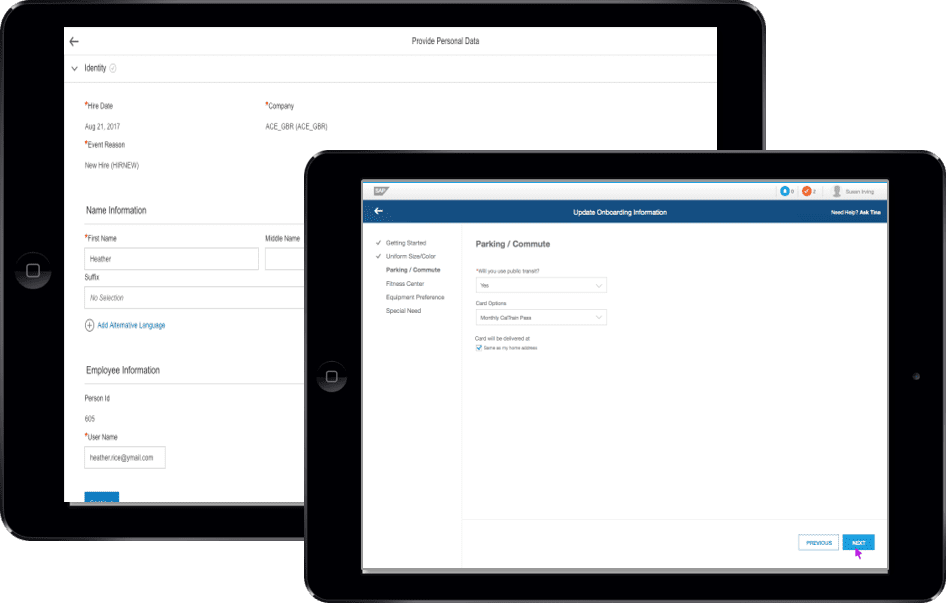
For example, configuration and the user interface are 100% aligned with what we are accustomed to from EC and other Fiori-based modules, which means greater usability and a smoother user interface.

Onboarding 2.0 shares shares core data structure and a database model with the entire SuccessFactors suite. This gives you direct access to use many of the same functionalities and objects from Foundation and EC. Most notable is the use of the Business Rule Engine for tailoring processes to client-specific needs as well as Meta-Data Framework (MDF) objects used to gather data directly in the core of the suite.

Fiori look and feel for all screens in Onboarding 2.0
No more double maintenance

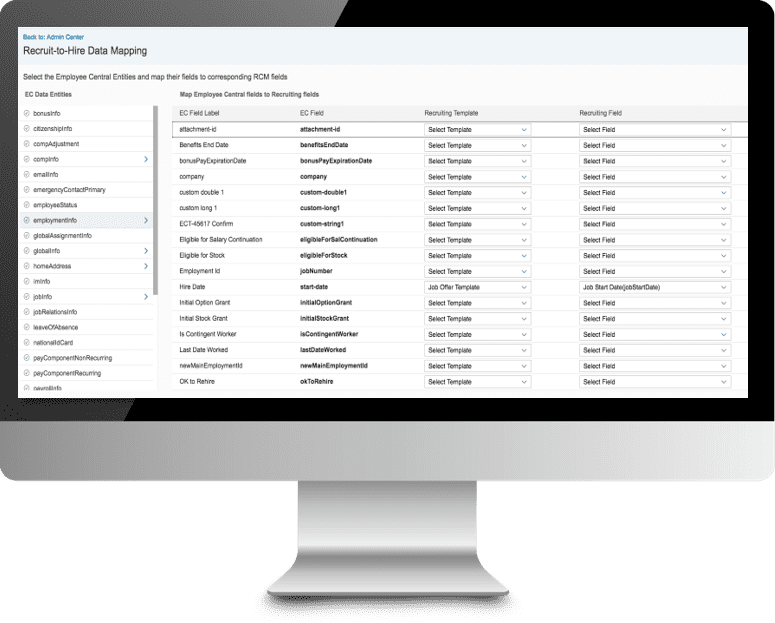
Because Onboarding 2.0 uses the same data model as EC, you do not have to worry about double maintenance between these two modules. Picklists and MDF objects are all the same between EC and Onboarding 2.0, which means that mapping data from Onboarding to EC is no longer necessary. The only mapping exercise left is from Recruiting to Onboarding.

From many to just one mapping tool in Onboarding 2.0
Permission and group setup – Ad Hoc report is no longer needed for Permission sync

Onboarding 2.0 uses the well-known role-based permission approach to handle access permission and access groups for the onboarding process. This gives you much more transparency and makes it easier to align the permission setup across modules. Also, Ad Hoc reports do not need to be run to synchronize the permission groups, which simplifies the Onboarding-EC integration even more.

Manager new hire activities replaced by Onboarding tasks

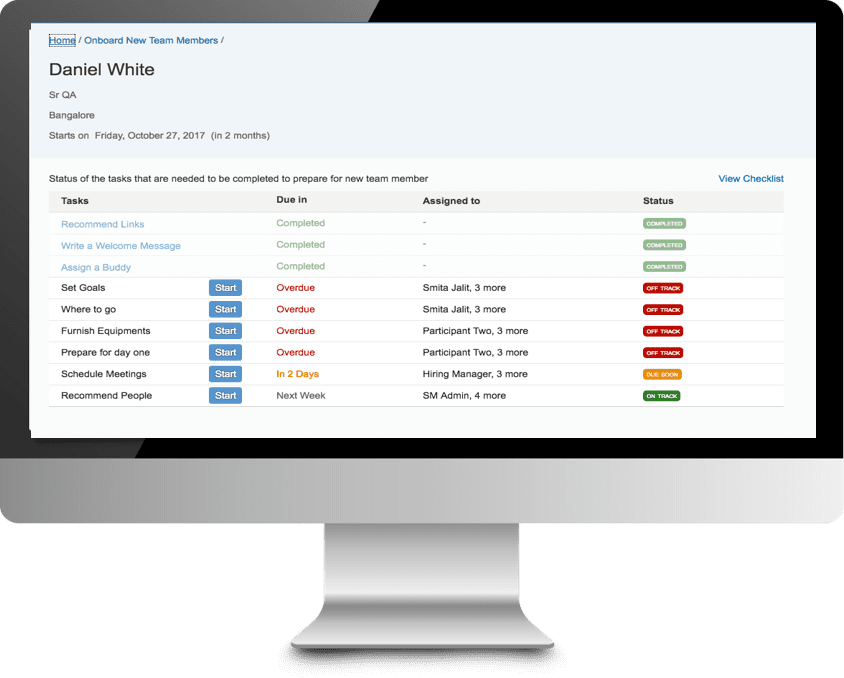
The new Onboarding Tasks are much more flexible than before. With Onboarding 2.0, you can assign specific tasks to different Responsibility Groups pinpointing the people responsible for the individual tasks. We often hear from clients using the old version of Onboarding that this particular feature is a huge deficit in the module because company processes in which all tasks are handled by the same individual are very rare. This add-on of flexibility is again a big step forward for supporting businesses in their actual processes as well as making full use of the module capabilities.

Onboarding Program example showing task assignments

How to get started

Is your organization currently using Onboarding 1.0, and are you looking for the best strategy for your migration to Onboarding 2.0? Or perhaps you have been waiting for Onboarding 2.0 and want to implement the module as quickly as possible. Whichever situation your company is in with onboarding and the SuccessFactors suite, GP Strategies can offer you expert guidance on SuccessFactors Onboarding.

Contact us for expert guidance through this new chapter in Onboarding with SuccessFactors.


About the Authors

Anders Molsner
Anders has more than 20 years of experience in the areas of IT, HR and Learning consulting. As a SuccessFactors Learning Management specialist with GP Strategies, he works with companies to ensure the best support for learning, education and building competencies. Anders is an SAP Professional Certified Learning consultant, and has an Associate Certification in Onboarding. Furthermore, Anders has experienced with: SuccessFactors Platform, Agile Team Management (SCRUM Master), Quality Assurance, Testing and Troubleshooting, Responsive Web technologies, Content Management Systems (CMS), E-Learning Production.

Get in touch.

Learn more about our talent transformation solutions.

Transformation doesn’t happen overnight if you’re doing it right. We continuously deliver measurable outcomes and help you stay the course – choose the right partner for your journey.

Our suite of offerings include:

  • Managed Learning Services
  • Learning Content Design & Development
  • Consulting
  • AI Readiness, Integration, & Support
  • Leadership & Inclusion Training
  • Technical Training
  • Learning Technologies & Implementation
  • Off-the-Shelf Training Courses


Teamwork: Revitalizing Downtown Loíza

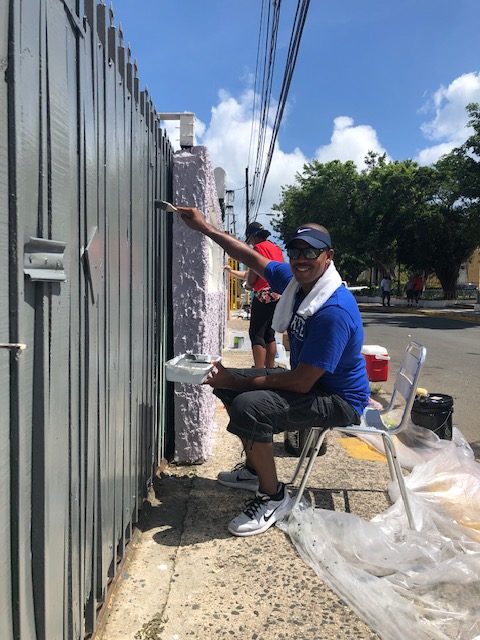
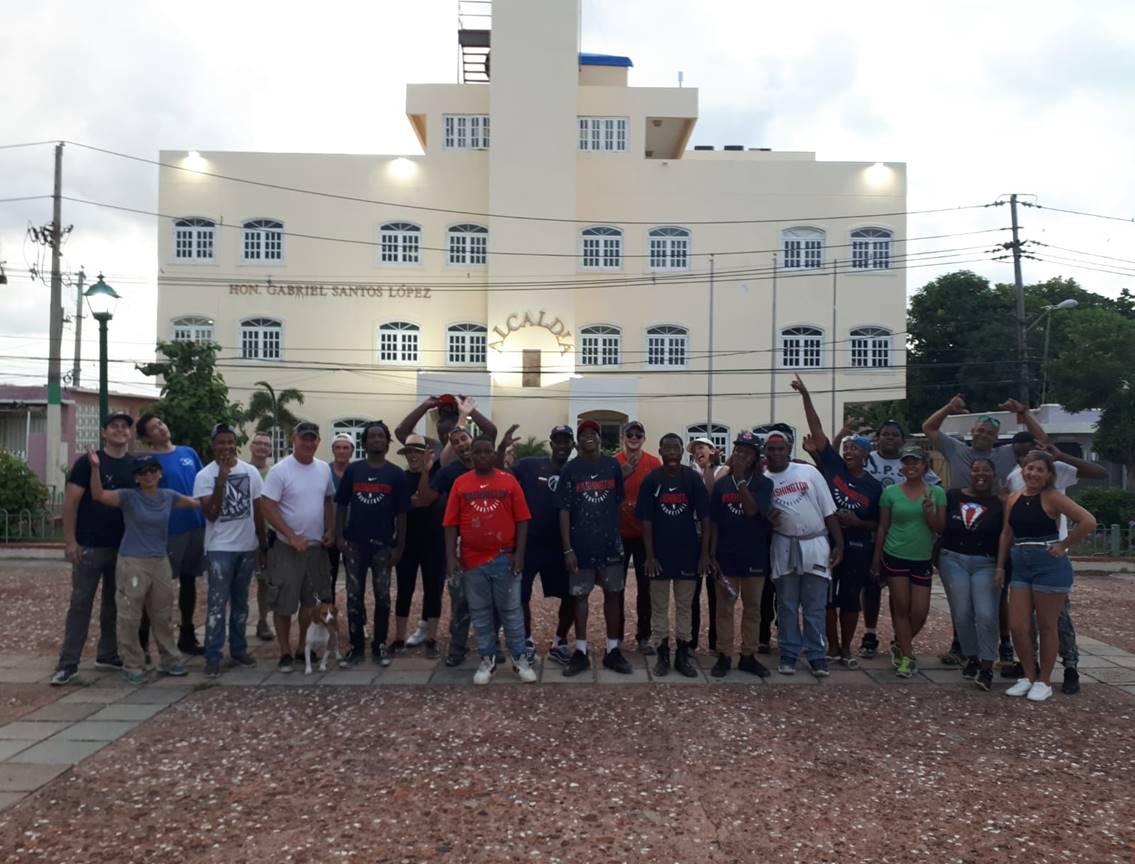
Recently the GP Strategies team in Puerto Rico, including Reuben Meador, Yolanda Velez (and son), Nilda Rodriguez (and son), and Maria Wiscovitch, came together to revitalize the city square in downtown Loíza. It was a remarkable experience. Here is the GP Strategies crew along with the mayor in front of the house we completed. It was great to work together in a different “team environment.” While the work was hard, the results were immediate (different from our current rebuilding efforts that can take some time).

In collaboration with the AESARA and Robert Pack foundations, we painted 16 houses and businesses around the city hall pavilion. Local people began to drive through the city center as word got out. People were amazed at the transformation; our team received many thanks. The purpose of painting the city square was to bring in tourism as well as businesses. As a bonus to our efforts, we learned that someone asked about renting one of the abandoned businesses that had been painted.

This project started when Luis Daniel, the director of federal programs for the municipality, asked me to meet with Sissi Pham of the AESARA group. AESARA has worked to raise over $300,000 in donations as well as medical supplies for the municipality of Loíza. Last year AESARA came to the island and helped paint four homes through the Ricky Martin Foundation. Sissi asked what she thought they should do as a project this year. I responded that the mayor should answer that question, as it pertained to the scope the municipality would want done. However, I mentioned that AESARA should not take on this task alone but should involve the community leaders, other businesses, and the community. By reaching out, we turned 24 people into almost 60. By involving the community, we will continue to grow this effort and not have it be just one weekend event a year.

Our purpose is to make the center of town an attraction for tourists and businesses alike. We would like to see Loíza become the “Springfield, MA” of Puerto Rico. Our plan is to build from the center out. AESERA will be back again in November for a visit, and then perform another round of work in January. My latest plan is to involve community leaders from the various barrios. We would like to supply them with paint so that they can choose a home that needs to be painted. We found that it costs roughly $200 per residential home to paint. The plan would be to get work crews out to these homes and deliver the supplies to the necessary residences.

Ultimately, this effort showed that with a vision, some funding, and a group working toward the execution of a goal, success will result. We at GP Strategies are here for our municipalities and customers for the long haul. We will help with the vision, gather funding, and execute to get the job done.

About the Authors

Bill Roberts
Leveraging approximately 20 years of management and financing experience, Mr. Bill Roberts plays a key role on the GP Puerto Rico team as a Program Manager specialist. Roberts established the Puerto Rico office and outfitted the local team with the appropriate resources to tackle post-Hurricane Maria challenges and support clients on the road to recovery. He regularly interfaces with PR municipal officials to better understand their program management needs and address the inspection of damage sites and infrastructure. Additionally, Roberts organizes community engagement initiatives in Puerto Rico on behalf GP Strategies.

Get in touch.

Learn more about our talent transformation solutions.

Transformation doesn’t happen overnight if you’re doing it right. We continuously deliver measurable outcomes and help you stay the course – choose the right partner for your journey.

Our suite of offerings include:

  • Managed Learning Services
  • Learning Content Design & Development
  • Consulting
  • AI Readiness, Integration, & Support
  • Leadership & Inclusion Training
  • Technical Training
  • Learning Technologies & Implementation
  • Off-the-Shelf Training Courses


How to Motivate Your Learners Using Personalized Compliance Training

This blog article was written prior to LEO Learning becoming part of GP Strategies.

Personalized compliance training is key when it comes to building emotional engagement with your learners and driving behavioral change. In this blog post, we look at our “Head, Hand and Heart” engagement model and explore methods to motivate your learners and improve the application of learning.

Learner Engagement Model

When it comes to compliance training, engaged learners are key to driving effective behavioral change. However, that’s often easier said than done. It can be challenging to truly engage learners with compliance training due to the volume, repetitive subject matter and mandatory nature of this type of training.

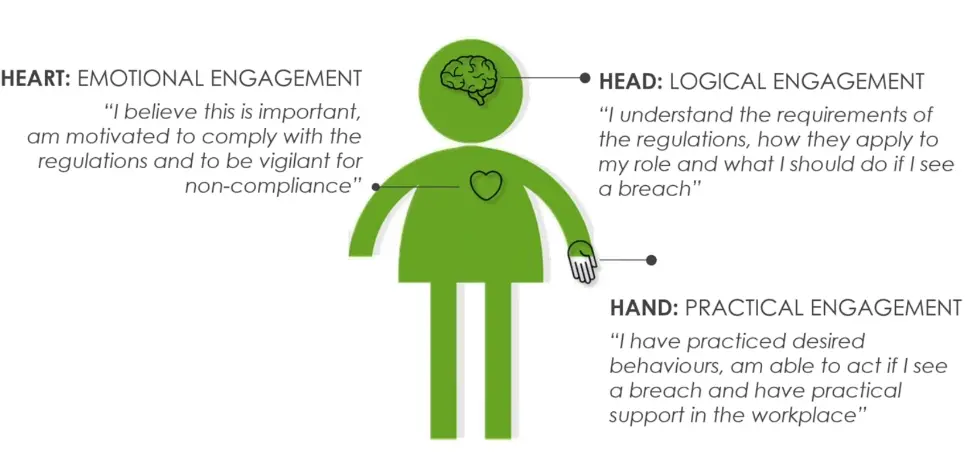
So how do you ensure learner engagement is always considered in your learning design? We use our “Head, Hand and Heart” model to ensure behavioral design—or designing for engagement – is intrinsic in all our learning programs.

Our model pays homage to BJ Fogg’s three-pillar model, which posited that for behavioral change to happen, three factors must be present. If just one factor was missing, then behavioral change will not take place:

  • Trigger – The ability to recognize the signs/scenarios when learning should be applied
  • Ability – The ability to apply the learning
  • Motivation – The desire to apply their learning/or concerns over the consequences of inaction

The model of learner engagement builds on the principles of the three pillars, but with a particular focus on learner engagement in the  governance, risk, and compliance arena.

To bring this model to life, let’s take a closer look at the Heart section to understand how you can increase learner motivation through emotional engagement.

Why Is It Important to Personalize the Learner Experience?

One way to win over your learner’s heart is to demonstrate that you offer a customized learning experience by tailoring the content to individual learning needs.

This shows that you value their time and understand their individual circumstances. By answering “what’s in it for me?” you go a long way to increasing a learner’s motivation, and therefore tackle this crucial element of the ‘Head, Hand, Heart’ engagement model.

With compliance training topics, this often means getting your learner to believe that it’s important to be vigilant on the job. You want them to feel motivated and for this to manifest as behavioral change. So, for example, if they do see suspicious activity following anti-money laundering training, they have the desire to report it.

Customizing the learner journey lets you:

  • Serve up content tailored to individual needs
  • Save time for the individual
  • Create individual learning goals and growth areas
  • Drive efficiencies by reducing overall training time

How Do You Personalize Compliance Training?

Here are two ways to achieve custom compliance training.

1) Stranding

Stranding allows you to serve up the content that is relevant to your learner by tailoring the learning path to the individual.

For stranding to work, you need to assess what content is relevant to the learner. This is typically done in three ways:

  • By job role
  • By region
  • By competency

Stranding by job role or region ensures that the correct, localized content is served up. Competency assessments will test to see what the learner already knows, and you can reduce their learning path according to the thresholds you set. If you decide that a thorough assessment is enough to prove competency, those with the highest competency may not even need to complete further training.

This approach can take more time to develop and test, but it pays off. Not only are you likely to increase engagement, but there are also significant efficiencies to be made by reducing the time learners spend on training. We worked with a global bank that had over 20 eLearning modules, and through stranding we reduced training time, saving between £2 million and £4 million on annual accreditation.

2) Scenarios and Storytelling

Scenarios and storytelling are important because they offer a sense of challenge, an immersive experience and portray the impact of making poor decisions in a safe environment.

Personalizing scenarios and story-telling is a powerful way to deliver messages that mean more to the user. If you have a global audience, it ensures the content is relatable – local laws, regulations and customs make the learning meaningful to the individual.

Stranding by job role, for example, allows scenarios to be used that will get the learner thinking about how to apply it the learning to their job role. Take anti-money laundering training – the signs of suspicious activity may vary greatly between a teller in a bank and a customer service agent in a contact center.

You can also get creative with how you theme and build storytelling using classic narrative techniques, by incrementality building a story, using teasers and adding suspense with high consequence examples. Cliffhangers aren’t just for Hollywood. They can also leave your learners wanting more. And that’s an effective way to build a continual story between modules.

About the Authors

Ashley Laurence

Get in touch.

Learn more about our talent transformation solutions.

Transformation doesn’t happen overnight if you’re doing it right. We continuously deliver measurable outcomes and help you stay the course – choose the right partner for your journey.

Our suite of offerings include:

  • Managed Learning Services
  • Learning Content Design & Development
  • Consulting
  • AI Readiness, Integration, & Support
  • Leadership & Inclusion Training
  • Technical Training
  • Learning Technologies & Implementation
  • Off-the-Shelf Training Courses


Train Your Brain (and Avoid Brain Drain)!

As a learning practitioner, I often think about what I do in my life outside of work to learn new things and keep myself ready to apply what I have learned quickly and easily. A few techniques that really make a difference for me are recurrent, quick touchpoints and contextual reflection. I have a few great brain training tips that really make a difference for me and allow me to be in “everlearn” mode in a way that doesn’t fry my grey matter.

I enjoy getting regular reinforcement of things (that matter to me) through mobile messaging platforms. It’s content, that I don’t have to work for, saved to my mobile device in case I can’t get to it immediately. It’s content I want or need regular connection with. Currently, I am opted into Shine and receive thoughtful messages and inspiration every day. Find what you are interested in and check out what messaging platforms are out there to inspire or change your current way of thinking or doing. Don’t be afraid, opt in and see what happens. Never fear, you can always type STOP to end the experience if you need to.

Another great brain training tip is that I look for ways to quickly apply what I learn. Outright memorization will only get us so far when we’re learning. We need to be able to make connections to our own experience. My friends laugh at me – I refer to it very simply as “thinking about stuff,” to link what I have learned to what I already know and what it means to me going forward.

Here’s an example… When I prepare a new recipe, I think about how I might modify it based on my own preferences, experience and knowledge. I also think about what I might serve it with, which informs how I may modify the new recipe. I consider taste profiles like salt, fat, acid and sweet. This connects that recipe directly to my own experience. I also think about which wine would complement the full plate. Again, this connects what I am learning, a new recipe, to my broader knowledge and experience. As a direct result of “thinking about stuff,” I am far more likely to prepare a new recipe in a way that I will remember, enjoy and be able to reflect and share with others. If I simply followed the step-by-step instructions, I wouldn’t have made the meaningful connections along the way. This is what makes learning so powerful.

Are you ready to train your brain? Here are three simple ways to train your brain to keep learning simple and fresh:

  1. Simplicity matters. The more complex we make it, the less likely you will be to use it long-term.
  2. Easy touchpoints work. Check out how cool messaging apps can drive you to think differently about what matters, not just give you more information about it. For every interest, there’s a messaging app that can ride as a sidecar and keep meaningful things quite present and available for you.
  3. Reflection and application count. Think about how to add a reflection element to the things you are learning about, making those connections to you – in your role in your life, helps retention and organic application

About the Authors

Ann Rollins
Looking for the Connections I LOVE MY JOB! The process of untying difficult knots for my clients, and getting better with each repetition thrills me. I take the skills and knowledge learned with each rep on to the next challenge, becoming a quicker study, agile problem navigator, and solver. However, I wasn’t always this way. How exactly did I get here? My evolution from instructional design order-taker to bigger system thinker (about many things, not just instructional design) began on October 3, 2000. My charmed life was shattered in a moment while my family was on what should have been the vacation of a lifetime. On day 3, my father died of sudden cardiac death a mile offshore, while scuba diving with my mother in Barbados. He was only 55. He. Was. Healthy. Any sudden death is traumatic, but an emergency at sea in a third world country adds a dimension of horror that thankfully most will never experience. There is plenty more to the story, bad and good, but that is for another time. I slept-walked through the months that followed, trying to make any sense of how and why it happened. When the fog finally lifted, I spent so much time rethinking the last months, looking for the connections, and I struggled because I couldn’t make sense of it all. I felt like I was in my own darker Groundhog Day film: wake, grieve, rinse, repeat. In that experience, my problem solving acumen evolved. I learned that looking across a situation and revisiting an experience over time, while it may not change what is, allows me to search for, plan and change what is next. You see, humans typically try to problem solve by focusing primarily on changing what is. Sometimes, you simply can’t change what is. Death taught me that lesson about non-negotiables. And her lesson helps me solve problems much more effectively today. When we experience a singular event, our brains are hard-wired to make sense of it, to fix it. As new information comes in, and we are presented with new problems or challenges; our brains quickly make the associations, and then connections to create the jump needed to assess and respond in better, more effective ways with each pass. This is closely related to how I approach the business problems that our clients bring to us. Their challenges are real; they have problems that they cannot solve. These problems are costing them money and mindshare; they hurt. When they bring these problems to us, our job is to look at the problem, and revisit similar challenges that we have seen in the past. When we revisit situations that have some commonality (because they all do, frankly), we evaluate what worked, what didn’t, and what tools should be at the forefront of our options for solutions for them. I’d like to think of my own experience with all of my clients as a network that gets bigger and bigger with time. Client industries, size, and tenure with GP Strategies all vary, but we shouldn’t use those imaginary “partitions” that separate one from the next to keep us from thinking across the wide span of solutions that we’ve provided to our clients. However, in order for my network to grow as fast as I want it to, I need to keep my head up, and constantly survey what is happening with my peers and counterparts on other projects. Like my network of clients and projects, I also have a network of peers that I have forged and nurtured during my five years at GP Strategies, and a network of folks outside who have traveled my career journey with me. I regularly reach out to get new thoughts on my ideas, brainstorm with people in different capacities, collaborate in different ways, and allow those experiences to pull me out of my comfortable ID space and into others. I want to know what they see, because with each additional “rep” we can make our work better, and solve client problems faster and in more innovative, creative ways. I hope you enjoy the resources below, and look forward to connecting with you! Become part of my network on Twitter: @AnnibabyCan

Get in touch.

Learn more about our talent transformation solutions.

Transformation doesn’t happen overnight if you’re doing it right. We continuously deliver measurable outcomes and help you stay the course – choose the right partner for your journey.

Our suite of offerings include:

  • Managed Learning Services
  • Learning Content Design & Development
  • Consulting
  • AI Readiness, Integration, & Support
  • Leadership & Inclusion Training
  • Technical Training
  • Learning Technologies & Implementation
  • Off-the-Shelf Training Courses


The Globalization of Learning: The Shift from the Margins to the Heart of the Enterprise

The Mindset versus the Technology

Many years ago, when I was running an educational technology company, I always looked forward to my biannual trips to Silicon Valley. That was when I learned about what was coming next. In those days, Silicon Valley had at least a two-year lead-time on the rest of the world and that allowed my company to plan and strategize for what was eventually going to appear. In general, there was a huge amount of asymmetrical development in technology but particularly in learning technologies.

If we go back even further, the UK established the Open University in 1968 and in 1975 Germany established the FernUniversität. These second chance universities were spectacularly successful and both remain the largest universities in their respective countries. But any mention of either the OU or the FernU was met with incredulity when you crossed the Atlantic. There was no influence at all. The work done on open learning in the UK in the 80’s was reinvented 20 years later to become the open resources movement. That partitioning of the world seems almost unimaginable now. Everything that happens in Berlin or London mirrors what is happening in San Francisco or New York. News, as well as venture capital, traverses the world in an instant.

The Long Journey

The future of learning is here. Everything has accelerated. Talk to any big company about all the challenges facing leadership with no real answers or the ability to respond to all the potential disruptions that surround them to understand the profundity of these changes. It would seem disingenuous in this world of instant connectivity not to update how learning is delivered and the mindset that underpins that delivery.

If learning is to be at the heart of the organization, it has to profoundly interconnect with every aspect of the organization and be sensitive to the needs of staff at all levels. Learning teams urgently need to:

  • Interconnect with business decisions on all levels, and their human implications
  • Develop people faster than their external environment is changing
  • Help build a culture of self-directed, self-motivated, lifelong learners that learning people support and facilitate but do not control

This takes us far beyond skills mapping and competence assurance. There has to be a growth mindset, where the vast majority of staff take their own careers and destiny seriously. They need to believe in their own ability to learn and cope with change and be provided with the tools to be able to do this on a continuous basis so that their work becomes learning, and their learning becomes work. Just as technology touches most of everything they do, this process must also be drenched in technology.

The Organizational Gyroscope

Imagine a pilot trying to fly without a gyroscope to indicate the artificial horizon and the relationship of the plane to that horizon. The pilot will be flying blind, which would be undesirable and dangerous. If you don’t know where the horizon is, flying upside down is as easy as flying the right way up. In just the same way, learning is the gyroscope that powers and energizes the organization as a constant reminder of where the horizons are. It is crucial for organizations to navigate the turbulence of the present and build for the uncertainty of the future with a strong culture of learning that turns insight into action and builds a common agenda to tackle the tasks and challenges ahead.

About the Authors

Nigel Paine
Nigel Paine joined the GP Strategies Advisory Board in 2018 and has been involved in corporate learning for over twenty-five years. In April 2002, he was appointed as head of the BBC’s learning and development operation. Under his leadership, the team transformed the learning function and put it on the corporate map. He left the BBC in September 2006 to start a company focused on building great workplaces by promoting creativity, innovation, values-based leadership, and learning and exploring the link between them. Nigel teaches in the CLO Doctoral Program at the University of Pennsylvania and has written two books, “The Learning Challenge: Dealing with Technology, Innovation and Change in Learning and Development” and “Building Leadership Development Programmes That Work.” He is currently working on a new book on building and developing a learning culture. Nigel also presents a monthly TV series (Learning Now TV) and hosts a weekly podcast with Martin Couzins called “From Scratch.” He regularly speaks at conferences and writes articles for magazines and journals about development, technology, and leadership.

Get in touch.

Learn more about our talent transformation solutions.

Transformation doesn’t happen overnight if you’re doing it right. We continuously deliver measurable outcomes and help you stay the course – choose the right partner for your journey.

Our suite of offerings include:

  • Managed Learning Services
  • Learning Content Design & Development
  • Consulting
  • AI Readiness, Integration, & Support
  • Leadership & Inclusion Training
  • Technical Training
  • Learning Technologies & Implementation
  • Off-the-Shelf Training Courses


Reporting in SuccessFactors

In the past, when you talked about SAP SuccessFactors reporting, multiple reporting tools need to be considered (Online Report Designer [ORD], Plateau Report Designer [PRD] for Learning, dashboards, Business Intelligence and Reporting Tool [BIRT], Workforce Analytics, Workforce Planning, and ad hoc reporting). Having multiple reporting tools for different SAP SuccessFactors modules made it almost impossible to combine the data from all modules in one report. This also makes reports across different SAP SuccessFactors modules lack a cohesive/consistent look and feel.

Listening to requests of SuccessFactors customers to simplify reporting, SAP created a single reporting solution called People Analytics that is powered by the SAP Analytics Cloud.


What is SAP Analytics Cloud?

The SAP Analytics Cloud is one simple cloud solution connecting your people, information, and ideas to create dynamic visual stories based on your key business areas with data that is managed by IT. This SuccessFactors reporting solution seamlessly integrates with your data and planning solutions to simplify your analytics landscape. Connect to data from multiple different sources, and visually analyze your information to see the full picture of your business and make better-informed decisions (SAP, n.d.).

Examples of reports that can be created using SAP Analytics Cloud.


What is SAP SuccessFactors People Analytics?

SAP SuccessFactors People Analytics is the new overall solution for reporting, analytics, and workforce planning within SAP SuccessFactors. SAP is embedding SAP Analytics Cloud visualization and planning capabilities into SAP SuccessFactors People Analytics to provide a compelling, modern user experience to customers. Data from across the enterprise and from the market is analyzed with HR data to provide everyone with the impact-driven insights and guidance they need, when they need it, without a delay.


SAP SuccessFactors People Analytics consists of three editions:

  • SAP SuccessFactors People Analytics, Embedded Edition. The embedded edition consolidates all legacy SAP SuccessFactors transactional reporting tools into a single tool for reporting, insights, dashboards, etc. and enables customers to perform cross-suite reporting based on live transactional data across the SAP SuccessFactors HCM suite.− Beta program targeted for Q3 2019 with GA scheduled for H1 2020.
  • SAP SuccessFactors People Analytics, advanced edition. SAP SuccessFactors People Analytics, advanced edition is being built on the existing SAP SuccessFactors Workforce Analytics (on HANA) foundation, thus ensuring a less-disruptive migration for customers that have already implemented SAP SuccessFactors Workforce Analytics. The advanced edition will provide predefined metrics packs, HR benchmarks, and time-series analytics as well as workforce visualizations enabled by SAP Analytics Cloud. − Beta program targeted for Q3 2019 with GA targeted for H2 2020.
  • SAP SuccessFactors People Analytics, planning edition. SAP SuccessFactors People Analytics, planning edition is the next generation of Workforce Planning with collaborative workforce planning and visualizations enabled by SAP Analytics Cloud. − Targeting GA in 2021.

What is the difference between SAP Analytics Cloud and SAP SuccessFactors People Analytics?

  • SAP SuccessFactors People Analytics and SAP Analytics Cloud enterprise are complementary.
  • SAP SuccessFactors People Analytics is embedded SAP Analytics Cloud technology but is restricted in scope to HR data. Customers can pull in HR data from non-SAP SuccessFactors systems, including historical HR data, into a data warehouse for use in SAP SuccessFactors People Analytics.
  • SAP SuccessFactors People Analytics provides the predefined metrics packs, HR benchmarks, and time-series analytics that customers cannot get with SAP Analytics Cloud alone. Customers that need to blend HR data with data from other systems for enterprise analytics will need to also purchase SAP Analytics Cloud licenses.
  • SAP SuccessFactors People Analytics is not moving to SAP Analytics Cloud. Customers will not need separate SAP Analytics Cloud licenses to use SAP SuccessFactors People Analytics.

So, stay tuned in the coming months, as this topic is discussed in more detail as new functionality with People Analytics within SuccessFactors becomes available. If you have any questions, please feel free to contact me: kslepecki@gpstrategies.com.

About the Authors

Kevin Slepecki

Get in touch.

Learn more about our talent transformation solutions.

Transformation doesn’t happen overnight if you’re doing it right. We continuously deliver measurable outcomes and help you stay the course – choose the right partner for your journey.

Our suite of offerings include:

  • Managed Learning Services
  • Learning Content Design & Development
  • Consulting
  • AI Readiness, Integration, & Support
  • Leadership & Inclusion Training
  • Technical Training
  • Learning Technologies & Implementation
  • Off-the-Shelf Training Courses


Five Evergreen Strategies for Employee Engagement in the Future Workplace

Employee engagement is an organizational performance strategy. It’s also a highly personal equation: Every person has a unique relationship with their work and employer. This is the reason increased engagement has eluded so many well-intentioned enterprises. You can’t fix low engagement with broad-brush programs alone. The magic happens on the frontlines, one employee at a time. (If you’re not familiar with the BlessingWhite definition of employee engagement, you can learn about it here.)

With headlines like “Will a Robot Take Your Job?”, conversations with leaders often turn to discussing the question, What will we need to do to create an engaged workforce in the future? I think the following five strategies will make a difference as your organization flexes to reflect changing markets and workplace realities. These successful employee engagement strategies can also work for you today.

Pay Attention to Meaning

Meaningful work remains a key driver in employee engagement and is a primary goal in career management. The challenge also remains: “Meaningful” (like its cousins “challenging” and “interesting”) is an intangible term defined by individual employees, reflecting their personal values, interests, and talents.

Despite the proliferation of self-improvement gurus and career resources (The Muse is a favorite of mine), too many people still take on roles for external markers of success (e.g., the money, the prestige) without reflecting on what matters most to them. That can lead to bad job fit, which leads to misery. You need to keep providing tools and training for people to clarify what they’re looking for. Keep encouraging managers to talk to their teams, so they can better understand each person’s interests and aspirations, and then help align those interests with your organization’s needs.

Build Connections to Purpose and People

Another important employee engagement strategy that is often successful is connection. Connection to a shared purpose builds on meaningful work by cementing an employee’s relationship with the organization, not just the work. You don’t need to be curing cancer; you do need to consistently remind people how what they do makes a difference.

Connections that employees have with their managers and colleagues matter, too. A lot. They don’t have to be best friends. They do need to feel like they’re part of a community. When people get to know one another, they establish respectful, trusting relationships. They achieve understanding and commonality, which will become even more important as workforces become increasingly dispersed and diverse.

Prioritize

Engagement can’t happen if people don’t know which of the 20 to-dos on their task list matter most. Changing priorities and ambiguity are not only frustrating, they are barriers to the level of achievement required for full engagement. Although technology for supporting workflow and goal attainment has improved, many organizations remain paralyzed by the inability to focus on the few things that will deliver the biggest impact. Your question now, and always, needs to be, If we do this, what are we agreeing not to do?

Develop for Today and Tomorrow

Development needs to be part of your future engagement strategy for two reasons: First, our research consistently links career development opportunities and personal growth to high job satisfaction. And second (admittedly, a no-brainer), your organization needs people to have the skills to do whatever you need them to do—including those jobs that don’t even exist today. For more tips on this topic, check out my GP Strategies colleague Keith Keating’s podcast on preparing for AI and the future of work.

Provide Tools and Resources

When our engagement surveys ask people what could most improve their contribution to the organization, tools, and resources often top the list. (Other common responses include training and clarity of what the organization needs, which I’ve already explored above.) Before you invest a big budget to replace your systems, make sure you know exactly what people mean. Reasons can vary by department, role, or location, and may be something that local managers can address. If you do realize your systems are inadequate for the demands of the digital workplace, do your homework to find systems that not only work, but work with one another. (We’ve got some guidance for HCM systems here.)

In Summary…

How and where we work may indeed change in the future, but employee engagement will always be a personal equation. Your challenge will be, as it is now, to move from clichéd “employees are our greatest asset” statements to investing the leadership commitment and funding needed to help people connect with work that works for them and delivers what you need.

About the Authors

Mary Ann Masarech
Mary Ann Masarech spent the first third of her career writing, designing, and marketing skills training for top-notch consulting firms. She acquired a broad Mary Ann is the Lead Consultant for GP Strategies’ Engagement Practice. In this role, she leverages her extensive experience with instructional design and client experience to create practical tools and strategies that clients apply worldwide to create successful businesses and thriving workplaces. She is also co-author of The Engagement Equation: Leadership Strategies for an Inspired Workforce (Wiley, Oct 2012), and a founding member of the Norma Pfriem Urban Outreach Initiatives, a not-for-profit that addresses food insecurity and education for underserved adults and children. Mary Ann is a graduate of Wesleyan University. 

Get in touch.

Learn more about our talent transformation solutions.

Transformation doesn’t happen overnight if you’re doing it right. We continuously deliver measurable outcomes and help you stay the course – choose the right partner for your journey.

Our suite of offerings include:

  • Managed Learning Services
  • Learning Content Design & Development
  • Consulting
  • AI Readiness, Integration, & Support
  • Leadership & Inclusion Training
  • Technical Training
  • Learning Technologies & Implementation
  • Off-the-Shelf Training Courses