SAP SuccessFactors Q2 Release On Demand Webinars

The Q2 release is here and full of new features and functionality! We have broken down the updates in a series of 10-15 minute On Demand webinars for you to quickly learn what to expect in your updated SuccessFactors environment.

  • Sap Successfactors Recruiting Q2 2019
  • Sap Successfactors Perform Align Succession Q2 2019
  • Sap Successfactors Onboarding Q2 2019
  • Sap Successfactors Learning Management Q2 2019
  • Sap Cloud Operations Dell Boomi Q2 2019
  • Sap Successfactors Employee Central Q2 2019
  • Sap Successfactors Compensation Variable Pay Q2 2019

About the Authors

Erik Ebert
For the past 25 years, Erik Ebert has supported organizations across diverse industries and geographies to implement digital transformation strategies, improving business performance within human capital management (HCM). Erik has a track record of building lasting relationships through a consultative approach, resulting in happy clients, successful projects, and effective teams. Erik works as a Business Development Director with HCT at GP Strategies in Copenhagen, Denmark.

Get in touch.

Learn more about our talent transformation solutions.

Transformation doesn’t happen overnight if you’re doing it right. We continuously deliver measurable outcomes and help you stay the course – choose the right partner for your journey.

Our suite of offerings include:

  • Managed Learning Services
  • Learning Content Design & Development
  • Consulting
  • AI Readiness, Integration, & Support
  • Leadership & Inclusion Training
  • Technical Training
  • Learning Technologies & Implementation
  • Off-the-Shelf Training Courses


Aligning Technology Decisions With Strategic Business Initiatives

Where does your organization fall in the technology adoption curve? Is it a leading-edge innovator or an early adopter? Or is it a laggard that potentially has performance impacted due to late or ineffective investments? Or maybe your organization is with the majority sitting in the middle.

Wherever you fall, one thing is certain. Organizations that focus on aligning technology decisions with their strategic business direction improve the ROI of those investments, optimize effectiveness, and realize benefits sooner.

Many technologies on the market today are designed to help companies leverage data and analytics to make business decisions, improve efficiency, decrease costs, increase production, streamline processes, and support a successful transition to the digital world.

But when determining where to invest to impact your business in a positive way – to truly achieve the best ROI on technology – consider more than just choosing the shiniest or newest product on the market.

Companies that make technology or innovation decisions based on their strategic direction realize the greatest ROI.

It might sound simple, but you would be surprised how many organizations just select the newest innovations and are swayed by marketing influence with very few proven business cases. Imagine investing millions of dollars in technologies your organization isn’t capable of using, let alone realizing value from. Or, what if the organization selects technologies that don’t integrate or align with current applications or processes?

New technology is designed to improve performance and support operational excellence in some manner—whether it’s leveraging analytics to make business decisions or streamlining a process to increase worker productivity. It’s easy to quantify return in isolation and when everything is going right. That, though, doesn’t factor in how to quantify returns on technology in aggregate, identify the human or organizational cultural element, or ensure the “adoption” required for success. How will your workforce manage several new technologies at once? How will they optimize performance on a minute-by-minute basis, each and every day?

I’m only scratching the surface on the challenges we face in this new digital, innovative, technology-driven economy. It’s challenging and complicated, and many options are coming out of internal R&D and engineering departments and from many proven and qualified vendors.

As innovation and technology continue to improve and evolve, consider the following questions to guide you in your decision-making:

  • Does this align with our mission, and will it support achievement of our strategic direction?

The mission comes from the top-down. Leaders should have a strategic plan or key performance indicators (KPIs) they want to improve upon. For example, if the organization wants to decrease workplace accidents by using new training methodologies, then implementing an entire digital transformation strategy might not be necessary. Ensuring that technology supports improvement to defined business KPIs is critical.

  • Will this new technology integrate with what we already have?

Some existing applications are still very useful, especially to people who have been using these systems for a long time. Can these new technologies integrate with existing systems to extract the data needed? It’s critical to thoroughly evaluate potential vendors.

Ask for use cases, request expected performance results, and understand their long-term strategy and technology/product roadmap to make sure they are the right long-term partner.

  • How much do we really need?

Buying technology for technology’s sake is seldom successful. More often than not, it becomes shelfware. Having selected, reliable technologies that are core to your business function is much more valuable and cost effective to implement, adopt, use, and continually improve upon.

  • Does this technology fit our budget?

Cost is obviously going to play a major factor in deciding what digital technologies to purchase, but if these technologies relate to the strategic initiatives, support improvement to KPIs, or show a clear ROI, you’re heading in the right direction.

With so many choices out there and the drive for organizations to remain competitive in a global environment, technology is critical. However, leading organizations will base their technology decisions on how closely they align to support and help achieve their strategic initiatives.

About the Authors

Craig Dalziel
Growing up in southern Ontario, Canada, I was not unlike thousands of Canadian children who played hockey. Although a bit of a cliché, hockey to Canada is like football to America. I realized early on that the best hockey players, like all top athletes, had more than just natural talent. They were inspired, had the drive, and brought the passion and discipline to achieve excellence. I won’t be too modest to say I had some natural talent, but I understood that was not enough. And so I looked to those leading players to model success. I learned that I needed to train hard, set targets, outthink my competition, and look for new ways to improve. Like many Canadian children, I dreamed of a career in the NHL, and although I played some high-level junior hockey, I didn’t make the big leagues. But, I enjoyed some victories and have life-long friends who I still play hockey with recreationally, 20 years later. I’ve carried this passion for performance excellence to both my career and to my role at GP Strategies, helping clients achieve business excellence. Much like an athlete, we help clients train to be their best. But we really need to go beyond that to help our clients “make the big leagues.” We take a holistic view of an organization and find ways to improve performance by assessing gaps, benchmarking against the elite, overcoming obstacles, uncovering competitive advantages, and implementing best practices. It takes discipline, perseverance, and dedication to achieve success. As Wayne Gretzy, nicknamed “The Great One,” said, “A good hockey player plays where the puck is, a great hockey player plays where the puck is going to be.” That’s how I think of my client relationships. My job is to help them get to where the puck is going to be. --------------------------------------------------------------------------- Craig Dalziel is a Sr. Director at GP Strategies Corporation.  For over 20 years, Craig has been helping companies improve performance of their technical assets through Asset Performance Management, Operational Excellence, and Workforce Performance Optimization solutions.  Craig oversees GP Strategies’ global business development team focusing on technical performance services across multiple market sectors including power generation/transmission/distribution, oil & gas, manufacturing, food and beverage, pharmaceuticals, and other process industries.

Get in touch.

Learn more about our talent transformation solutions.

Transformation doesn’t happen overnight if you’re doing it right. We continuously deliver measurable outcomes and help you stay the course – choose the right partner for your journey.

Our suite of offerings include:

  • Managed Learning Services
  • Learning Content Design & Development
  • Consulting
  • AI Readiness, Integration, & Support
  • Leadership & Inclusion Training
  • Technical Training
  • Learning Technologies & Implementation
  • Off-the-Shelf Training Courses


Innovation Isn’t Always Shiny

Innovation isn’t shiny – it’s about problems.

When people talk to me about innovation, there is usually something shiny involved. It might be virtual reality, augmented reality, or a new piece of technology, but it is almost always guaranteed to be shiny – and expensive. I also describe this type of innovation as “a solution looking for a problem.”

Let’s look at two different situations with the same shiny solution:

  • Situation A: I am driving down the road, and I see a billboard for a new Apple Watch – I think to myself how fun and exciting having the watch would be. Everyone has one; I want to have one, too; I will seem so innovative.
  • Situation B: I am sitting in a meeting and waiting on my husband to let me know he will be home on time. I don’t want to be rude to my customer, so I have my phone stashed in my bag. I feel a soft buzz on my wrist and realize it’s my husband calling as he does every day on the way home – and instantly I know my sweet puppy will get her dinner on time.

Both situations have the same end result: wearable technology. But only one is innovation – solving a problem with a unique solution.

When looking to innovate, remember the following three critical steps:

Identify the problem.

If you are innovating, there should be a specific problem you are trying to solve. This is a great time to consider the five W’s:

  • Who – Who does the problem affect? Specific groups, organizations, customers, etc.
  • What – What is the true issue? What happens if we don’t solve it?
  • When – When does the problem need to be resolved?
  • Where – Where is the issue found?
  • Why – Why is it important?

Problem Statement: My new puppy needs to eat her dinner on time (and get outside), but my husband often works late. When I am in a meeting, I don’t have the ability to receive his call to ensure someone else can help the puppy. If we ignore this problem, the puppy will have an accident in the house, possibly chew on things that she shouldn’t, and have too much energy when we arrive home.

Identify your constraints.

Using the problem statement above, start to identify the types of constraints that you might encounter. Example constraints include the following:

  • Time
  • Budget
  • Internet availability
  • Technology
  • Organization

Constraints: Availability of a phone in the meeting, time sensitivity of information, having my husband remember to call the dog walker.

Identify your innovations.

Considering your constraints, identify possible solutions and potential consequences of those solutions.

Possible innovations:

  • Have my husband call the dog walker directly (behavior change).
  • Have the dog walker feed the puppy every day (long-term cost implication).
  • Put the puppy in doggy daycare (long-term expense).
  • Have my phone out at the end of the day (customer reputation).
  • Don’t schedule meetings at the end of the day (customer challenge).
  • Use wearable technology (one-time cost).

This is where you will truly get to the root of innovation as not always being shiny. Some of the best innovations are changes to processes or changes to roles. Innovation should impact your organization and your customer with results that you can see and measure. Sometimes technology CAN be a solution, but only after you have evaluated the problem, considered the constraints, and identified it as your best solution. Something shiny as a solution to a problem is definitely okay – but start with the problem, first.

About the Authors

Sheri Weppel
Sheri Weppel started her career as an art teacher covered in finger paint, clearly teaching people about out-of-the-box thinking (or at least off-the-construction-paper thinking). While working on her master’s degree in Instructional Design and Development at Lehigh University, she realized that we could learn a lot from the public-school classroom. Concepts like micro-learning, learning styles, gaming, and training on demand were common in grade school, but were considered new concepts in the corporate sector. Because one degree is never enough, Sheri continued her studies at Lehigh with a focus on Gaming for Instruction. In her spare time, she spent her evenings losing to her husband in Scrabble and wanting to throw the letter Q across the room, making her realize the emotional attachments we can have to games. If we could harness that desire to succeed, compete, or win to a learning environment, what impact could we have on learner motivation? Countless games of Scrabble later, Sheri started at GP Strategies as an Instructional Designer and was able to inject those concepts into solutions for her customers. This is often a challenge for customers that want to use gaming but often don’t believe they have the time or budget required to successfully launch into the gaming space. Sheri is driven to help these clients find a balance in embedding gaming elements into instruction in a practical manner. In the past nine years, Sheri has held many roles within the organization, from instructional designer to sales lead for blended learning, and is now focusing on the off-the-shelf product GPiLEARN+, growing the product into a true blended learning solution. Regardless of her role, Sheri is always focused on working with customers to help build impactful training solutions that focus on the needs of all populations. She helps clients determine specifically when to incorporate gaming versus using hands-on, traditional approaches. When she is not working, Sheri enjoys having adventures with her dog Olivia, attending barre classes, and learning new three-letter words that begin with the letter Q.

Get in touch.

Learn more about our talent transformation solutions.

Transformation doesn’t happen overnight if you’re doing it right. We continuously deliver measurable outcomes and help you stay the course – choose the right partner for your journey.

Our suite of offerings include:

  • Managed Learning Services
  • Learning Content Design & Development
  • Consulting
  • AI Readiness, Integration, & Support
  • Leadership & Inclusion Training
  • Technical Training
  • Learning Technologies & Implementation
  • Off-the-Shelf Training Courses


Design Thinking: Risks and Rewards

With applications ranging from organizational design to product development, a design-thinking approach lies at the root of some of the most successful products and platforms. Uber, Apple, and philanthropic organizations +Acumen and New York Cares have used design thinking to create intuitive, enjoyable user experiences for a variety of products and services.

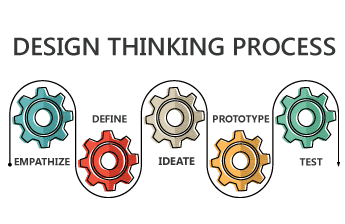
Design thinking is a 5- phase approach that can vary from team to team, organization to organization, but the core mindset is the same—understand the people and problem, and take action. If you are not familiar with design thinking, watch our informative design thinking video.It should come as no surprise that talking to users yields important clues about what they’re looking for in a product or experience. But design thinking is not, in and of itself, a guarantee of success. Before you sign on to the open-ended, meandering journey that is true design thinking, consider some of its inherent risks.

One such risk arises when the practitioner or team doesn’t understand the use—or the limitations—of design thinking. The best example is the semantic dispute over what exactly design thinking is. Different sources provide countless contradictory descriptions and steps, and this lack of clarity leaves the process open to interpretation, thus introducing bias, subjectivity, and falsifications.

Another liability lies in human nature: specifically, the ego. Some would-be practitioners are motivated by the desire to be seen as creative and forward thinking—so they reach for design thinking. But applying the process won’t transform you into a designer overnight. It may even do a disservice to your team—and your clients—by conflating the framework of design thinking with the practice of design.

A third risk lies in the larger context of the organization using design thinking. Even the most faithful implementation will not confer value without corporate compatibility in the form of leadership support of design thinking, willingness to support new ideas, and the freedom for all stakeholders to speak openly during the process.

L&D professionals, might assume that they can mitigate these risks through, well, more L&D. Surely a practitioner trained in design thinking can be trusted to “do it right.”

Not so fast. Design thinking courses vary widely in quality, and some perpetuate inconsistent definitions of the process and its applications. Some courses provide learners with a perfectly competent theoretical approach to design thinking, but simply undertaking a training course is not enough. Design thinking requires application and practice to support training in theory and philosophy. A new practitioner needs a community of practice in which to question and critique, and grow in their design-thinking practice. Earning a certificate is not enough.

The best way to help L&D professionals harness the potential value of design thinking is to learn about it, question it, and then apply it. As it stands now, the value of design thinking is subjective to the practitioner’s understanding and potential application of some discrete activities during a workshop. However, the value should increase as the team adopts a mindset that is focused on the learner and understands that design thinking simply is one tool to embrace that mindset.

Given all of these caveats, why use design thinking? The short and honest answer is “sometimes.” Training problems that are candidates for the design-thinking approach are characterized by a lack of attention and focus on the learner.

Consider this scenario: A client “orders” a training program in time for a product launch or a cohort of new hires instead of asking what learners might need. The impulse is often to jump in and begin designing; however, L&D professionals add more value when building time for learner empathy into the process. Though the Empathize phase can be the most fluid and time consuming—not to mention humbling—step in the process, conversations with learners are worth the investment. Their findings can help strengthen training programs in three key ways:

Empathizing helps us create authentic and accessible learning. Against our better judgment, L&D professionals churn out too many deliverables that resemble outdated textbooks, complete with tiny font, bulleted lists, and the occasional image. When the target audience consists of learners who perform hands-on, interpersonal, or less-specialized tasks, reading about skills may not serve them.

Empathizing helps us to show respect for learners’ time. Learners’ needs differ based upon job role, readiness, tenure, and even region. Veterans and new hires will express vastly different performance support needs and should not be herded onto a single, generic learning path. Once learners have achieved competency, training should demonstrate respect for their needs by taking them away from their jobs only minimally. Certain learners, such as sales staff, are particularly sensitive to being taken out of the workstream, as time away from work directly translates to lost income.

Empathizing sometimes means that advocating against an unnecessary deliverable. A commitment to both clients and learners means we are obligated to advise against “solutions” unlikely to benefit either. We’re not talking ourselves out of a job: Showing respect for the client’s investment and the learner’s time builds both parties’ trust in the work we do.

As L&D professionals, we like to believe we have the answers—or at least a solid hypothesis about what the answers might be. Design thinking invites variability and uncertainty into a process we sometimes wish to contain and control. However, our value as L&D professionals increases as we adopt a mindset that focuses on the ever-evolving learner. Design thinking is one of many tools that reminds us to maintain this focus. As with any craft, the expertise lies in knowing when—and how—to use it.

About the Authors

Keith Keating
With a career spanning over 20 years in learning & development, Keith Keating holds a Master’s Degree in Leadership and has experience in a myriad of areas ranging from Instructional Design, Leadership Coaching, Operations Management, and Process Transformation. More recently Keith has been leading clients on the development and execution of their global learning strategies. Regardless of the role, at the heart of everything Keith does centers around problem solving. He studied Design Thinking at MIT’s Sloan School of Management and found Design Thinking was a perfect tool to add to his problem solving "toolkit". Since then, Keith has been utilizing Design Thinking to help clients tap into understanding and resolving unmet customer needs.

Get in touch.

Learn more about our talent transformation solutions.

Transformation doesn’t happen overnight if you’re doing it right. We continuously deliver measurable outcomes and help you stay the course – choose the right partner for your journey.

Our suite of offerings include:

  • Managed Learning Services
  • Learning Content Design & Development
  • Consulting
  • AI Readiness, Integration, & Support
  • Leadership & Inclusion Training
  • Technical Training
  • Learning Technologies & Implementation
  • Off-the-Shelf Training Courses


Stakeholder Engagement: Critical to User Adoption

Whether a project is using a waterfall or an agile delivery method, stakeholder engagement is one of the keys to successful user adoption. For the sake of this discussion, let’s explore the value of effective stakeholder engagement and its impact using agile. First, let’s define stakeholder engagement.

In my opinion, stakeholder engagement is defined as working with and building relationships with people who are affected by or can have an impact on the success of a project. Engagement is the foundation for involving stakeholders and refers to the formal management of the human dimensions of changes associated with any project implementation. The core elements of stakeholder engagement lie within one’s ability to:

  • Coordinate communications activity across all parties, to monitor the accuracy of the key messages, improve efficiency, and avoid mixed messages being given to different stakeholders.
  • Plan enough time for effective stakeholder engagement. One size doesn’t fit all. We need to employ a variety of techniques to understand the range of stakeholder views.
  • Collect and analyze the full range of views, and group them into themes to get the big picture. People give their own views, and identify what the potential issues are for them.
  • Be prepared to listen. We cannot assume we know what people want and what their aspirations are, as they can be different to what we perceive them to be.

If these are the tenets of stakeholder engagement and there may be many more, then the way one engages stakeholders in an agile environment lends itself to making the tenets a reality. In agile, there are multiple opportunities for stakeholders to be involved in the product development process. The same benefits from stakeholders being involved in iterative product development are achieved when they are involved in readiness/adoption activities early and often in the process.

One of the many attributes of agile is the cadence for business involvement during the sprint process. Sprint-based stakeholder involvement from a change readiness perspective enhances user adoption by providing multiple opportunities for stakeholder and team engagement—before, during, and after each sprint. By involving the different types of stakeholders in every step of the project, you will experience the following benefits:

  • A high degree of collaboration between the business and the project team
  • More opportunities for the stakeholders to truly understand the business’s vision and objectives of the project
  • Increased stakeholder trust in the team’s ability to understand how they will be affected by the change
  • The ability for change readiness activities to be implemented and measured, and risk to user adoption mitigated during every sprint
  • The ability to develop and test training material’s effectiveness for each sprint
  • The ability to build training curriculum maps by sprint, allowing users to understand what training will be delivered to support their day-to-day task
  • Acceptance criteria for readiness and as product development, which supports user adoption early and often in the project lifecycle
  • Deeply engaged project stakeholders, promoting ownership and increased user adoption

At the end of the day, stakeholder engagement is important regardless of the project delivery method. It is critical to user adoption. However, when more opportunities exist for a high degree of engagement to occur, the probability of the stakeholder commitment and ownership required to achieve the business goals of any project increases.

About the Authors

Kayla Ratz
Kayla Ratz is the Digital Marketing Manager for GP Strategies and the editor of the GP Strategies Blog. Her focus is on sharing thought leadership and insights across digital mediums, and through collaboration efforts, to support performance improvement and enable knowledge sharing in the Learning Industry.

Get in touch.

Learn more about our talent transformation solutions.

Transformation doesn’t happen overnight if you’re doing it right. We continuously deliver measurable outcomes and help you stay the course – choose the right partner for your journey.

Our suite of offerings include:

  • Managed Learning Services
  • Learning Content Design & Development
  • Consulting
  • AI Readiness, Integration, & Support
  • Leadership & Inclusion Training
  • Technical Training
  • Learning Technologies & Implementation
  • Off-the-Shelf Training Courses


How Training and Succession Strategies Are Changing Technical Industries

Most organizations realize that success is heavily based on having the right people with the right skills in the right positions at the right time. However, few have found ways to consistently develop and maintain succession planning processes with positive outcomes.

Don’t take my word for it. There are a myriad of studies and research papers out there that back this up. Go back over a 20-year period, and the numbers and conclusions are startlingly similar year upon year. According to a survey from AMA Enterprise polling of 1,098 senior managers and executives  a quarter of the participants say their company does not have a succession planning program. This is in spite of the undoubted understanding of succession strategy’s importance to the future of the business from the leadership layer.

Why are successive leaders failing to address this? The reasons are many and varied, and the gap between intent and reality has been widening. As a mentor of mine once said, “Capability development is a long-term investment, and many companies trade in short-term decision-making.”

If you are in the oil, gas, or energy sector, here are some of those realities:

  • Fifty percent of the workforce is due to retire in the next 5–10 years.[1]
  • For every two people retiring, there is only one new person entering the workforce.

This is further compounded by huge demographic gaps in the ages of the workforce. A workforce that is also now being challenged by an influx of new technologies. A workforce that, until recently, still uses techniques honed in the 1950s and uses technologies put in place in the 1980s. The degree of difficulty is further exacerbated by recent studies that 28 percent of millennials would consider staying at their current company beyond 5 years.[2]

So who is responsible for capability development and succession planning? HR? Learning and development? The functional business leaders? Well, the short answer is that everyone needs to play a part. Throwing people into training classes and hoping for the best is not a strategy.

Evaluation, education, exposure, and experience are words more likely to be fused together these days to create a more effective learning experience. And this is not the responsibility of just one department.

We are beginning to see the creation of departments, with names like Operational Excellence and Continuous Improvement, that are responsible for lowering operational risk and operating costs, and increasing revenues. In most instances, there are fine margins at play. To paraphrase Susan Rice, unlike 30–40 years ago, the majority of the assets in the organization now resides in the knowledge and ability of its people—not just equipment.

As a result, the early adopters and leaders in this area have shown the way forward. There is an understanding that the management of the business and operational processes relies heavily on investment in developing the right culture and a pool of talent with skills and qualities that cover a spectrum of disciplines. Words like transparency, accountability, and advocacy are no longer platitudes erroneously and mysteriously woven into the mission statement. Although these leading organizations employ various methodologies such as Six Sigma and lean, the culture they are seeking to emulate is built upon the guiding principles developed by the United States Navy’s Nuclear Program. The objectives are long term, but the focus is developed through the execution of short-term goals.

There is no doubt about it; building out a succession strategy, while worthwhile, means answering a great many “what’s in it for me” questions along the way. But any aspirations of a stronger, future-proofed workforce are going to require that the organization finds these answers. How well an organization manages these human factors will have a significant impact on its ability to effectively manage the future safety, productivity, and profitability of the business and its assets for years to come.

  1. https://www.hartenergy.com/exclusives/workforce-challenges-remain-oil-gas-sector-26634
  2. https://www2.deloitte.com/global/en/pages/about-deloitte/articles/millennialsurvey.html

About the Authors

William Spindloe
William Spindloe is a Capability Development Strategist who partners with Government, CEOs, and executives to grow and development the efficiency of their workforce. After spending nearly three decades working in human capability, William understands the critical need to develop high performance individuals and teams that using processes that are sustainable and measurable. In addition to having a number of articles published internationally, William is the author of the book, The Learning Link – Going Beyond the Happy Sheet. He is also a frequent speaker at industry events addressing key challenges like Leadership Development, Assessing Capability, Continuous Improvement and Measuring the Impact of Learning.

Get in touch.

Learn more about our talent transformation solutions.

Transformation doesn’t happen overnight if you’re doing it right. We continuously deliver measurable outcomes and help you stay the course – choose the right partner for your journey.

Our suite of offerings include:

  • Managed Learning Services
  • Learning Content Design & Development
  • Consulting
  • AI Readiness, Integration, & Support
  • Leadership & Inclusion Training
  • Technical Training
  • Learning Technologies & Implementation
  • Off-the-Shelf Training Courses


Digital Learning: Look Up

I am often asked to help organizations introduce digital learning. The reason they choose digital learning usually has to do with modernizing the output and creating a more flexible, user-friendly, and user-centered approach.

I always worry when I hear about big learning transformations that appear to be completely disconnected from the wider organizational strategy. Modernizing your learning is not nearly as impactful as adapting your learning to better meet the strategic needs of the organization.

Most workplaces are undergoing rapid digital transformation to become closer to their customers and more responsive and alert to changes in the market as well as generate more analytics to help clarify where they are succeeding and where they are not. For some organizations, this endeavor involves anticipating changes in the market, but for many others it includes playing catchup and attempting to head off a looming catastrophe as the competition pulls ahead and gets closer to its customers, offering them much more of what they need than the organization in hand. There is no purist effort involved in digital transformation; there are no correct models or optimal ways to update your provision. One thing is for certain: The whole organization has to pull together to achieve this goal, and that, most certainly, includes the learning operation.

The best reason for implementing a new digital learning program is because the whole organization is going through root-and-branch reassessment of its approach, and learning should be no exception. The learning operation should be marching hand in hand with that transformation process. Far from being a way of making learning more efficient, it is actually one of the critical means to sustain any kind of transformation and give the workforce both the skills and confidence to move forward. The idea that the organization moves in one direction and learning moves in a totally different direction is absurd and not sustainable.

You can’t opt out from digital transformation, nor can you do it in your own time and at your own pace. If the organization has to change every aspect of its operation, then every aspect has to change. Learning is absolutely critical, as it prepares participants for the change and provides learners with the chance to feel comfortable with new models and new ways of working. Indeed, the way the organization is changing should be replicated in the learning offered, ensuring that the organization moves forward in step and is not misaligned with different departments sitting ahead or behind the mainstream.

Here are five considerations to keep top of mind when implementing a digital learning program:

  • As you increase your engagement with your external customers and suppliers, and meet their needs faster, increase your internal collaboration and integration. Your digital learning strategy will begin to model that association and create a safe space that will accelerate the necessary changes.
  • Most organizations are becoming more complex. In addition to our full-time employees, we now rely on contractors, gig workers, freelancers, and even source views from the crowd outside. Only a digitally transformed learning operation can reach the entire workforce and create a sense of belonging. It can build one coherent operation from such disparate groups that have contrasting reasons for being part of the organization, but need the same or similar skillsets and mindsets.
  • Timberland once ran an ad campaign that was splashed across all its shops. The ad read, “If you’re not fast, you’re food,” which could also be a useful slogan for digital organizations and their digital learning. Building digital skills together with (and this is crucial) opportunities to practice those skills inside a digital environment increases the velocity of change. Practices learned at the corporate university can be honed in a safe place. This is so much more desirable than failing in front of the customer.
  • If the learning team can mirror the organization in the process of transformation, you have built something powerful that completely aligns with the business strategy.
  • A digitally smart organization works differently from a more conventional one. It emphasizes working across the organization and building new products or services cooperatively and in conjunction with customers, and it creates temporary teams where people join, work on an initiative, and then move on to a new team. It is about building new skills by doing and creating an environment of continuous development. The tight bond with the learning strategy is immediately self-evident.

I want those in corporate learning to digitally transform in order to support their organization, not simply to change the mode of learning for some spurious reason or another. No company that has gone through digital transformation successfully can afford to let any element of the organization, especially the learning organization fall behind.

This unique opportunity shows just how important learning is and builds a modern, market-capable, and agile organization. Please don’t throw that opportunity away.

About the Authors

Nigel Paine
Nigel Paine joined the GP Strategies Advisory Board in 2018 and has been involved in corporate learning for over twenty-five years. In April 2002, he was appointed as head of the BBC’s learning and development operation. Under his leadership, the team transformed the learning function and put it on the corporate map. He left the BBC in September 2006 to start a company focused on building great workplaces by promoting creativity, innovation, values-based leadership, and learning and exploring the link between them. Nigel teaches in the CLO Doctoral Program at the University of Pennsylvania and has written two books, “The Learning Challenge: Dealing with Technology, Innovation and Change in Learning and Development” and “Building Leadership Development Programmes That Work.” He is currently working on a new book on building and developing a learning culture. Nigel also presents a monthly TV series (Learning Now TV) and hosts a weekly podcast with Martin Couzins called “From Scratch.” He regularly speaks at conferences and writes articles for magazines and journals about development, technology, and leadership.

Get in touch.

Learn more about our talent transformation solutions.

Transformation doesn’t happen overnight if you’re doing it right. We continuously deliver measurable outcomes and help you stay the course – choose the right partner for your journey.

Our suite of offerings include:

  • Managed Learning Services
  • Learning Content Design & Development
  • Consulting
  • AI Readiness, Integration, & Support
  • Leadership & Inclusion Training
  • Technical Training
  • Learning Technologies & Implementation
  • Off-the-Shelf Training Courses


A Tribute to Dr. Robert W. Deutsch

The GP Strategies family is mourning the loss of founder, Dr. Robert W. Deutsch, who passed away on March 19th, 2019.

Robert W. Deutsch was born in New York City in 1924. Robert earned a degree in physics from M.I.T in 1948 and completed his doctoral degree in physics in 1953 at UC Berkeley. He married his wife, Florence, in 1949 and the couple settled in Baltimore in 1964. In 1968, Dr. Deutsch launched his career as an entrepreneur by founding General Physics Corporation (now GP Strategies Corporation). While most consultants would talk to the CEO, Deutsch’s approach was to roll up his sleeves, talk to those on ground level, and get suggestions from them on how to improve the company.

In 1988, Dr. Deutsch left General Physics and founded RWD Technologies, a company focused on the IT revolution that was transforming the way companies manufactured products, managed their business operations, and communicated with their suppliers and customers. However, throughout his career, Dr. Deutsch remained true to his commitment to invest in the education, training, and development of people, and to promote innovative thinking and solutions for complex problems in the workplace. In 1991, he formed the Deutsch Foundation.

The foundation was small for its first 15 years, but grew tenfold following GP Strategies Corporation’s acquisition of RWD Technologies in 2011. The Foundation looked at what it could contribute significantly to the vitality and revitalization of Baltimore—assets in which others were not investing. It became clear that investing in the emerging innovation, arts, and creative economy in Baltimore would have the greatest impact. Today, their vision and values continue to be at the heart of the foundation.

With an inspirational list of accomplishments, his family was the center of his focus and the secret to Deutsch’s success can be summed up by what was written on the back of his business card, which read, “Work should be an enjoyable part of a well-rounded life.”

Our condolences go out to his family and those who knew him. His legacy will continue through the many individuals and organizations he had a profound impact on.

For more information on the Robert W Deutsch Foundation, visit: https://www.rwdfoundation.org/

About the Authors

GP Strategies Corporation
GP Strategies is a global performance improvement solutions provider of sales and technical training, e-Learning solutions, management consulting and engineering services. GP Strategies' solutions improve the effectiveness of organizations by delivering innovative and superior training, consulting and business improvement services, customized to meet the specific needs of its clients. Clients include Fortune 500 companies, manufacturing, process and energy industries, and other commercial and government customers.

Get in touch.

Learn more about our talent transformation solutions.

Transformation doesn’t happen overnight if you’re doing it right. We continuously deliver measurable outcomes and help you stay the course – choose the right partner for your journey.

Our suite of offerings include:

  • Managed Learning Services
  • Learning Content Design & Development
  • Consulting
  • AI Readiness, Integration, & Support
  • Leadership & Inclusion Training
  • Technical Training
  • Learning Technologies & Implementation
  • Off-the-Shelf Training Courses


Good Content Is the Foundation for Content Curation

“Content is king.” We have heard this phrase many times before. With the advent of new content curation technologies in L&D, lots of organizations want to jump on the bandwagon and offer their learners the best possible experience through the newest gadgets. But before starting any curation efforts, we have to remember that good content is the foundation of all effective learning.

The Basics of a Content Strategy

Think of a content strategy as an inventory at a grocery store. Stores keep track of what is on their shelves and in the warehouse so they know exactly how many products they can sell. If they come close to products selling out, they order more. If a store doesn’t have inventory in place, how do they know when to order new products?

According to Kristina Halvorson, CEO and founder of Brain Traffic, content strategy is the “creation, publication, and governance of useful, usable content.” It lets you manage your content as a business asset. “Content” includes the content you write as well as images and multimedia. Ultimately, having an established content curation strategy helps create meaningful, engaging, and sustainable content and enables you to identify the right content at the right time for the right audience. You can easily recognize what content already exists, what should be created, and, more importantly, why it should be created. Leveraging data here is key to pinpointing what content is accessed the most and what content has hardly been touched.

Create a Content Strategy That Sticks

The best place to start is with what you already have in place. Most organizations have an abundance of content with no central repository or one person responsible for maintaining it. Get all stakeholders together, including instructional designers, facilitators, copywriters, and someone from marketing, and simply summarize what content already exists. Then, create a content strategy plan, which can be a simple Google or Excel sheet outlining, for example, content titles; descriptions; delivery channel; access data (how often, devices, time of day); responsibilities; tags; and maintenance cycle. This will help identify current gaps and show the additional content that is needed. When thinking about content creation, there is no need to reinvent the wheel. As a rule of thumb, create about 65% of content, curate 25%, and collaborate on 10%.

Next Step – Curate Content

First off, content curation in the traditional marketing sense is the process of sorting through large amounts of content on the web and presenting the best posts in a meaningful way. Curation is not creating new content but rather discovering, compiling, and sharing existing content. L&D departments don’t necessarily go out and use the entire web for their content curation purposes (although they might use tools such as Degreed); they often focus on in-house content.

The key to successful content curation lies in the learner’s ability to find appropriate content, which means that content needs to be properly tagged and organized in the first place. It’s our responsibility to sift through content, and group and categorize it. Categories could include onboarding, product training, etc. Then, the content is shared through online portals and platforms that can be accessed by the learner as needed.

The advantage of curation tools is the just-in-time delivery of content and the relevance it has to the learner. More and more, we see a need to move away from the traditional LMS toward a more robust platform that aligns with modern learners and their needs to access relevant content when and how they need it. However, before moving into that direction, ensure you have the basics in place, which will help to create a successful content curation strategy that makes a difference to your learners.

About the Authors

Bianca Baumann

Get in touch.

Learn more about our talent transformation solutions.

Transformation doesn’t happen overnight if you’re doing it right. We continuously deliver measurable outcomes and help you stay the course – choose the right partner for your journey.

Our suite of offerings include:

  • Managed Learning Services
  • Learning Content Design & Development
  • Consulting
  • AI Readiness, Integration, & Support
  • Leadership & Inclusion Training
  • Technical Training
  • Learning Technologies & Implementation
  • Off-the-Shelf Training Courses


Improve Your Data by Dropping These Five Poor Survey Questions

Oftentimes I hear that surveys are not a good way to collect feedback from learners. Or that people are getting tired of answering surveys, which then leads to low response rates. Or people are not getting any insights or actionable data from their surveys. All of these reasons can give the perception that surveys are a waste of time.

How can we shift the perception of surveys?

I think one way is to eliminate poor survey questions. We often ask poor questions because that’s the way we have always done it. The questions may not seem that bad because we have gotten used to seeing them over and over again. However, taking the time to critique your current survey could eliminate some of these poor questions. Here is my list of five bad survey questions to consider dropping or revising:

Number 5:

On a scale of 1 to 10, how did you enjoy the catering at today’s session?

You have probably seen questions that ask the learners about the facility, classroom, or food. I am not sure any of these things have an impact on the learning that takes place. Yes, I agree that the environment does impact a person’s ability to receive the information, but how much control do you, as a learning leader, have over the food and classroom? And the key to any survey question is to know what you are going to do with the data. Do you currently share results back with the catering company or with your facilities team? If we cannot act on the information we gather, then we should instead ask other questions that we can act on.

Number 4:

The registration process for this course was efficient and effective. (strongly disagree to strongly agree)

This one is trying to collect data about how people registered for the training. But how much control does a learning experience designer have over the registration process? Often this is asking for feedback on the LMS or your organization’s learning technology, which we already know that is hard to change or improve your LMS or learning technology. Another problem with this question is the use of the word “and.” Asking a learner to provide feedback using two items can confuse the learner. What if the registration process was effective but not efficient? And use words that are easy to understand for the learner. They may have different ideas on what is efficient and effective. Instead, you could ask, What problems did you have registering for the course, or How did you learn about this training opportunity?

Number 3:

The trainer was effective and knowledgeable. (strongly disagree to strongly agree)

We do need to understand what part the trainer played in the learning experience. But this question is vague and leaves us with data that we cannot act on. What can we do if the trainer is not effective and not knowledgeable? This item does not tell us the behaviors that the trainer exhibited in the training. If you really want to know about the trainer, then use a behavior checklist and observe the trainer in the classroom. Or design a series of questions that lead to specific behaviors such as, The trainer encouraged participants to take part in class discussions, the trainer answered my questions, or the trainer gave me actionable feedback. If you don’t want to lengthen your current survey, then you can determine the effectiveness of the trainer by analyzing the comments from the question, How could this course be improved? And if you don’t have a way to quickly share the feedback with the trainer, then you should not collect the data in a survey.

Number 2:

The content of the course met the objectives. (strongly disagree to strongly agree)

We often ask this question to determine if a course achieved the learning objectives. However, learners often do not know the objectives of the course. And even if the trainer explained the objectives at the start of the training, how would a learner know if they met or achieved those objectives? One way to determine if a course met the objectives is to design a test, and use the test score to determine how well the course met the objectives. We often use surveys to collect data because we cannot use a test. Instead of asking about the objectives, you can ask the learner to note one thing they learned that they know they will use. You can then analyze the comments to see how well they match up with the objectives.

Number 1:

Overall, how satisfied are you with this learning experience? (not satisfied to very satisfied)

We often ask this question to determine if the course met the needs of the learner. However, when we use the word “satisfied,” it leaves much of the meaning up to the learner. The learner could interpret satisfaction to mean the training was engaging, or useful, or relevant, or meaningful or if they liked the people in the classroom. What if the learning experience was compliance training? How satisfied were you with your last compliance training experience? We are usually happy just to be done with compliance training.

So, what can you ask instead? We need to ask questions that determine the effectiveness of the training. Effectiveness can be determined by rating agreement to items such as, The training will help me be more successful on the job, my job performance will improve as a result of this training, or this training was worth the time away from my job. Learners value a learning experience that is useful, helps improve their performance, and is a good use of their time.


About the Authors

Scott Weersing
What is learning analytics and why am I passionate about it? Way back when I was a newspaper photographer, I really wanted to know the who, what, when, where, and why about the story I was assigned to. I loved to find out more information so I could be in the right place at the right time in order to get the best photograph. The more information I had, along with personal experience, prepared me to take an impactful photograph. My journey to learning analytics follows the same path of asking questions and finding the right tools. When I started working in Learning and Development as an instructional designer, I always was curious about what the learners were going to do with the training on the job. Oftentimes, I would get a response from the SME that the new knowledge would just change behavior on the job. I guess I am a little cynical about the magic of training. Just wave the magic wand, attend the training, view the WBT, and your problems will be solved. I did not know the questions to ask to ensure that the training would be applied on the job, but my leaders noticed that I was curious and liked to ask questions. They asked me whether I would you like to be a performance consultant. After telling me what a performance consultant does, I said that it sounded great. Who wouldn’t want to solve business and performance problems with a series of interventions? It was my time as a performance consultant that I learned about the right questions to ask to get to outcomes and, in turn, I became fascinated with metrics. My favorite questions are still as follows: Can you tell me more about the problem? What have you have already tried to solve the problem? What would it look like after this problem is solved? What metrics or data do you have that show there is a problem? I became data driven to find the causes of problems and then track the solutions to see if we were moving the needle. The tools to find the root cause of a problem are the same tools to see whether the training is being applied on the job. I use interviews, focus groups, observations, checklists, and surveys to find out what is causing a problem, and then I use the same tools to find out what is happening after training and, in turn, making an impact on business outcomes. I would say that learning analytics and photography are similar in that you need to plan with the end in mind to collect the right information in order to tell a story and make an impact.

Get in touch.

Learn more about our talent transformation solutions.

Transformation doesn’t happen overnight if you’re doing it right. We continuously deliver measurable outcomes and help you stay the course – choose the right partner for your journey.

Our suite of offerings include:

  • Managed Learning Services
  • Learning Content Design & Development
  • Consulting
  • AI Readiness, Integration, & Support
  • Leadership & Inclusion Training
  • Technical Training
  • Learning Technologies & Implementation
  • Off-the-Shelf Training Courses