4 Steps to Improve Your Engagement

Resolutions for Personal and Professional Achievement

Full disclosure: A version of this blog appeared nearly a decade ago. Its principles are evergreen, however—and in today’s hybrid and virtual working world, it’s also even more important to figure out our individual engagement equations. So here is a dusted-off version with some updated context as you plan how to increase both your performance and satisfaction.

Here’s to more great days at work in spite of [you fill in the blank]!

Engagement Is an Elusive Goal

Many things can influence your engagement at work: organizational changes, behaviors of your manager and colleagues, challenges in your projects, your situation at home, and even local or world events (like a pandemic maybe?). That means you can’t stay fully engaged without effort. In fact, you can feel totally engaged one week only to be hanging on by a thread the next.

Engagement Is Not an All-or-Nothing Proposition

Not being engaged is not the same as being disengaged. Our X Model of Employee Engagement uses two axes (contribution and satisfaction) and five levels to describe where you may be in terms of your engagement. The goal is always to move yourself and others up to experience the highest levels of contribution and satisfaction.

Do Your Part to Improve Engagement

It’s unlikely that you can maintain full engagement on your own. In fact, we have an entire team devoted to helping organizations create cultures that fuel engagement. It’s fair to expect that senior leaders will create an inclusive, supportive workplace and that all leaders act in a fair, trustworthy, and competent manner. It’s true that leaders need to be crystal clear about the organization’s purpose, values, and strategy—and how you fit in. It’s reasonable to count on them to fix policies and practices that undermine engagement and high performance.

Yet no one can make you more engaged. Your engagement is a personal equation. It reflects your relationship with work, based on your values, your talents, and your aspirations. You need to own that equation. Take action, no matter what your employer does or doesn’t do.

Try These Four Things

1. Know what matters to you

If you aren’t clear on your personal aspirations and motivators, you can’t satisfy them on the job. For nearly 50 years, we’ve been helping individuals clarify their personal values, and we have seen how social justice and pandemic-related events have sparked “the Great Reflection.” Your values are your filter for your decisions and actions. Step back and reflect on what they are—and whether they’re being satisfied at work and home. If your actions, personally, are misaligned with what you believe, you’ll be miserable before you walk through the office door. If you keep your values front and center, they can be powerful fuel for great days at work.

2. Know what matters to your employer

We are talking about work, so personal engagement is not just about your satisfaction. To be fully engaged, you need to be a top performer. You can’t accomplish extraordinary things if you don’t know what the organization needs from you (and why). Market conditions and strategies can change overnight, so check in often with your manager. Recalibrate to focus your energy and talents on the very top priorities on your very long to-do list.

3. Build on your strengths

Buck Blessing, an employee-engagement pioneer and founder of one of our divisions, was known for saying, “If you address your development needs only, you’ll die a very average person.” Find out what you do well by asking for feedback (self-assessment is not enough), and then get better at it. Find opportunities to add value with your talents. Your employer will benefit, and you’ll be more engaged. Of course, fix any weaknesses that are career liabilities or impede peak performance. Average is not an ingredient in personal or professional success.

4. Commit or quit

Choose to be a star. Choose to take care of your health so you can wake up with energy during the work week and on the weekend. Choose to connect emotionally. Choose to leverage the things you can control in your environment that will support your best work. Choose to ask for help from your manager or others to improve your performance and engagement your team’s results. Choose to be more engaged.

What Are You Waiting For?

If you shook your head with cynicism as you read that last point, do yourself a favor: find another role—maybe another employer. Hanging on to a “good job” (e.g., it pays well, looks impressive) when you are not engaged is a bad strategy. You spend thousands of hours each year on the job. Make them count. Why plod through them feeling miserable or undervalued—or even just okay? Sooner or later, your performance will suffer and dissatisfaction at work will spill over to affect your personal life. Who wants that?

About the Authors

Mary Ann Masarech
Mary Ann Masarech spent the first third of her career writing, designing, and marketing skills training for top-notch consulting firms. She acquired a broad Mary Ann is the Lead Consultant for GP Strategies’ Engagement Practice. In this role, she leverages her extensive experience with instructional design and client experience to create practical tools and strategies that clients apply worldwide to create successful businesses and thriving workplaces. She is also co-author of The Engagement Equation: Leadership Strategies for an Inspired Workforce (Wiley, Oct 2012), and a founding member of the Norma Pfriem Urban Outreach Initiatives, a not-for-profit that addresses food insecurity and education for underserved adults and children. Mary Ann is a graduate of Wesleyan University. 

Get in touch.

Learn more about our talent transformation solutions.

Transformation doesn’t happen overnight if you’re doing it right. We continuously deliver measurable outcomes and help you stay the course – choose the right partner for your journey.

Our suite of offerings include:

  • Managed Learning Services
  • Learning Content Design & Development
  • Consulting
  • AI Readiness, Integration, & Support
  • Leadership & Inclusion Training
  • Technical Training
  • Learning Technologies & Implementation
  • Off-the-Shelf Training Courses


GP Strategies’ Top 10 Resources of 2021

Leadership & Learning Strategies for Workforce Transformation

2021 has taught us the importance of being flexible. Our traditional assumptions about learning have changed, and we’ve challenged the rules about how, when, and where we connect with and train employees. We are proud to have been a catalyst for helping organizations create effective hybrid strategies and equip people with the tools, techniques, and technologies for the future of learning.

We’ve curated our best content from 2021 for you in this post.

#10 | The Evolving Role of Learning in Workforce Transformation – How the CLO will Drive Business Growth

Workforce transformation is crucial as companies strive to attract and keep talent and to build high-performing cultures that will thrive.

We published a research report with Future Workplace based on a global survey of HR and business leaders asking about barriers holding organizations back from building on recent breakthroughs to innovate how they build agile learning cultures ready for the next pivot. The report is a playbook of immediate actions to pursue as you plan your strategy for 2022 and ready your organization to drive learning as an important lever for workforce transformation.

Read more.

#9 | Hybrid Workforce: Turn Challenges Into Opportunities | Podcast

In this episode, Patrich Calhoun discusses what he’s hearing from business leaders as they face the challenges of leading a hybrid workforce, from strategy to engagement and burnout.

Read more.

#8 | 4 Strategies for Creating a Culture of Career Growth | Blog Article

In this blog post, Mary Ann Masarech discusses four strategies to create a culture of continuous career growth to improve the odds that your workforce will be willing, ready, and able to move into the roles you need them to play.

Read more.

#7 | What is Workforce Transformation and Why You Should Care | Podcast

Businesses that thrive are in a constant state of transformation, and the skills and knowledge needed from your workforce continue to evolve. In this podcast episode, Matt Donovan explains that true workforce transformation is recognizing people are at the heart of change and L&D solutions need to be designed from a human-centric approach.

Read more.

#6 | 5 Tips for Keeping Virtual Learners Engaged | Blog Article

One of the biggest reasons that virtual environments are not successful is the lack of engagement. In the virtual environment, we tend to drop the activities that we did in person, possibly due to the restriction of time or maybe the lack of online design experience.

In this article, Keith Keating explores ideas, tactics, and activities to design and deliver engaging virtual learning experiences.

Read more.

#5 | Leader Mindsets: New Ways of Thinking for a New Hybrid World | Blog Article

From policy to processes to communication and leadership, there is little that will be left untouched as hybrid becomes the norm for many organizations. Leah Clark details how to apply four key mindsets of leadership in the new context of hybrid working. These mindsets can relieve the factors contributing to stress and keep teams engaged.

Read more.

#4 | Future Workplace: Viability of Virtual and Augmented Reality for Business and Learning Professionals | Blog Article

Many companies are interested in using AR and VR for learning and corporate initiatives but don’t know where to get started. Industry leader Dennis Bonilla, Dean of the Wiley Education Services Global Academy and a Fellow of the Future Workplace Network, met with two GP experts and discussed where immersive technologies are headed, what software drives them, and what scenarios are best for applying them.

Read more.

#3 | Reinventing Leadership | Research Report

We asked individual contributors what they want from the work they do, their expectations for moving into a leadership role, and whether their current managers have the ability to develop them as leaders. This research report presents the findings and offers insights into what teams can do to support the future leaders in your organization.

Read more.

#2 | First Class Delivery I Building and Maintaining Successful Global Training Delivery Teams | eBook

This eBook guide outlines key factors and best practices in building and maintaining a successful training delivery team. Read the eBook for a new approach that consistently delivers the best results.

Read more.

#1 | Developing a Holistic Approach to Enable the Hybrid Workforce | Article

The explosion of hybrid work has moved what was once an employee accommodation to a purposeful, strategic company-wide approach. In order to structure a productive and satisfying work experience, both need to take responsibility for creating a hybrid scenario that works.

This detailed article on the hybrid workforce outlines four critical areas that affect organizational performance that need to be addressed. Read more for how new approaches need to be imagined related to career development and learning.

Read more.

About the Authors

Zach Ergo

Get in touch.

Learn more about our talent transformation solutions.

Transformation doesn’t happen overnight if you’re doing it right. We continuously deliver measurable outcomes and help you stay the course – choose the right partner for your journey.

Our suite of offerings include:

  • Managed Learning Services
  • Learning Content Design & Development
  • Consulting
  • AI Readiness, Integration, & Support
  • Leadership & Inclusion Training
  • Technical Training
  • Learning Technologies & Implementation
  • Off-the-Shelf Training Courses


Building a Data-Driven Culture

It’s no secret that analytics has been a focus for organizations over the last few years. And it continues to be. In recent surveys, 73% of talent leaders say that People Analytics will be a big priority for the next five years, but 55% say they still need help putting basic People Analytics strategies into place.

But why is it so important? One reason is it allows organizations to make critical business decisions using data rather than just a “gut feeling.” But the lack of proper data insights causes organizations to struggle with making data-driven insights.

Some factors that can make this challenging are:

  • Data spread across numerous systems
  • Poor data quality and data governance
  • Lack of access and/or ability to use modern visualization tools with real-time access to data
  • A shortage of business acumen and influencing competencies in HR

To get to the heart of proper People Analytics, organizations need to formulate a comprehensive People Analytics program that is separate from other HR functions. Below, I have outlined a suggested guideline on how to do that.

  1. Develop a People Analytics strategy. Broadly consider what you want to measure to generate strategic insights to solve your unique business problems.
  2. Create a system roadmap to support the strategy. Understand your existing systems and available tools; determine what you need to add to meet your strategic goals.
  3. Create a human capital skills plan to support the strategy. Understand the skills and experience necessary to use new tools and effectively influence others with data inside and outside of HR.
  4. Execute the plan. Implement new systems and tools and train your team on the new tools and processes.
  5. Ongoing review and enhancement. At least annually, review business needs to ensure you are delivering necessary reports and analyses.

Organizations that take advantage of a proper People Analytics program will see ROI. Take Experian, for example. They have seen significant improvement across the business, including reduced attrition (decrease of 4%) and an increase of savings of over $14 million dollars over two years. Those numbers speak for themselves.

Are you ready to get started on your People Analytics journey? Let us help you.

About the Authors

GP Strategies Corporation
GP Strategies is a global performance improvement solutions provider of sales and technical training, e-Learning solutions, management consulting and engineering services. GP Strategies' solutions improve the effectiveness of organizations by delivering innovative and superior training, consulting and business improvement services, customized to meet the specific needs of its clients. Clients include Fortune 500 companies, manufacturing, process and energy industries, and other commercial and government customers.

Get in touch.

Learn more about our talent transformation solutions.

Transformation doesn’t happen overnight if you’re doing it right. We continuously deliver measurable outcomes and help you stay the course – choose the right partner for your journey.

Our suite of offerings include:

  • Managed Learning Services
  • Learning Content Design & Development
  • Consulting
  • AI Readiness, Integration, & Support
  • Leadership & Inclusion Training
  • Technical Training
  • Learning Technologies & Implementation
  • Off-the-Shelf Training Courses


Virtual Instructor-Led Training: Best Practices to Elevate Virtual Learning Delivery

Virtual instructor-led training (VILT) became the go-to format as many organizations were faced with making decisions on how to move forward with their learning and development strategies. Learning teams had to quickly prioritize which programs were crucial to the organization and then had to scramble to create a strategy for how to proceed in a virtual and digital world.

As a result, many organizations quickly adapted their in-person sessions to VILT and other virtual formats, with little time to spend on redesign and redevelopment.

Now that organizations are returning to the office, to some degree, and are developing hybrid models, learning and development teams are making decisions on what will return to in-person formats and what the organizations will continue to leverage with virtual platforms.

These trends have emerged in virtual training:

  • From surviving to thriving
  • New demands and catching up
  • Lessons learned and best practices
  • Virtual and digital learning is here to stay

“Good enough” worked for quick needs, but it’s no longer good enough. Employees and leaders alike now expect learning programs to go from good to great.

Here are some best practices to help elevate your virtual training and delivery.

The Three Roles Your Organization Needs for Virtual Delivery

Seamless delivery, intuitive tools, and collaboration are core needs in VILT and other forms of virtual training delivery to improve effectiveness, engagement, and retention. There are three roles that make this happen.

The infrastructure roles you need:

  1. Virtual facilitator and/or coach: The role of a virtual facilitator or coach is to foster discussions, provide feedback, and encourage insight and reflection. These roles have an expert understanding of the content and are instrumental in creating a virtual community where participants are connected to the facilitator and to other participants.
  2. Virtual producer: The virtual producer is responsible, from a technical standpoint, for the overall success of virtual events. This role is a vital resource, providing assistance before, during, and after your training. Producers can help transform the training into trouble-free, fast-moving, interactive events that keep the learners involved and the facilitator on track.
  3. Platform moderator: This role has a visible presence providing a human element to a digital experience. The main purpose of the role is to foster learner engagement through online and offline communication. Platform moderators are the primary point of contact for the learners, supporting and encouraging participation throughout the digital experience.

Watch the on-demand webinar for more.

“Good Enough” Is No Longer Good Enough

Elevating virtual training is about putting the learner at the center, having the right team, and aligning on roles and responsibilities.

It is important to have a learning technology strategy to ensure virtual training is delivered seamlessly.

  • Selecting the right platform. Even the smallest hiccups can affect the learner’s experience. The right platform should be easy to use and include interactive capabilities, administrative reporting and analytics, and support from the right team.
  • Using the right tools. Annotation, interactive tools, and calling on participants keeps engagement alive by reducing multitasking and helps with technology fatigue. Available tools such as breakouts, polls, whiteboards, pulse checks, and webcams can promote engagement, seed discussion threads, and help participants effectively use the chat.
  • Accessible, easy to use, and convenient. Virtual training helps with accessibility but it is also critical to ensure your virtual or remote employees have the tools and technologies to access, work, and learn effectively, depending on their individual needs.

Our learners are also split between in-person and virtual worlds. Facilitators are now working both virtually and in the classroom. It’s critical, in these situations, to use webcams, microphones and speakers, and chat functions and to pose questions to the learners. The hybrid workforce also demands a hybrid approach to facilitation.

Build Energy and Connection

To deliver learning effectively, be more energetic than you would in-person and:

  • Use participants’ names.
  • Use virtual body language.
  • Ask standard questions, but also try new ways of questioning.
  • Collaborate rather than lecture.
  • Harness the power of peer pressure and peer support.

Watch the on-demand webinar for more.

Using MS Teams Effectively: Best Practices for Modern Communication Tools

There are more and more collaboration and communication tools on the market these days. And with that comes more and more features and capabilities. One of the most common tools is Microsoft Teams.

Microsoft Teams comes with many functionalities such as sharing documents and files, real time management and editing, and sharing ideas through chat functions. While bringing these collaboration functions together offers many benefits, the challenges include having too many teams, too many notifications, and version control. Putting a process in place ahead of using these functions will reduce those challenges.

It helps to personalize your notifications by updating your notifications, permissions, and hidden teams. You can access these functions with the ellipsis next to your profile picture and these options will help manage and organize notifications and groups.

When delivering virtual training, it helps to practice polls, breakouts, whiteboards, emoticons, and sharing your screen or content effectively.

Watch the on-demand webinar for more specifics on how to use Microsoft Teams.

By implementing these best practices, learning and development teams can significantly improve virtual training delivery.

About the Authors

Fran Colavita
Fran Colavita is a senior manager at GP Strategies, leading the instructor resource management teams and global associates network, which includes facilitators and producers.
Megan Bridgett
Megan Bridgett, a leader in training and talent development for over a decade, helps organizations implement, optimize, and increase capabilities in their learning management initiatives.

Get in touch.

Learn more about our talent transformation solutions.

Transformation doesn’t happen overnight if you’re doing it right. We continuously deliver measurable outcomes and help you stay the course – choose the right partner for your journey.

Our suite of offerings include:

  • Managed Learning Services
  • Learning Content Design & Development
  • Consulting
  • AI Readiness, Integration, & Support
  • Leadership & Inclusion Training
  • Technical Training
  • Learning Technologies & Implementation
  • Off-the-Shelf Training Courses


Ensuring Equity and Psychological Safety in a Hybrid World

Most of us have seen big changes in the way we work since early 2020. It began through necessity, as we’ve learned more about the hybrid working world, but it is clear these changes developed momentum and are now part of the new normal. Working from home for some is a flexible and comfortable experience in which team members can fulfil their work obligations and find extra time, and possibly money, by avoiding the commute, reducing dress costs, and finding efficiency in home tasks. The benefits within work-life balance that the hybrid environment brings can be great, often bringing a greater sense of engagement or productivity, a positive for both the employee and the organization. But what about those of us that do not share such a rewarding experience in a hybrid structure? 

My own journey into hybrid working began with our office temporarily closing, as many others had, and immediately I began to see some of the unique challenges of this new world. The first of those challenges being space, my living space seeming that much smaller when making room for the trappings of the office. Other unexpected obstacles started to make themselves apparent as the face-to-face meetings were replaced by virtual meetings. I didn’t realise how many coping mechanisms I had developed to navigate the more social aspects of work until they had all been stripped away. Another thing I came to realise was how important the ritual of getting ready and walking to the office was. It prepared me to both start the day with the right mindset and helped me steel myself for those more demanding aspects. This started me down a path of examining why some of these rituals and coping mechanisms were so important and ultimately led me to exploring neurodiversity as a way of understanding this.

While on this ongoing journey, one of the most eye-opening aspects has been connecting with a great many others who have similar challenges and needs. For many who sit on the neurodiversity spectrum, the traditional workplace created a much-needed structure that helps deal with the additional challenges that come from working in, and navigating, a very social and community orientated part of life. Working from home also provides some very practical challenges for those who might struggle with social interaction and reading facial expressions. The difference between a video call where we might or might not be able to see faces and an in-person meeting where there are additional cues to pick up on in terms of body language can be great for some. For instance, if a colleague brings an angry or frustrated face into a meeting, where no one has the context of a wider working environment, then it could easily be misunderstood. There is a lot of unheard and unseen context that is missed by everyone when not working side by side with your colleagues.

The hybrid environment, for those with mental health challenges, disabilities, neurodiversity, or that feel the need to mask who they are in the workplace, if not treated carefully, can represent an erosion of the work-life balance. Another way of looking at this is that the home, which would have been a safe space they kept separate to allow themselves time to process their unique challenges, or be fully authentic, is now the place they work. This means that the lines blur, making the workspace a distracting and confusing one in which they may not feel their best. At worst their home has gone from a necessary refuge in which they can rejuvenate to bring the best version of themselves into the office, into a kind of limbo, where they are never quite relaxed or fully engaged.

If these are just some of the challenges of the hybrid working structure, what are our roles as leaders in fostering the equity and psychological safety necessary to make the new hybrid normal a success for everyone?

Let’s begin with understanding the term “psychological safety” and why it is important. In a psychologically safe work community, we have a mutual trust and respect for our teammates. We want them to feel comfortable to express themselves authentically and we want to enjoy the same freedom to be ourselves in turn. In this environment, team members feel safe to provide their own unique inputs which can drive innovation. In the same way, individuals do not fear making honest mistakes and instead everyone on the team can learn from them being treated as a growth opportunity. It is also a space in which team members can feel safe to share their challenges, and in that innovative space, find new better ways of working together to overcome those challenges.

Equity we can define most simply as fair treatment. As leaders in a work environment our responsibility to equity is to ensure everyone has access to the same opportunities. We do this by identifying and negating the barriers that can prevent participation. In an equitable work environment, all team members should feel like they have an equal and fair playing field in which to advance and no one team member or group has been given unfair advantage. It is easy to see how this equitable environment contributes and is linked to psychological safety and is an important factor in improving engagement.

The first step in our journey towards equity and psychological safety must be communication. We should not be assuming the important environmental context our teams work within; doing so would not demonstrate our commitment to equity. Inclusive conversations require their own approach and GP Strategies offers a useful model to support them in CARE.

Curiosity

Setting aside or challenging our assumptions to instead treat our colleagues with curiosity. The more we learn about those we work with, the more we build trust and a greater sense of connection. It is also an important behaviour to model in helping our teams to understand each other. When we are curious, we are quick to listen and slow to speak. Asking a value-based question such as, “What is important to you in the workplace?” can help to provide a broader context to who they are. We can utilise causative questions to understand why they might make a certain response.  This exploration will show that we are truly interested in expanding our understanding of them and want them to feel both valued and heard.

Awareness

This is about using our listening skills to expand our understanding and then, as we learn about our colleagues, keeping that knowledge in the forefront of our minds as we interact with them. Awareness is also about keeping the broader picture in our mind and how the individual’s story meshes with the wider background story.

Relational

By being curious and keeping that awareness of what we have learned we demonstrate a desire to grow our relationship with our colleagues. We should strive to strengthen our connections and cultivate relationships. This will hopefully come naturally when you are curious and aware in the right ways, however, another key ingredient to building relationships is trust and the cornerstone of trust is authenticity. The easiest way to demonstrate authenticity is by expressing your own vulnerability and your human differences.  An example of this might be sharing in a meeting how tired you are from having been on camera all day, or admitting something is outside of your expertise and seeking advice.

Empathy

The skills of being curious, aware, and relational all feed in to showing and achieving empathy. We ask questions to understand about our colleagues, we use awareness of what we have learned to build stronger relationships. Those stronger relationships help us to connect. Empathy means taking the perspective of others, understanding where they are and letting them know that you see that in a non-judgmental way. In practical terms, we cannot improve our teams view or experience of the hybrid environment without first understanding how they feel about it. It is important to understand that empathy is not about offering solutions or advice and certainly not about drawing comparisons to your own experience. Empathy is about giving someone your full attention, acknowledging their feelings, creating safety, and then asking them how you can help.

Clarity is an important tool in building a hybrid environment where our teams feel safe but also feel a strong sense of fairness. As leaders, we should set clear expectations on issues involving the hybrid workplace. Clarity on these sorts of issues avoid any team members from feeling the environment is unfair because they don’t feel they can be flexible while others have fully embraced the flexibility.

  • Dress code: What is acceptable to wear while working at home? Are you happy for your team to enjoy the comfort of being casual in the hybrid environment? Do you have different expectations for being on and off camera? Clear guidelines ensure that no one misses out or gets it wrong because they didn’t understand.
  • Usage of cameras in meetings: Commonly this is encouraged but not mandated, there are often many reasons people might shy away from using their camera, such as having family or pets in the background. This might not be a problem for the wider team and you as their leader, however they won’t know unless there is conversation and clear communication.
  • Flexible work time: Many at-home employees are working more flexible hours to take care of their families. This is of course a wonderful benefit, however, when others who aren’t doing the same see their colleagues offline or starting late, they could feel there is an inequity in effort. Setting and communicating clear expectations is crucial in managing perceptions and ensuring that there isn’t a real imbalance caused by some team members unable to take advantage of this benefit when the greater team must still meet operating requirements.

I mentioned the loss of the important ritual of getting ready and going to work. It is possible to replace this ritual with a new delineator to start the workday—the “check-in”. Beginning the day or even just a meeting with a check-in with your team can help bring everyone together. It is a chance to share mood, workload or even anything they are bringing with them that might prevent them from being at their best. This could help bridge a lot of the context gap that we miss by not working side by side and helps build a greater sense of connection amongst your whole team. This candour is also a great way to build authenticity and trust within a team; trust being an important ingredient in psychological safety.

Above all else, the hybrid environment has been a reminder for us that everyone has a different story, that includes a much broader context than is immediately apparent. As we build a new way of working with our teams, we have a wonderful opportunity as leaders to ensure it has a foundation of empathy, curiosity, and trust which will grow a team and a culture that is healthy, happy, and high performing.

About the Authors

Lex Musgrave

Get in touch.

Learn more about our talent transformation solutions.

Transformation doesn’t happen overnight if you’re doing it right. We continuously deliver measurable outcomes and help you stay the course – choose the right partner for your journey.

Our suite of offerings include:

  • Managed Learning Services
  • Learning Content Design & Development
  • Consulting
  • AI Readiness, Integration, & Support
  • Leadership & Inclusion Training
  • Technical Training
  • Learning Technologies & Implementation
  • Off-the-Shelf Training Courses


SAP SuccessFactors H2 2021 Release On-Demand Webinars

The H2 2021 release is here and full of new features and functionality! We have broken down the updates in a series of 10-30 minute on-demand webinars for you to quickly learn what to expect in your updated SuccessFactors environment.

About the Authors

GP Strategies Corporation
GP Strategies is a global performance improvement solutions provider of sales and technical training, e-Learning solutions, management consulting and engineering services. GP Strategies' solutions improve the effectiveness of organizations by delivering innovative and superior training, consulting and business improvement services, customized to meet the specific needs of its clients. Clients include Fortune 500 companies, manufacturing, process and energy industries, and other commercial and government customers.

Get in touch.

Learn more about our talent transformation solutions.

Transformation doesn’t happen overnight if you’re doing it right. We continuously deliver measurable outcomes and help you stay the course – choose the right partner for your journey.

Our suite of offerings include:

  • Managed Learning Services
  • Learning Content Design & Development
  • Consulting
  • AI Readiness, Integration, & Support
  • Leadership & Inclusion Training
  • Technical Training
  • Learning Technologies & Implementation
  • Off-the-Shelf Training Courses


Six Tips for Employee Onboarding in a Hybrid Workplace

Congratulations. You’re hiring. Perhaps your business is experiencing a growth spurt requiring a high volume of new hires and newly promoted managers. Maybe you have found talent to replace those employees who left searching for greener pastures as part of the Great Resignation. Whatever the scenario, you need to ensure that everyone becomes productive as quickly as possible.

Onboarding is more than rolling out a welcoming red carpet or the administration associated with orientation. This is not a conversation about making sure people have the equipment they need (although please have it ready for them on Day One). It’s about ramping up employees in new roles quickly and laying the foundation for their long-term success.

The problem is that onboarding has always been, well, problematic. It’s an activity that often falls through the cracks in the handoffs from recruiting to HR to the hiring manager. In a hybrid workplace, with more remote workers and decentralized teams, those cracks can be bigger than ever. We offer, therefore, six tips for making it more successful.

Don’t forget about internal transfers

Hiring from within and increased talent mobility serve both the interests of your organization and your individual employees. You save money and time, and employees achieve their career aspirations in, not outside, your organization. Then why are you investing exclusively in onboarding external new hires? Welcome them again. Make sure their managers have appropriate onboarding conversations (more about that later)—especially with new remote team members who may be more hesitant to reach out with questions than they would if they could walk down the hall and pop their head into their manager’s office.

Blend high touch and high tech for reach, engagement, and community

The days of gathering people in a room and passing out the hefty employee handbook binders were gone long before the spike in remote work. Online resources can portion out content and tasks while using technology to drive return traffic to the resources. One client of ours recently showed us an onboarding program that laid out 12 weeks of activities for new hires and included a forum for community building. Self-directed, online tools aren’t enough, though. Informal, virtual meetups of recent new hires or monthly department get-togethers can fuel personal connections when the team is not in a central location. So can assigning new team members “buddies” to help them learn the ropes.

Set career development expectations from the start

We’ve helped organizations establish a career point of view to shape career management tools and to manage expectations throughout the employee experience. During onboarding, answer questions like: How does the organization define “career”? Who is responsible for what? What resources exist to support career growth? What kinds of career journeys have other employees had?

Focus on organizational values and culture

Core values and culture guide how people in an organization get their work done, regardless of their function or role. In the last decade, we’ve seen more organizations make this content a priority, often with videos or live presentations by key executives and “regular” employees. As with any organizational messaging, it’s worth getting this right. Stick with authentic stories of, “here’s how we do things” and, “here are the tenets that guide our work together” to avoid crossing the line into soulless corporate propaganda. (Yes, you know what I’m talking about.)

Hold managers accountable for onboarding conversations

Productivity and long-term success depend on what happens in the first 90 days between managers and new team members, particularly in a hybrid work environment. This is especially true for internal transfers and promotions, where new team members are expected to hit the ground running. Results and relationships can be hampered by misunderstandings that could have been avoided if people talked to each other. Expect managers to conduct critical conversations about how they’re going to work together, which tasks are top priorities, what capabilities will make a difference, and what’s expected in the team’s work environment. An alternative: Provide employees in new roles with guidelines for leading a conversation about clarity of work priorities, work environment, and working relationships.

Survey employees new to the organization or in a new role

With the advent of listening tools, it’s easier to check in with employees wherever they work. Set up a survey at the three-month tenure mark for new hires. Make sure to check in with employees who moved into new roles, especially those individual contributors you just moved into people manager roles. Include items about the onboarding experience, sense of community, clarity of work priorities, and what their manager did to accelerate ramp-up and set them up for success.

Once again, congratulations. Your hiring and talent mobility efforts are working. Now use the tips above to fine-tune your onboarding process. The enthusiasm and good intentions of your employees, managers, and organization aren’t enough. And your organization can’t wait for employees in new roles to sort through the rules of the road on their own.

About the Authors

Mary Ann Masarech
Mary Ann Masarech spent the first third of her career writing, designing, and marketing skills training for top-notch consulting firms. She acquired a broad Mary Ann is the Lead Consultant for GP Strategies’ Engagement Practice. In this role, she leverages her extensive experience with instructional design and client experience to create practical tools and strategies that clients apply worldwide to create successful businesses and thriving workplaces. She is also co-author of The Engagement Equation: Leadership Strategies for an Inspired Workforce (Wiley, Oct 2012), and a founding member of the Norma Pfriem Urban Outreach Initiatives, a not-for-profit that addresses food insecurity and education for underserved adults and children. Mary Ann is a graduate of Wesleyan University. 

Get in touch.

Learn more about our talent transformation solutions.

Transformation doesn’t happen overnight if you’re doing it right. We continuously deliver measurable outcomes and help you stay the course – choose the right partner for your journey.

Our suite of offerings include:

  • Managed Learning Services
  • Learning Content Design & Development
  • Consulting
  • AI Readiness, Integration, & Support
  • Leadership & Inclusion Training
  • Technical Training
  • Learning Technologies & Implementation
  • Off-the-Shelf Training Courses


The Nuances of Communication in a Hybrid World

Recent research from GP Strategies identified communication as one of the critical stumbling blocks of leaders, and one of the factors most directly attributable to leadership success.

Today’s increasingly remote and hybrid workplaces make effective communication skills more important than ever. When time and distance separate employees and their leaders, it can be more challenging to build and maintain trust. Key managerial tasks like delegation and giving feedback are often more complex. Critical conversations related to performance, career development, and engagement tend to look different—if they’re happening at all. And not addressing those potential pitfalls can come at a high cost—from lack of morale to diminished trust to staff turnover.

Thankfully, our research and practice indicate it’s not necessarily that managers need different communication skills to thrive in a hybrid environment, but rather a nuanced application of those skills which takes into account the shifting situational context. Those nuances include leaders demonstrating increased empathy, equity, intentionality, and clarity in their communication.

Empathy

Being a great leader has always required an understanding of self and others. But the events of 2020 brought an increased focus on holistic wellness and unblurring the lines between work and home lives. As a result, leaders need to demonstrate increased empathy, both as they speak and as they listen to their employees. Give grace when allowable and provide time and space for small talk and celebrations, both in and out of the office setting. From acknowledging milestones like work anniversaries and birthdays to checking in on weekend plans, taking time to connect on a human level builds the trust, psychological safety, and connection that are critical for sustained team success.

Questions leaders can ask themselves to check for empathy include:

  • Do I have an understanding of the benefits and drawbacks to each employee’s work setup and situation?
  • Am I balancing the need to get things done with the human needs of my employees?
  • Have I checked in on my team members outside of just their work contributions?

Equity

Having employees working in different physical settings can create inequity on a variety of levels. In leading your team, tap into your inclusive mindset as you strive for equity in opportunity (including stretch assignments and career development opportunities), participation (having visibility and a voice) and the sharing of resources and information. With remote employees, be sure you are creating opportunities to get the same “small talk” benefits as those you see in person more often. As a leader, your work to ensure equity is critical—it sets the framework for the trust and psychological safety needed for relationships and teams to thrive.

Questions leaders can ask themselves to check for equity include:

  • Am I aware of all available technology to assist with creating a level playing field with my team?
  • Do I share the same information with team members, regardless of where they are located?
  • Is there equitable acknowledgment of milestones, accomplishments, and occasions, regardless of where my team is located?
  • When meeting with my team, is there balance between who is speaking/not speaking? Does the physical setup provide advantages to some and not others?

Intentionality

Great communication in the hybrid world requires leaders to apply intention in terms of how, what, and when they communicate. In our virtual communication course, we give leaders four main tips in this area: to open up, be transparent, mind their modality, and multi-task with care. Opening up means taking the time to share more about yourself—who you are, what you value, and your life outside of work. Transparency comes into play when communicating context and rationale, often behind changes or decisions, which can help build more buy-in and support. Being intentional about modality is important because, depending on the message, it may be delivered more effectively in certain methods than others. Finally, being intentionally mindful and focused on the task or conversation at hand can be hugely beneficial in building trusted relationships with your team members.

Questions leaders can ask themselves to check for intentionality include:

  • Have I given thought to how, why, and when I am communicating with my team?
  • Am I utilizing the proper modality for the message being communicated?
  • Do I prioritize synchronous touchpoints with my team whenever I can?
  • Am I tuning out distraction as I interface with my team members?

Clarity

When you don’t have the luxury of seeing your team members every day, clarity is key. As a leader, you can mitigate misunderstandings and maintain morale through being clear in the messages you are delivering, as well as the channels you choose for delivery. It is critically important for leaders of hybrid teams to be clear about individual and team goals and objectives, to link the team’s goals to the larger organizational strategy, and to explicitly state culture and expectations. Checking for understanding of these key elements is an important step for leaders to take so that they can ensure their team is on the same page.

Questions leaders can ask themselves to check for clarity include:

  • Do I have a consistent communication schedule with my team?
  • Does each person understand their specific role on the team?
  • Is there a consistent and accessible source for key foundational documents and information?
  • Have I created an environment where team members can seek clarity if it is not provided?

While it’s true that the shift to hybrid work has created challenges for leaders, when it comes to communication, those challenges are easily addressed. Remember, it’s not necessarily about developing and deploying new communication skills, but rather, the nuanced application of existing skills. If leaders apply empathy, equity, clarity, and intentionality in their communication, they will set the stage for successful working relationships in the hybrid world of work—now and in the future.

About the Authors

Katy Bailey

Get in touch.

Learn more about our talent transformation solutions.

Transformation doesn’t happen overnight if you’re doing it right. We continuously deliver measurable outcomes and help you stay the course – choose the right partner for your journey.

Our suite of offerings include:

  • Managed Learning Services
  • Learning Content Design & Development
  • Consulting
  • AI Readiness, Integration, & Support
  • Leadership & Inclusion Training
  • Technical Training
  • Learning Technologies & Implementation
  • Off-the-Shelf Training Courses


Change Saturation and Change Collision. They’re Real

I’m going to date myself here. I remember watching the cartoon character Popeye, the Sailor Man as a child growing up. Popeye had a saying when he was fed up and about to take action on his mortal enemy, Brutus. He would say, “I’ve had all I can stands, cause I can’t stands no more.” Well, what if that was the sentiment of people within your organization when they reach the tipping point with all the changes affecting their day-to-day work lives? What if, they can’t stands no more? When change seems to be the only constant within most organizations today, how do you manage the impact on employees, and possible burnout? Here’s one answer. Organizations must be concerned with change saturation and change collision.

According to Prosci, change saturation is when individuals and organizations experience more change than can be absorbed, and change collision is when too much change is happening at once, resulting in conflicts in timeframe, resources, and mindshare. This definition means there has to be a delicate dance between the ever-evolving changes to maintain competitive advantage, modernize technology platforms, manage digital transformation initiatives, and the impact these changes have on the organization.

So, how do organizations do the dance? One way to combat this challenge is to establish a change management office or CMO. A CMO takes into consideration all aspects of projects, strategic initiatives, technology implementations, and transformations that will have an impact on an organization. Not just from the delivery aspect and successful implementation, but mostly on how all this change affects people within the organization. A CMO is a governing body for all things change related. From overseeing the sheer number of projects, to the complexity of initiatives and what toll these endeavors place on their people is the role of the CMO. Even though the fast-moving train of change may not slow down, this oversight will ensure the right focus is placed on people impacts. Armed with a view of people impacts, an organization can proceed with knowledge that change saturation and collision is real, how this may affect business outcomes, and how individuals within the organization might respond. This focus allows organizations to move forward with acceptable risk and mitigation planning should their employees reach a tipping point with too much change.

Another point to consider is the alarming rate at which employees are quitting jobs. One report shows that one in four people quit their jobs this year. Another stated that 65% of people were looking for new jobs in August alone. Although there are a lot of factors that contribute to these scenarios, one has to consider that the amount of change an organization is going through as a result of the pandemic and other economic factors might play a role in this staggering increase in people leaving their jobs. I have no facts to back this assumption up, but it is food for thought.

The bottom line is we live in a world where change is occurring at a faster rate than ever. One might say it’s evolution. This is how the world moves forward. However, a portfolio view of change and people impacts provided by a CMO could make a difference in your people sticking around for the long haul or making a mass exodus “cause they can’t stands no more.”  

About the Authors

Julyan Lee
Julyan is the Organizational Change Management Practice Lead at GP Strategies within Platform Adoption. His focus is on executing the OCM disciplines of Prosci, ADKAR, SAP Activate, Infor IDM Methodologies in both waterfall and Agile project environments. He is responsible for building GP standard OCM processes and methodologies, and ensuring uniformity in their application across OCM resources and their projects. He also supports business development teams in their sales pursuits, in formulating OCM solutions and proposal responses, and presenting to clients.

Get in touch.

Learn more about our talent transformation solutions.

Transformation doesn’t happen overnight if you’re doing it right. We continuously deliver measurable outcomes and help you stay the course – choose the right partner for your journey.

Our suite of offerings include:

  • Managed Learning Services
  • Learning Content Design & Development
  • Consulting
  • AI Readiness, Integration, & Support
  • Leadership & Inclusion Training
  • Technical Training
  • Learning Technologies & Implementation
  • Off-the-Shelf Training Courses


Choosing the Right Mentor

I have a confession to make: I once had a mentor that I didn’t like all the time. She could be harsh. She could be direct. She sometimes challenged me in ways that were uncomfortable. But, when it came down to it, there was no bigger advocate in my life than she. Time and time again, she found ways to turn a spotlight on my accomplishments, find the goodness in what I was doing, and tee me up to work on the next big thing.

Her role as my mentor was not to blow smoke. It wasn’t to tell me how great I was. It was to help me get better. And she did. I might not have always liked it, but even when I initially railed against it, I always came back around because I knew her feedback and guidance ultimately helped me improve.

I’m a big believer in creating a network or a council of supporters who each have a unique purpose in my life—but who all share a common goal—to help me learn, develop, and grow. A mentor has an important regular seat on that council and a particularly important role when it comes to career turning points and critical decisions.

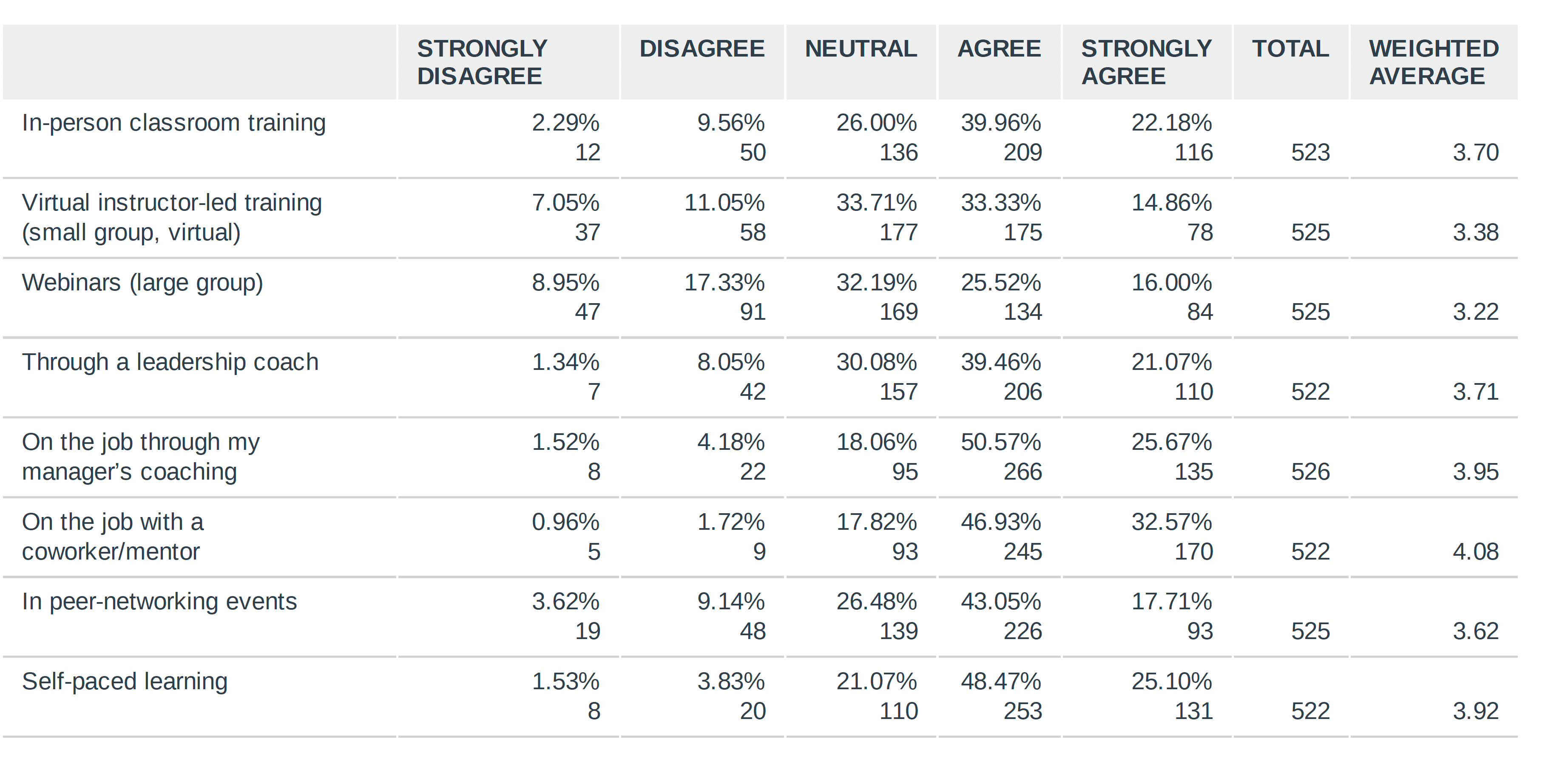
A mentor’s role is not only pivotal during career milestones; they also have an impact on day-to-day satisfaction. Research conducted by CNBC and Survey Monkey revealed some profound differences between employees who had mentors and those who did not. Of the 8,000 individuals surveyed in the Workplace Happiness Survey, 9 in 10 workers, 91%, who have a mentor are satisfied with their job, including more than half (57%) who are “very satisfied.” For those without a mentor, those numbers drop considerably. What’s more, GP Strategies’ research identified mentoring as the most helpful leadership intervention available according to our survey respondents.

Because of the impact a mentor can have on career advancement and the ability to navigate organizational dynamics, finding the right mentor in a senior-level position is a logical choice. But finding a mentor in the C-suite, or even close to it, isn’t as easy as it sounds. The scarcity of women in senior-level positions, a challenge that is even more pronounced for women of color, can make it hard to find a role model that feels relatable.

Reimagining the mentor-mentee relationship can create new possibilities for filling that pivotal function. Expanding the definition of the mentorship encourages individuals not to confine themselves to only executives, but to seek the type of influence a mentor can have from colleagues with commensurate or just slightly more experience.

Further expansion of the more traditional mentoring relationship includes the concept of reverse mentoring—relationships in which more seasoned workers equally benefit from learning about new technology or emerging ideas from their junior colleagues who may be better informed. Regardless of how you uniquely define your mentoring relationship, the key point is to find one, cultivate one, and let the connections you build help you to evolve and flourish.

Regardless of where your mentor sits within your organization, three elements are critical to ensure success:

  • Shared responsibility – Both the mentor and the mentee play an active role in constructing a relationship that is beneficial. The mentor is giving of their time, advice, and experience. The mentee is an active listener and is open to what they hear and learn from their mentor. Both are responsible for the success of the relationship
  • Mutual benefit – The mentee’s benefits in the relationship are clear: insight into the organization’s culture, network development, feedback, and self-confidence. The mentor benefits as well; they feel the satisfaction of helping someone else and are exposed to new ideas and perspectives that mentees can often bring to the relationship.
  • Relationship – At the core of the mentor-mentee relationship is trust and communication. Mentors who are accepting and nonjudgmental set a tone for a connection that allows the mentee to bring their true selves into the relationship and authentically gain advice and guidance. By being open to self-reflection and feedback and by applying the guidance received from their mentor, a mentee can establish a trustful relationship with their mentor, which generates creativity and achievement.

My mentor helped me in countless ways—offering her advice and industry expertise. She was able to suggest ways to navigate organizational challenges and advocate for me to others. She was a safe space for testing new ideas or discussing setbacks and failures—in many ways she was the ultimate “growth mindset” coach. And, finally, she enhanced my self-confidence by highlighting the strengths I was sometimes unable to recognize in myself.

National Mentoring Day provides an opportunity to stop, reflect, and thank the mentors who have helped countless individuals see the best in themselves and aspire to more. If you have a mentor who has helped shape your life, take a moment to thank them. And if you haven’t had the benefit of this unique type of support in your life, seek it out. Find someone to challenge you, as my mentor did. Find someone to share their experiences. Finding the right mentor for you will help ensure you’ll both reap the rewards.

About the Authors

Leah Clark
Leah Clark is the Leadership Practice Lead at GP Strategies, as well as an author and the founder of LeaderConnect. With over 28 years of experience in her field, Leah brings a unique perspective on the mindsets and skillset that are critical to leadership success to her coaching and consulting. Her clients benefit from her collaborative approach to crafting a well-connected and thoughtful leadership development strategy. Leah holds a Master of Arts; Organizational Psychology, Columbia University and a Bachelor of Arts; English and Sociology, Boston College.

Get in touch.

Learn more about our talent transformation solutions.

Transformation doesn’t happen overnight if you’re doing it right. We continuously deliver measurable outcomes and help you stay the course – choose the right partner for your journey.

Our suite of offerings include:

  • Managed Learning Services
  • Learning Content Design & Development
  • Consulting
  • AI Readiness, Integration, & Support
  • Leadership & Inclusion Training
  • Technical Training
  • Learning Technologies & Implementation
  • Off-the-Shelf Training Courses