The Future of Technical Learning is Changing

The technical learner of the future has a distinct advantage over those of the past: there are many, many more ways in which to absorb technical training. From chatbots to touchscreens to photorealistic and dimensionally immersive virtual reality simulations, the future for the technical learner is exciting.

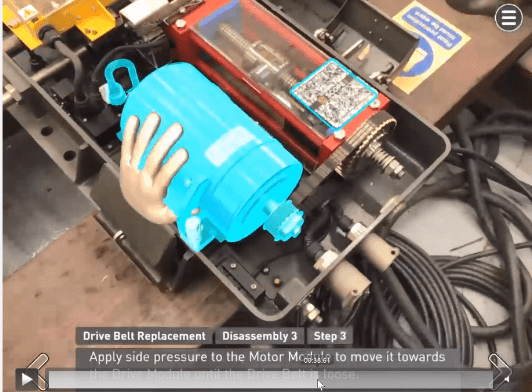
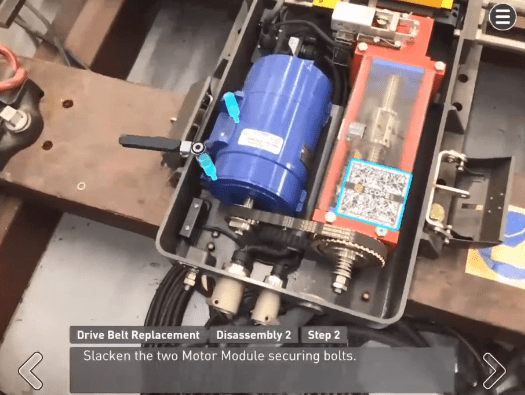
The very technology that makes this era of evolving training methods possible is also responsible for making them a necessity. In recent years, innovative technologies have been developed to increase supply-side, demand-side, grid, and storage flexibility. However, with each new piece of technology comes varying degrees of reeducation that is needed among the workforce. As we see virtual reality and augmented reality enter industrial markets, these new ways of technical learning should be adopted. For example, maintenance technicians can now use augmented reality to overlay “virtual tools” such as a wench or ratchet on top of real equipment to learn proper techniques.

Technical Learning 1

Technical Learning 2

Technical Learning 3

This technology can be combined with live chat, video, audio, and annotations to teach learners in real time and connect them with remote experts if needed. This is a new way of technical learning; one that can be easily integrated with realistic expectations and change management practices built in.

In general, learning has been steadily migrating away from the traditional classroom and toward leveraging technologies that allow the learning and procedures to be available at the location of the work and happen in real time.

Another new technology shortening technical workers’ learning curves is Interactive Electronic Technical Manuals (ITEMs). This next generation of technical documentation enables critical information to be available on all devices, from desktops and laptops to tablets and smartphones, and delivers content in an engaging manner. These interactive manuals combine a range of technical documentation and can incorporate features such as videos, animations, and augmented reality (AR) to simplify complex instructions or procedures.

The COVID-19 outbreak has further exacerbated the rate of technology implementation, with major plants recalibrating their technology to maximize the safety of their employees, their communities, and their customers. Prior to the pandemic, remote work was slowly expanding, accounting for less than 10 percent of the workforce. Futurists thought it would gradually expand, perhaps doubling between 2020 and 2030. However, today there are estimates that up to 30 percent of employees are now working remotely, and in the next decade, that number could climb as high as 40 percent. During the pandemic, things like virtual instructor-led training (VILT) are emerging as great options to provide workers the foundational knowledge and skills they need to perform on the job while keeping them safe.

Led by these major technological advances and spurred on by a workforce facing new health and safety challenges, large technical operations all over the world are choosing to take advantage of these new opportunities to provide their learners with cutting-edge training tools.

Here at GP Strategies, we have been partnering with organizations of all shapes and sizes to evaluate their technical training challenges and to tailor safe, effective, and forward-thinking solutions to fit their needs. All over the world, organizations are finding that implementing these new training technologies, as well as implementing consistent training as a key part of their asset management life cycle, is saving them millions during turbulent times.

Reach out to us today if you would like a technical learning consultation.

About the Authors

Craig Dalziel
Growing up in southern Ontario, Canada, I was not unlike thousands of Canadian children who played hockey. Although a bit of a cliché, hockey to Canada is like football to America. I realized early on that the best hockey players, like all top athletes, had more than just natural talent. They were inspired, had the drive, and brought the passion and discipline to achieve excellence. I won’t be too modest to say I had some natural talent, but I understood that was not enough. And so I looked to those leading players to model success. I learned that I needed to train hard, set targets, outthink my competition, and look for new ways to improve. Like many Canadian children, I dreamed of a career in the NHL, and although I played some high-level junior hockey, I didn’t make the big leagues. But, I enjoyed some victories and have life-long friends who I still play hockey with recreationally, 20 years later. I’ve carried this passion for performance excellence to both my career and to my role at GP Strategies, helping clients achieve business excellence. Much like an athlete, we help clients train to be their best. But we really need to go beyond that to help our clients “make the big leagues.” We take a holistic view of an organization and find ways to improve performance by assessing gaps, benchmarking against the elite, overcoming obstacles, uncovering competitive advantages, and implementing best practices. It takes discipline, perseverance, and dedication to achieve success. As Wayne Gretzy, nicknamed “The Great One,” said, “A good hockey player plays where the puck is, a great hockey player plays where the puck is going to be.” That’s how I think of my client relationships. My job is to help them get to where the puck is going to be. --------------------------------------------------------------------------- Craig Dalziel is a Sr. Director at GP Strategies Corporation.  For over 20 years, Craig has been helping companies improve performance of their technical assets through Asset Performance Management, Operational Excellence, and Workforce Performance Optimization solutions.  Craig oversees GP Strategies’ global business development team focusing on technical performance services across multiple market sectors including power generation/transmission/distribution, oil & gas, manufacturing, food and beverage, pharmaceuticals, and other process industries.

Get in touch.

Learn more about our talent transformation solutions.

Transformation doesn’t happen overnight if you’re doing it right. We continuously deliver measurable outcomes and help you stay the course – choose the right partner for your journey.

Our suite of offerings include:

  • Managed Learning Services
  • Learning Content Design & Development
  • Consulting
  • AI Readiness, Integration, & Support
  • Leadership & Inclusion Training
  • Technical Training
  • Learning Technologies & Implementation
  • Off-the-Shelf Training Courses


Q&A Interview: Addressing Personal Microaggressions and Personal Bias

Whether or not we’d like to admit it, we all carry bias. Built initially as a product of our instinctive fight, flight, or freeze responses, our biases evolve over time as we are influenced daily by our experiences, family and friends, media, and the world around us. As adults we can become less aware, or unconscious, of our own biases, which can create unintentional discriminatory responses toward others, also known as microaggressions. Bias and microaggressions occur everywhere, even in the workplace. Our consistent goal is to uncover our biases and move to change them, and in turn, reduce the potential for microaggressions. Are we ready to courageously and honestly confront our biases?

In a recent panel discussion on Addressing Microaggressions in the Workplace, we interviewed three industry leaders to gain insights on their experience and explore:

  • Types of bias in the workplace and how leaders can increase personal bias awareness
  • Common microaggressions and how leaders can address them
  • The concept of intent versus impact and how it relates to equality, equity, and liberation
  • Tools to reduce bias to create inclusive environments

During the session on addressing microaggressions and personal bias, we had a lively and engaged audience and several questions came up that we didn’t have time to answer. Below are those questions and thoughts from our panelists, James Garza, Diversity & Inclusion Learning Consultant for GP Strategies, Demetriouse Russell, CEO of Venn Diagram Partners, Frank Lewski, Leadership Development Consultant and Coach, and Stace Williams, Founder of InterActive Dynamics:

Q: What does positive bias mean?  What should someone respond to positive bias?  Isn’t it a good thing?

JG: Positive bias could also translate to privilege.  Essentially it stems from some part of your identity being seen as safe, trustworthy, or familiar, without any factual evidence or personal experience to support it.  And then, you benefit as a result.  So, it can be a good thing just in relation to you, but if it is enabled within the context of comparison to another, where negative bias occurs for them against positive bias for you, then it is not a good thing.  This is the injustice that we are trying to combat.

FL: As James mentioned in the Webinar, a bias is typically unfounded or presumed, and is based on stereotypes and implicit associations shaped by others or generalizations.  By this definition, a bias can either be negative or positive.  As a straight, white, non-disabled, male, I have become more and more aware of positive bias directed to me.  In my experience, a positive bias, and its negative consequence, often comes in the form of the “halo and horns” effect.

Let me give a few workplace examples that have happened numerous times over my career…

  • When entering a meeting, joined by a female colleague, with clients we’ve not met previously, I have experienced clients assuming I was the “boss” or held a more senior position than my female colleague – – and that was not the case.
  • When co-facilitating a workshop, with an African-American colleague, I have been in the back of the room, while my colleague was leading a discussion in the front of the room, and participants will turn-around and address their questions to me – – with no evidence that I would be able to provide a more informed response.
  • I’ve been in a corporate leadership role, and been given “accommodations”, without even making a request (such as “better” office furniture, support from an assistant, etc.), while employees with disabilities had to go to extreme measures and high-level of approvals to get “accommodations” that would support their ability to perform work.
  • I’ve been in hiring and talent development conversations where co-leaders make pre-judgements that an employee of Asian background would “obviously” be a “better” choice for a technical role, with no particular facts to back up the assertion.  (Note: This bias is often accompanied with a negative bias that the same individual would not be a good choice for a management position.)
  • And… here’s a very personal example… When my wife and I had our first child, we decided that we would both move into a part-time work arrangement, so that one of us could always be home with our baby daughter.  (Pause – – check-in on your own reaction as you just read that sentence.)  At the time, we worked in different functions in the same company, had similar roles, and were both viewed as “high-potentials”.  We were glad that the company’s HR policies were “progressive” enough to allow for the arrangement.  The reactions from our leaders and colleagues were very different.  The reaction I got was that I was some sort of hero – – a very forward-thinking, sensitive man – – someone who would make a great leader.  I was even asked to go on a speaking tour, across the company, to share my story as an example of creative work-life balance.  To the contrary, my wife received “advice” and “warnings” that she needed to understand that she was putting a hold on her career, and that her opportunities for promotion would be re-evaluated when she returned full time.

So… how should someone respond to positive personal bias like the examples above?  First of all, it’s to be aware enough that it’s happening.  That may be a huge step for someone who has “always” been on that “positive side” of bias.  Then, it’s about acknowledging the inequity of the bias.  That could take the form of “calling it out” or taking some action to balance the playing field.  In my example above, about working part-time, I have to admit, it was my wife who made me aware of the inequity.  Once she did, I used the platform of the speaking tour, without publicly “naming names”, to tell the “whole story.”

Q: ­Any advice on how frontline leaders can model inclusion and cultural humility, and promote behaviors that engender the trust required for strong teamwork?­

JG: Storytelling is a great skill that leaders can use to create an environment of inclusion and belonging.  It also allows leaders to share aspects of their personality and history appropriately while creating connection.  Leaders can cultivate storytelling across the team so that each team member is allowed the space and time during interactive moments to also share parts of themselves.  Again, it is about curiosity.  How can I stay curious about this other person?  Over time, we will see that we are often more alike than we initially thought or have similarities that might surprise us.  When we can connect on that human level frequently, then trust will follow.  So, a simple tool like storytelling can make all of that happen.

FL:  Remember the old “form, storm, norm, perform” model of how teams develop?  In my experience, the “storm” has always gotten a bad rap and is often short-changed (or “wished away”) by frontline leaders of teams.  The “storm” is actually where the work of diversity, inclusion and equity can best be promoted on a team.  After the team has completed forming (e.g. clear about its mission, objectives and who is on the team), storming is where a team leader can explicitly facilitate the team to openly discuss their differences – – What does each member uniquely bring to the team based on their background and experiences?  Storming is also the time where the leader sets precedence for how the team can have inclusive discussions and decision-making – – this can be done by setting inclusive team ground rules, and, more importantly, actually following those ground rules.  Done well, the energy of the storm can be productive (inclusive and trust-building), rather than destructive (exclusionary, silo-creating, and trust-breaking).

Q: ­How do you address D&I and all things related with a senior leadership team that does not want to take it on? They would prefer to continue “business as usual”.­

JG: Numbers and data matter to those that manage the bottom line most.  Work to find ways to get the data that supports D&I initiatives in front of those senior leaders, while also bringing in the human element through the voice of the employee, focus groups, articles with human stories, etc.  Map out a plan of implementation to start diversity and inclusion efforts, start small and grow.  We can often make a difference as a single voice, but often wait for large scale permissions before we take that action.  Be mindful and responsible to your role and internal protocols but get creative.  Find leaders in the organization who will sponsor the cause and gain allyship with your peers.  It is hard work sometimes, but change like this takes time, because we are asking people to analyze their full selves.

FL: This is a tough one to answer in a generic way.  It all depends on where the “resistance” is coming from – – why do they not “want to take it on”?

One reason could be that they do not see the business benefit of taking on such a challenging topic – – that, in their view, there are more downsides than upsides.  If that’s the situation, then the “classic” answer would be to make a business case.  There is a ton of research that can be drawn upon to make this case.  In my experience, going that direction is a tough route – – senior leaders can be very skilled at pushing back on numbers that don’t fit their viewpoint.  It can be more powerful if you have evidence (even if it’s qualitative) from your own organization/company of the benefits of D&I and/or negative consequences of not addressing it.

I think the tougher situation is if you have a senior leader or collective senior leadership team who are ideologically opposed to the premise of D&I.  When this is the case, the result is often a cursory coverage of D&I in corporate values statements, without any real investment or actions in making it real.  Other than a Board deciding to make changes, getting real commitment to D&I may require mindset-shifting development & experiences for the senior leaders.

The most common scenario, in my experience with senior leadership teams (as with the general employee population, and society as a whole), is a combination of the two situations above, along with an often silent minority of senior leaders who are actually advocates of D&I.  In this case, the leverage may be in facilitating those voices (along with other influencers in the company) to no longer be silent.

Q: So a number of female sounding names have shared a similar experience – being told to communicate differently.  Is this just a female experience or have any males also had a similar experience?

JG: Historically, this has been an unfair response to women that are assertive but seen as bossy, passionate, but seen as emotional, and empathetic but seen as passive or weak.  What is typically seen as positive presence for men is translated differently for women.  It is a pervasive problem that we must constantly work to dismantle.  Sometimes men can have a similar experience when another aspect of their identity is brough into play.  For example, an African American man may be asked to calm down or play nice so as to not be seen as threatening, or a gay man can be advised to act more masculine so as not to make others feel uncomfortable.

FL: Yup… I’m a male and heard that feedback growing up (I’m 61 now, so that was some time ago), and occasionally throughout my career.  I am an introvert (tend to listen and think through my thoughts before speaking), typically soft-spoken (not a loud, booming voice), and have been known to publicly shed a tear-or-two when something has touched me.  So… growing up, my male “mentors”, particularly my father and sports coaches, were clear to me that this communication style was not going to “cut it” if I wanted to be successful.  And, also growing up, often coming from peers, I would hear various forms of “stop being such a girl” or “are you gay or something” (although a more pejorative term was typically used instead of gay).  I heard similar “corporatized” versions of that feedback, occasionally, early in my career; although I would have to say it’s been rare in the last 20-25 years (or I just don’t pay attention to it anymore).

The bias that’s behind this feedback is that the best way to communicate and the best way to be heard is with a strong, loud, confident (even when you’re not), lean forward kind of way, where the only “allowable” emotion would be anger (which is interpreted as “passion”).  This is a particularly western cultural bias, not so true in many eastern cultures.

Now, I believe that bias has tempered a bit (in the past 20-25 years), at least in some corporate settings, as it’s been applied to males.  The concepts of vulnerability, compassion, and empathy have become a bit more acceptable for, and even “taught” to, males.

So… to come back to the female side of this story… I believe it’s true that women in corporate roles are often the target of that same original bias.  The difference is this… Much like when I was growing up, women may be told that they need to communicate differently in order to be heard.  But… something different happens if they do…  When a woman raises her voice, takes a firm stand on her opinion, shows some anger, she’s often not viewed as a passionate, confident leader, but rather the “b-word”.  So… it can be a no-win situation.

I think the corporate world is slowly shifting on this particular bias.  I discuss it often with my wife who has also been in and around the corporate world for the last 40 years, and my daughter who has joined it more recently.  I hope so.  Maybe my 1-year old grand-daughter will have a different experience.

Q: Do you feel the word “microaggression” masks what it really is – and that’s racism?  Racism needs to be addressed and calling it a microaggression seems to make it easier to do.  What are your thoughts on that?

JG: Yes, a microaggression can be rooted in or totally align with racism.  But not all microaggressions are about racism.  They can also be the result of bias related to gender, sexual orientation, socioeconomic status, education, religion, etc. However, if a behavior is racist, let’s call it that.  Look into Ibram X. Kendi’s book, “How to be an Anti-Racist”.  Professor Kendi offers insight that will help anyone understand how to get a foot in the door with these types of necessary conversations.

FL: A couple of thoughts… The first is that a microaggression is driven by a bias that could be related to any identity/characteristic – – race, gender, age, sexual orientation, religion, etc.  And… a microaggression is an interpersonal act (one person to another) that leaves the receiver feeling othered.  Racism, and all of the other ism’s, is a systemic issue – – also originated in bias, but manifested in a pattern of microaggressions and micro-inequities, with structures, policies, practices, etc. that result in power and privilege for one group and oppression of another.  So… I believe a racial micro-aggression is a subset of the broader issue of racism.  Said another way, dealing with racial microaggressions is a positive move, but it does not fully address the broader, more complex issues of systemic racism.

Q: How do you distinguish between a microagression and a simple mistake?  What are the differentiators?

JG: A simple mistake and a microaggressions can be the same thing.  Often times, due to our unconscious bias, a microaggressions is a mistake.  There is a difference between a malicious act, done on purpose and a moment of ignorance or jest, that still causes harm, but didn’t come with the intent to do so.  This is where intent and impact really play a part in helping someone understand that we can call a behavior or an action a mistake, but that doesn’t mean it isn’t also a microaggression.  And leaning on Maya Angelou’s quote, but paraphrasing, when and if we know better, then we must do better.  This is where we start to understand that mistakes still require responsibility and accountability, especially if they are also a microaggression.  Ultimately one of the biggest differentiators is what is the recipient calling it?  Do they see the interaction as a simple mistake?  Calling something that someone sees as hurtful (impact) a simple mistake (intent) can come across as an excuse.  The best thing we can do is own it, stay open and honest, and then work to keep it from happening again.

FL: From the viewpoint of the receiver at the moment of the microaggession, there really is no difference.  In the webinar, we talked about the dynamic of intent vs. impact, and it’s the impact that lands on the receiver.  When a “microaggressor” defends their behavior as a “simple mistake”, the impact is often heightened.  If, instead, the “microaggressor” takes responsibility for their behavior, seeks to understand the impact of that behavior (which could include a meaningful conversation with the other person), and takes steps to learn from the situation, then trust can be built in the relationship.

Remember the example Stace gave in the webinar about the person wearing boots stepping on the person wearing sandals?  Even when there is an environment where CARE and trust exist, there still may be times where people “step on toes” (by mistake or accident or circumstance).  But, in a safe, inclusive environment the conversation might sound something like… “You know you just stepped on my toes.  I was wearing sandals and you were wearing boots.  And, it really hurt.  In fact, I think my toe might be broken.”  And, the response would be… “Oh my.  I’m so sorry.  I’m going to make sure that doesn’t happen again.  What can I do to help with your toe?”

I know that sounds overly simplistic.  But, play around with the conversation.  Substitute an example of a microaggression, and listen to how it could play out for both sides of the story.

Q: Can I have the details mentioned in each category of the care model?

JG:

C stands for curious, staying interested in the other person while we work to suspend judgment.  Care might sound like, “Can you tell me more about how I made you feel excluded?”

A stands for Authentic, showing up as the best version of yourself every tie.  Authentic might sound like, “It is never my intent to make you feel this way.  I can see how my joke was not appropriate.”

R stands for responsible, taking responsibility for our impact, regardless of intent.  Responsible might sound like, “I am sorry.  Thank you for helping me become more aware.”

E stands for expand understanding, remaining humble and open to learning and growing even more.  Expand understanding might sound like, “How can I do better moving forward?”

Q: What in your experiences does the culture / climate need to look like to encourage and support use of the CARE model?

FL: One where there is equal value placed on results and relationships; company success and every individual’s success; difference and commonality.

Q: How can you have honest conversations without fearing for your job?

JG: Fear of losing your job over having a meaningful, necessary conversation seems illogical, but it is a real concern for a lot of workers.  I would first work to identify what is driving the fear, find the root cause.  Once you can uncover that, then work to see what safeguards can be put in place to reduce that fear or worry.  For example, if the fear is that your words will be misconstrued or retaliation will result from the conversation, ask to have an HR representative or a trusted, neutral leader to be part of the conversation.  If the fear stems from possibly saying the wrong thing and making the situation worse, then script out your discussion and practice it with someone you trust, whether at home or at work.

FL: If you are in an environment where that is the reality and/or a strong perception of the reality, then safe, confidential forums and vehicles need to be created for these conversations to take place.  And, policies and practices need to be created, communicated and followed that clearly explain what behaviors are expected vs. what behaviors could cost you your job.

One tricky part of this question is in the context of peoples’ learning and growth in the area of D&I.  Some of the most powerful learning experiences I’ve been a part of (as both a participant and facilitator) have involved very open forums where participants share their experiences and beliefs.  This could include stories from both sides of a microaggression.  At times, that means a person experiencing a microaggression could feel threatened for speaking up.  Or, the flip-side… a microaggressor might speak about one of their personal bias’, or it emerges out of the unconscious during the discussion – – and, it could be “ugly”.  In the context of a developmental experience, this can result in some very deep and meaningful personal growth.  None of this will happen if there is a fear that these stories will be repeated outside of the developmental experience.  So… great care (and CARE) needs to be taken in the design and facilitation of these types of sessions.

Q: You were ‘othered’ by someone in the leadership role, how do you bring that up and talk to them without feeling like you are rocking the boat too much and are a troublemaker.

JG:  Sometimes we have to get into what the late John Lewis calls “good trouble”, because being othered deserves an honest, direct conversation.  If we make someone uncomfortable, that is ok.  That is part of the process sometimes.  Our hope is that the other person will come to the moment with us with an open mind, a kind heart, and humility.  We know that isn’t always the case.  One of the ways we can get people to come to the table is to plan our approach, so that we can stay hyper focused on our goal without getting caught up in tangents, deflecting, or even emotions, despite our emotions being valid.  For addressing microaggressions, we can use the Fact and Impact tool.  Here is the breakdown of the tool with a gender bias moment example.

  • What was the statement/action?
    • Ex: “John repeatedly interrupted me when I spoke during the meeting.”
  • What assumption, stereotype, or belief might have prompted that statement/action?
    • Ex: Men are better at business and thus generate better ideas than women.
  • What message about me or my skills did it imply?
    • Ex: My skills, knowledge, and contribution are not valued.
  • What did I feel?
    • Ex: Hurt, angry, and insignificant.
  • How did it affect my behavior?
    • Ex: I stopped sharing ideas during meetings and now only submit them in writing to my manager.

Answers to the questions, are a great way to then shape a simple message to that person.

FL: Well… the greater responsibility for this, to not go in that direction, falls squarely on the leader.

But, that said, I think there are several questions/factors to consider.

  • So… to start with… if the ‘othered’ feeling includes a concern of physical harm, abuse, discrimination, harassment, etc., then you have every right to seek other support rather than addressing the situation directly with the leader.

If it does not fall into the above categories, then here are some other considerations:

  • What is your relationship with this leader – – what is the level of mutual trust? If it’s very low or non-existent, then, certainly the risk is higher.  In this case, you may want to consider seeking advice/information, from someone you trust, who knows this leader better than you do.  This additional background could help you define how best to address the leader, if at all.
  • If you choose to talk to the leader, consider using the “classic” best practices for delivering feedback – – make sure you are “grounded” before meeting with the leader; choose a private place for the conversation (in-person is best if possible; video-conference is second-best); ask the leader if they are willing to hear some feedback; state your authentic reason for giving the feedback; make a concise statement that includes the specific behavior/action of the leader (as if it were on a video-camera; not an interpretation), the impact it had on you, and how you felt in that moment. Then, and this is critical, pause.  Let the leader react, and hopefully, they will be curious and want to understand more.
  • If you deliver the feedback as described above, and the leader has a defensive response, you can acknowledge that it might have been difficult to hear, but you don’t need to apologize for giving the feedback. If they have an “offensive” response, then start back at number 1.

All of the above could be useful in addressing anyone who has “othered” you.  The extra “challenge” is the power difference (real and perceived) of the person being in a leadership role – – power that could be used for retribution.  So… my overarching advice for the situation is to follow your heart and take care of yourself.

Q: What can one do when your manager says you need to change the perception of yourself with no examples or why?

JG: We all want and sometimes need examples when we are told that we need to change our behavior.  Examples give us context.  If your manager is asking you to change and not providing examples regarding why, then seek feedback elsewhere.  Take what your manager is saying, stay open to it, and then evaluate its merit with people that you trust that will also tell you the truth.  If after seeking more feedback, you are able to find a connection to your manager’s feedback, then you can start to work on a plan to address it.  If you don’t find alignment, then keep the feedback in mind, and stay responsible to self-reflection or a pulse check on that feedback moving forward.

FL: So, I could see a few possibilities…

  • (I’m assuming you’ve done this one already.) Ask your manager for examples and why.
  • Based on what you know about this manager, what do you think is behind their need for you to change the perception of yourself. Given this question was asked in the context of the “Bias and Microaggressions” webinar, do you believe your manager is acting on a bias they hold?  If so, do some more exploration – – pay attention to other ways this manager may be demonstrating this bias.  If you see/hear other examples, and certainly if it’s playing out as a microaggression, then you may want to take some of the steps outlined in the previous question.
  • Ask a trusted colleague what they think it means.
  • If you have no interest in making a change in the perception of yourself, then consider just ignoring the comment, and moving on.

About the Authors

GP Strategies Corporation
GP Strategies is a global performance improvement solutions provider of sales and technical training, e-Learning solutions, management consulting and engineering services. GP Strategies' solutions improve the effectiveness of organizations by delivering innovative and superior training, consulting and business improvement services, customized to meet the specific needs of its clients. Clients include Fortune 500 companies, manufacturing, process and energy industries, and other commercial and government customers.

Get in touch.

Learn more about our talent transformation solutions.

Transformation doesn’t happen overnight if you’re doing it right. We continuously deliver measurable outcomes and help you stay the course – choose the right partner for your journey.

Our suite of offerings include:

  • Managed Learning Services
  • Learning Content Design & Development
  • Consulting
  • AI Readiness, Integration, & Support
  • Leadership & Inclusion Training
  • Technical Training
  • Learning Technologies & Implementation
  • Off-the-Shelf Training Courses


Beginning Your Journey: Migrating From SAP On Premise to Employee Central in the Cloud, Part 3

This is a follow up to part 2 of my series. If you haven’t read it yet, you can do so at the following link. Part 3 will address some of the advanced integration tips and tricks to allow you to replicate data from Employee Central back to your SAP on-premise environment using the Business Integration Builder framework.

In the previous blog post, we covered the basics of the Business Integration Builder (BIB) framework and how to map SAP infotypes against Employee Central (EC) objects. In this post we will dive deeper into some of the configuration options and how to handle more complicated mapping requirements that are frequently required in implementations. Many times, mappings between the two systems will not be a 1-to-1 association. A single field in EC may map to multiple locations in SAP, or require logic to parse or convert the value in EC to the corresponding SAP value. There are also commonly different object types for portlets in EC that need to map to subtypes of infotypes in SAP, thus the mapping must be reused for each subtype. We will cover all these scenarios in this post. The assumption for this topic is that you have a basic understanding of BIB mapping tables in the IMG. If you aren’t yet familiar with BIB mappings, you can refer to the previous blog post for a quick overview.

In the first scenario, you have one EC field that needs to map to more than one field on the SAP system. In this case, you can map one of the SAP fields directly to the EC data element, and you must use a Generic Value Conversion on a different unmapped EC field to map the same component to the second SAP field. Let’s use an example where a single Employee Subgroup field in EC must map and set values for both Employee Group and Employee Subgroup in SAP. First, map the EC subgroup field directly to the SAP IT0001-PERSK field. Note that we have included a value-mapping entity to convert the EC values to the SAP employee subgroups. This is a normal BIB mapping with a value mapping in place that you should already be familiar with. Note that EC field 56 is the Employee Subgroup field; you will need this later.

Below are sample value mappings for this field from EC back to SAP.

Next, map to the SAP Employee Group field using a Generic Value Conversion rule. To do this, you must select an unused mapping field from EC. This should be a field that you will never map to SAP in the future (Changed On, Changed By, Created On, Created By, etc.). In our example, we aren’t using Employment Type from EC in any mapping to SAP, so use that as your dummy mapping field and then overwrite it. Note that if you specify a Value Mapping Entity here, it will get applied to the value you set in the Generic Value Conversion rules after all the rules have run and values have been replaced, so you can remap the output of the rules using the value map here if needed.

Now, click on the Generic Value Conversion section in the left menu to remap the SAP EE group based on EC field 56 (EE Subgroup). Here you have specified the conversion rule “Check and replace,” which looks at another EC field, checks the value against parameter 1, and if they are equal, sets the value of the infotype field from the screen above (IT0001-PERSG) in the mapping to the value in parameter 2.

As you can see, we have mapped the value conversion to EC field 56; it is checking the subgroup IDs in that field against parameter 1 and mapping them to corresponding SAP EE group IDs in parameter 2. In this example, if field 56 has a value of EE_1, then the mapped value for IT0001-PERSG is 5. This trick allows you to bypass the fact that field 56 can normally be assigned only to a single SAP infotype field, and reuse it to map to multiple places in SAP. Similarly, you can identify country-specific value conversions using the “Country Specific Value Conversion” section on the upper left menu. The only difference between Generic and Country Specific is the inclusion of the Country Grouping column in the configuration that allows you to specify rules by country; all other columns are the same.

The second scenario uses value conversion rules to parse the value in the EC and extract a portion of it as the SAP value for the infotype field. The example shows the value conversions for pay scale group and level on SAP infotype 8. We will use the same approach as in example 1 to map the same pay scale field in EC to both SAP infotype fields. The difference is that both will have value conversion logic to parse out their respective components of the pay scale. First, map the EC legacy pay scale field (EC field 130 in this example) directly to IT0008-TRFGR for the pay scale group.

In the Generic Value Conversion section on the left menu, we have specified a processing sequence for the parsing. In this scenario, data is in the following format: <PS Type> – <PS Area> – <PS Group> – <PS Level>. Each pay scale attribute is separated by a dash – character (for example, NA-US-GRD11-03 where NA is the pay scale type, US is the pay scale area, GRD11 is the pay scale group, and 03 is the pay scale level).

As shown, there are three rows in the sequence with three Split rules. The first two split rules are to grab the data after the string/character in parameter 1. The third split rule is different; it specifies to grab the data before the string/character in parameter 1. This allows you to:

  • Strip off <PS Type> from before the dash with the first split rule.
  • Remove <PS Area> with the second split rule.
  • Grab the data before the dash with the remaining <PS Group> – <PS Level> data format using the third split rule.

These steps leave you with just the value in the <PS Group> spot in the ID format.

Similarly, we will map the pay scale area field using Generic Value Conversion rules. First, map the IT0008-TRFST field to the EC Field “Created On” that is not used in any mappings and never needs to be.

The value conversion rules are similar to the pay scale group. The main difference is that we start with the value in the legacy pay scale EC Field (field 130) and then use similar split operations to parse out the <PS Level> component.

The first rule is “Replace with string/EC field,” where we specify that we really want the value from EC Field 130 in this mapping, not the value from EC Field 32 “createdOn.” In the second rule, we perform the same split operation that we had in the previous field example, parsing out the <PS type> component. The third rule is also a split that parses out the <PS area> component. And finally, the fourth rule is also a split operation, but unlike the previous field where we did a split before the string/character in parameter 1, we are instead doing another split after the string/character in parameter 1. This gives us the remainder of the string, which would be <PS Level> data we are looking for. This type of parsing logic is useful when using the BIB framework to allow for calculated fields to be mapped using only configuration without the need to code and maintain the same logic in a BADI.

Our final example is mapping portlets that can have more than one record at the same time in Employee Central with a record type field indicating what kind of data record it is. Examples of this include Phone numbers/phone types, Addresses/Address types, Bank Accounts/Bank types, and Email Addresses/Email types. These portlets in EC can have multiple entries with a type field that indicates what kind of phone (home/cell), address (home/mailing), bank (main/expenses), or email (work/personal) is being stored. These structures tend to store the same fields no matter the type of record it is, and they correspond to an infotype/subtype combination on the SAP system that needs to be mapped to BIB. This is done using infotype cloning configuration in the framework.

First, create a transformation template for the EC entity you are trying to map multiple types for. In our example, we will do this for the PerPhone entity in Employee Central.

Now that the WS_8 template has been created in the template group, go to the IMG and specify the infotype and subtypes to clone. Under Employee Data Integration is a subfolder called Clone Transformation Templates. In that folder are two configuration options. Either define the infotype cloning configuration globally using the first IMG entry or per country using the second IMG entry. The second option is useful when you have certain countries that use different subtypes than the rest of the world within SAP, allowing you to configure a different subtype list for that country and letting the rest of the world use the global cloning configuration.

The example below specifies that PerPhone will map to infotype 0105 with five different subtypes that are possible. Every subtype here will be evaluated by the mapping and the BADI logic to determine if it has data to feed to SAP. Note that you can specify only one infotype number per transformation template that is cloned. You cannot clone another infotype along with 0105 in this template due to this limitation.

Now that we have specified the subtypes to clone the configuration for, we need to specify the fields that are being mapped and cloned in that WS_8 PerPhone template. Go back to the field mapping configuration Primary mapping; the subtype field is now grayed out because you specified the subtypes that are valid in the cloning configuration earlier.

In the example, we are mapping the USRID_LONG and the USRTY fields. The Phone number can be mapped directly to the data field (USRID or USRID_LONG for this infotype). Include the mapping from Phone Type in EC to the USRTY field, which is the subtype field for infotype 0105. This is what tells the BIB mapping that this particular phone type in EC maps to a specific subtype in SAP from the list specified in cloning. Below is the Primary Mapping entry for this field.

Note that a value mapping entity is included here; this allows us to map the EC phone types to the corresponding SAP subtype from our cloning list. We have every EC phone type listed in the EC Key and the matching SAP subtype on the ERP Key column.

This allows the system to match up the EC portlet types to SAP automatically and generate only the infotype/subtype records in SAP that have matching data in EC.

Conclusion

In summary, there are many options for mapping more complicated data transformations from Employee Central back to SAP using just the standard BIB mapping capabilities. The Generic Value Conversion functionality is especially helpful for calculating fields and mappings via configuration without the need to write ABAP code in a BADI. Cloning configuration allows you to use one set of field mappings for multiple infotype/subtype combinations, greatly reducing the amount of configuration and maintenance required in the replication.

The next entry in the series will be the setup of Cloud Platform Integration (CPI) and how to configure the connection from SAP to your CPI instance. If you have questions or need assistance with your company’s BIB configuration, feel free to contact me at mwhite@gpstrategies.com.

About the Authors

Michael White
As Director of SAP Technologies for GP Strategies’ Human Capital Technology Group, Michael is responsible for managing the technical resources that perform development and integration work in and out of both the SuccessFactors cloud solutions and the SAP ECC software platform. He has been working with SAP software since 2006 in a wide variety of roles ranging from Solution Architect all the way to Software Developer. This gives him a unique understanding of the SAP architecture from both a functional and detailed technical level and enables him to both understand the needs of the customer and immediately assess how the system can or cannot meet those needs. Michael holds a Master of Science in Computer Science and a Bachelor of Science in Computer Science from the Georgia Institute of Technology. He has also presented at multiple SAP Insider conferences in both the USA and Europe as well as the Houston ASUG conference.

Get in touch.

Learn more about our talent transformation solutions.

Transformation doesn’t happen overnight if you’re doing it right. We continuously deliver measurable outcomes and help you stay the course – choose the right partner for your journey.

Our suite of offerings include:

  • Managed Learning Services
  • Learning Content Design & Development
  • Consulting
  • AI Readiness, Integration, & Support
  • Leadership & Inclusion Training
  • Technical Training
  • Learning Technologies & Implementation
  • Off-the-Shelf Training Courses


Beginning Your Journey: Migrating From SAP On Premise to Employee Central in the Cloud, Part 2

This is a follow-up to my previous blog post. If you haven’t read it yet, you can do so at gpstrategies.com. Part 2 will address the integration functionality available to migrate your data to Employee Central or transfer your cloud data back to your SAP on premise environment.

As I mentioned in my previous blog post, there are two approaches to maintaining your employee data. “Core Hybrid” is where your entire population is live on Employee Central and you only need to send changes back to the SAP on premise environment. This requires an initial data load into EC, but only one direction of integration for subsequent employee data changes. Alternately, “Side-by-Side” is where part of your population is live in Employee Central and the rest retain SAP as the system of record. This approach will require ongoing bidirectional integration.

The good news is that no matter which integration approach you choose, the newest Business Integration Builder (BIB) framework available with the “SAP and EC integration add on 3.0” allows you to configure both directions in one location. It provides the easiest and most reusable platform to facilitate EC and SAP data transfer. Let’s dig into its advantages versus the previous integration framework.

Advantages of Business Integration Builder (BIB)

  • The SAP infotype mapping can be done mostly via a configuration table tying fields from EC to corresponding infotype/subtype/field combinations

– This means you can map and update infotypes via configuration that required ABAP development under the previous framework

– Repeating structures like infotype 41 and time constraint 3 infotypes are included in this configuration

  • Value conversion can be easily added to a configuration table that is tied into the EC to SAP mapping and can be reused for similar fields in different configuration mappings
  • Value mapping conversions can also be reused between the transfer of data to Employee Central from SAP as well as the transfer of data to SAP from Employee Central. They are designed to be reversible for exactly this purpose. This was not the case in the previous framework.
  • Mappings for Action/Reason dynamic determination can be done entirely via BADI, including dynamically remapping the Hire/Rehire actions and reasons. This was not previously possible as the BADI was not called until after the hire action/reason mapping.
  • All data sent in the replication to SAP is available in all Infotype BADI mapping calls, so you can easily grab any of the EC data sections from the EC Payload to evaluate and dynamically map fields. Previously, not all of the replication data was available when trying to perform BADI mappings.
  • All infotypes share the same BADI call now instead of three different BADI sections depending on which infotype you were processing. This makes it easier to track down code updates/issues and provide a consistent look and feel to all infotype mapping logic and coding structures.
  • Any mapping configured to a component of the compound employee API now will automatically include that component in the query to Employee Central. Previously, the list was statically defined in Boomi/HCI and was not expandable.

As you can see, this gives you the most configurability before you must start developing ABAP code to map and update infotypes. To illustrate this, see the example job information mapping below. It shows how easily the EC data structure can be mapped to many infotype/subtype/field combinations in a single configuration table.

Example Job Information mapping in Business Integration Builder

If a field needs a value mapping conversion, it can be plugged into one of the rows of the table using the Value Mapping Entity field in the details as shown below.

Example mapping for Event Reason using Value Mapping to the MASSG field in SAP

You can also click on the Define Value Mapping Entries button from that configuration screen to go directly to the value conversion configuration table. It allows you to define both the EC and ERP keys for the mapping.

Example Event Reason mapping table showing both the ERP and EC key values that can be used to integrate in either direction

The fact that the same mapping structures can be reused between the outbound and inbound integrations allows you to minimize the amount of rework that occurs if the mapping requirements change. Additionally, since the query for the compound employee API from Employee Central for the replication back to SAP is dynamically generated based on your mapping configuration, you can query components of the API that were previously unavailable by including them in this configuration framework.

An additional capability of BIB is to allow both CSV (Comma Separated File) and web service-based integration. When configuring your transformation template group, you can specify if it is a Web Service or CSV file-based transfer.

Once your mapping is defined, the extraction of Employee data from SAP is done using the standard extraction program ECPAO_EMPL_EXTRACTION, where you select the mapping template group and file or web service transfer.

The import of data from Employee Central into SAP is done via the import program ECPAO_EE_ORG_REPL_QUERY, which will query the compound employee API to pull employee data from EC and load it into SAP based on the template group mappings.

In summary, no matter if you want to send data from SAP to Employee Central or if you are replicating data from Employee Central to SAP (or both), the Business Integration Builder framework is a powerful tool that facilitates this process. The ability to configure reusable mappings between both integrations and configure most infotype replications as a mapping instead of having to develop code to import them makes the integration process far more seamless than it has ever been. This functionality is constantly being expanded by SAP to make your transition to the cloud as simple and painless as possible. Hopefully you have found this blog informative as you consider your cloud transition. If you have questions or want to follow up with GP Strategies, please contact me at mwhite@gpstrategies.com.

Read the next blog – Beginning Your Journey: Migrating from SAP On Premise to Employee Central in the Cloud, Part 3

About the Authors

Michael White
As Director of SAP Technologies for GP Strategies’ Human Capital Technology Group, Michael is responsible for managing the technical resources that perform development and integration work in and out of both the SuccessFactors cloud solutions and the SAP ECC software platform. He has been working with SAP software since 2006 in a wide variety of roles ranging from Solution Architect all the way to Software Developer. This gives him a unique understanding of the SAP architecture from both a functional and detailed technical level and enables him to both understand the needs of the customer and immediately assess how the system can or cannot meet those needs. Michael holds a Master of Science in Computer Science and a Bachelor of Science in Computer Science from the Georgia Institute of Technology. He has also presented at multiple SAP Insider conferences in both the USA and Europe as well as the Houston ASUG conference.

Get in touch.

Learn more about our talent transformation solutions.

Transformation doesn’t happen overnight if you’re doing it right. We continuously deliver measurable outcomes and help you stay the course – choose the right partner for your journey.

Our suite of offerings include:

  • Managed Learning Services
  • Learning Content Design & Development
  • Consulting
  • AI Readiness, Integration, & Support
  • Leadership & Inclusion Training
  • Technical Training
  • Learning Technologies & Implementation
  • Off-the-Shelf Training Courses


Become a Strong Driver of Change: Lessons From a Global Pandemic

The word “unprecedented” is thrown around a lot when talking about what we’re living through right now. The last few months have been a time of upheaval for us all. Our personal, work, and social lives have all been turned upside down or, unfortunately for many, have been disconnected completely. As citizens of a global community, this is a new experience for many of us. Certainly, humans have lived through trauma akin to this before. Thankfully, we have learned from their experiences and are able to draw from them to take the right actions now. We are also learning things now that will help future generations weather the storms they’ll face.

Adversity propels growth by forcing us to adapt and innovate out of necessity. As a change practitioner, this global pandemic has offered a truly unique learning experience, albeit one I know none of us wanted to face. During this time, I have experienced and led changes with my clients, my GP Strategies teams, and even my personal life. Through those changes, I have seen the pitfalls of thinking about change in the traditional way—plan, manage, sustain—and instead embraced a more modern and nimble change approach focused on the preventative, proactive, responsive mindset. Preventative work is about predicting risks and points of failure and ensuring they don’t happen; being proactive is about having plans to set up the environment for the changes you know; being responsive is about having an openness to change plans.

This pandemic has shown me the value of extraordinary change management and how a mindset shift from the old, stagnant change approach to a preventative, proactive, and responsive approach transformed my thinking and helped me grow as a change professional in four key areas.

1. Uncertainty is a certainty; plan for it.

A major hallmark of this pandemic has been all the uncertainty surrounding every part of our lives. Mundane tasks we used to take for granted, such as asking ourselves how safe it is to go to the grocery store have made us think differently about nearly every decision we make. Larger decisions will impact many businesses for years to come, forcing them to ask themselves if their strategies are aligned to the needs of their customers and employees. That is a lot of disruption to face.

Early in the pandemic, I found myself nearly paralyzed by the difficulties of making decisions in the face of so much uncertainty. The “what ifs” swirled constantly and that churn made me feel like I was always wading through quicksand. Then I heard a podcast host ask a question that cleared a path through all of that chaos: “Uncertainty has been a bedfellow for human beings for all of our history. So, why are we all freaking out now about not being able to predict the future?”

Thank you, Stephen Dubner and Angela Duckworth for that little push—that one comment made me rethink what I was experiencing and how I was reacting. Uncertainty is a constant in our world. Unquestionably there is much more uncertainty readily apparent in what we’re facing now, but it isn’t something new.

Now I am drawing on my experience as a driver of change and working to embrace that ambiguity. Admittedly, some days are harder than others. The stress of the early pandemic reverted my tired brain back to the old way of thinking about changes—plan, manage, sustain—even when I knew that wasn’t a viable way to think about it in this ever-evolving world we live in. But, sometimes, brains have a mind of their own…

Knowing that uncertainty is always going to be a constant, I’m redoubling my efforts to recognize when my clients or I are falling into the old plan, manage, sustain trap. Instead, I’m refocusing my sights on the preventative, proactive, responsive mindset. As an example of that shift, I joined a client team in early March, the week before stay-at-home orders hit most cities in the United States. The client was set to go live with a new employee learning platform. They had been preparing for the go-live for months and were set to turn the switch on in mere weeks. But stay-at-home restrictions changed entire businesses nearly overnight, leaving the team to decide how to move forward. There were two options: maintain the chartered course and go-live as-planned or respond to the new context and incoming data about how the workforce was struggling to cope with the new day-to-day. Ultimately, the team decided to change the plan by pushing the system go-live to be responsive to the needs of the employees and business. Of course, that meant that we had a whole new set of potential risks—and those risks changed often—to anticipate and preventatively mitigate. But by framing the change through a flexible, more forward-thinking lens, we were able to better support employees and deliver better value to the business.

2. Capable leadership at all levels is nonnegotiable.

A good leader, no matter where they sit in the organization, is critical in tough times. In good times, it can be easier to overlook lackluster leadership. But when things are difficult, the cracks in the foundation become apparent. In change leadership, a good leader is one who has a preventative, proactive, responsive mindset and can meet the new challenges of day-to-day work in this environment.

Neuroscience research tells us that uncertainty, like what we’re facing now, triggers a threat response in our brains. That threat response is harmful because it causes emotional and physical stress and negatively impacts our decision making. As leaders and drivers of change who are thinking preventatively, proactively, and responsively, we need to create certainty where we can, even if it is in small things, like schedule consistency or a daily wellness check-in. And when it comes to “bad news”, don’t hold onto it waiting for the “perfect” time to announce it. Human imagination is wondrous and creative. Unfortunately, this means speculating on what might be, causes a lot more stress and harm than simply knowing the facts. Just make sure to deliver the message empathetically with the psychological well-being of the recipient in mind.

Relatedly, good communication rarely happens in an email. The most impactful leadership moments I have seen have been when a leader intentionally opened the door to have transparent and honest conversations. Sometimes, that even requires saying, “I don’t know. I’ll get you an answer”. As leaders, we find it hard when we don’t have all of the answers, but if there’s anything we should have learned from this experience, it is that no one person can know the right answer all of the time—and we have to be okay with that. Sometimes, we are wrong. Mistakes are made. Data are missing. But a good leader knows how be responsive, to own those mistakes and move on.

Additionally, in the suddenly virtual working world we find ourselves in, it’s worth taking the time to proactively call or video chat to have some of these conversations. In a virtual environment, we lose the opportunity for the informal “hallway” or “watercooler” checks we would have had before. With technological distance can come feelings of isolation, so we need to remember to reach out to create those connecting moments outside of formally scheduled meetings. Feelings of personal connectedness, especially with one’s manager, is important for employees to feel engaged and keep burnout at bay.

My colleague Leah Clark has some wonderful additional guidance on leadership during COVID-19 that I recommend you check out.

3. Manage change fatigue by avoiding a piecemeal approach

As change practitioners, we often talk about change saturation and change fatigue with our clients. We work to not overwhelm employees with too much at once. But the sudden onset of changes resulting from COVID-19 was something that few of us expected or were prepared for.

Over the last few years, I have heard consistently from clients, “We’re changing more than ever before. Our people are experiencing a lot of change from all sides.” This pandemic highlighted for me the importance of the change saturation conversation and how we need to be more thoughtful and proactive about the environment and context in which we’re operating and communicating.

The first step to combating change fatigue is to take a preventative approach by holistically planning for and managing organizational changes. This should start at the leader level with sponsors engaged with each other and their colleagues. This may spur some difficult questions like, is this a strategic change? Is it business-imperative right now? How will it impact our employees and customers? I’ve seen many clients take a piecemeal approach to change—Payroll is rolling out a new system, Performance Management is modernizing their approach, Marketing is reorganizing, Sales is debuting a new engagement model—but none of the change teams are coordinating to understand the combined and cumulative impacts to the business and its employees. A truly coordinated, preventative approach to change allows leaders to predict risks and points of failure and ensure they don’t happen.

Change saturation also needs to be measured. Gathering data on change saturation is a level beyond what many organizations commonly measure, but doing so allows leaders to be responsive to employee needs in real-time before and during the change. Frontline employees and stakeholders are a key resource to understanding the real change experience. There are a lot of formal methods to gather this data (surveys, interviews, champion networks), but don’t discount the informal interactions as valuable information sources.

4. A global mindset is critical—and it will never not be.

We are global citizens living in an increasingly interconnected, interdependent world. Our organizations are, too. That means that what is happening in another state, region, or country does impact us. We’ve seen this play out clearly during the pandemic. We witnessed firsthand nearly the entire world come to a standstill, causing regional and international disruption of supply chains in our grocery stores, critical medical and safety equipment, manufacturing, and so much more. Overall, as leaders of business and change, we all need to grow our cultural competency and global awareness. Our interconnected, global lives are not a fading fad.

This has highlighted for me two valuable lessons: One, always pay attention to the broader context—what is happening elsewhere does have impacts the world over. Having this broader perspective will help you be better able as a leader to take a preventative approach by giving you the information you need to predict risks and take actions to safeguard against negative effects.

The second lesson is that a one-size-fits-all approach really doesn’t fit anyone. Cultural and regional differences impact how each of us responds to change. Your plan should be proactive in that it is dictated by both the change itself and the affected participants, which may mean that it will involve a variety of approaches to meet the needs of different audiences. With localized change plans, we should also be focused on localized acceptance and resistance data.

Learning is richer when it is shared—I want to hear what adversity has taught you about being a change leader! Comment below or send me a message.

About the Authors

Valerie Brophy
I’ve always been interested in people—specifically what they do and why they do it. My family jokes that I was “born a psychologist, but not the therapy kind of psychologist.” So, when college came around, psychology seemed a natural fit. But so did business. I said that I would decide between the two before graduation. Then graduation was looming nearer, and I was no closer to choosing between my interests. A chance comment from a professor helped me realize I didn’t need to choose. And that’s how I became an industrial-organizational psychologist. Throughout graduate school, the question that kept me going was, “How can I make work better for the people doing it?” That led me to my first internship studying employee engagement. Then, it led me to consulting, were I interact with and affect actual people every day. That question is still what energizes me daily and fuels the passion I bring to my clients.

Get in touch.

Learn more about our talent transformation solutions.

Transformation doesn’t happen overnight if you’re doing it right. We continuously deliver measurable outcomes and help you stay the course – choose the right partner for your journey.

Our suite of offerings include:

  • Managed Learning Services
  • Learning Content Design & Development
  • Consulting
  • AI Readiness, Integration, & Support
  • Leadership & Inclusion Training
  • Technical Training
  • Learning Technologies & Implementation
  • Off-the-Shelf Training Courses


Migrating Away from Oracle UPK

What’s driving the need for alternatives?

Since Oracle’s announcement that it plans to discontinue the development of its User Productivity Kit (UPK), many customers are seeking alternatives for their training development, simulation, and eLearning needs.  There will be no major UPK feature releases following the current version (12.1). Oracle has also announced that the UPK Premier Support end date for Oracle UPK 12.1 has been extended from April 2019 to December 2022 if you subscribe to Premier Support. This news is driving many clients to look for alternatives to UPK and create a strategy for migration or reuse their UPK content.

What to do with existing UPK content?

First off, your current content is safe. It isn’t going anywhere, and you can still make updates. The challenge is that if there are issues with UPK going forward, there is no one to help outside of the UPK community.

Your Oracle UPK content can continue to be used as a resource for your teams even after you choose another platform; however, there are several options available regarding your existing content.

Complete redevelopment

Yes, I said it, complete redevelopment. While this is certainly the most intensive method of converting the materials, it does provide an opportunity to refresh your existing content and complete any needed updates. However, this task can be daunting if you have a large library of UPK content and dozens (hundreds?) of simulations. The benefit of this task however is that you have the existing content to use as a template for your new training materials. The working conditions brought on by the challenges of 2020 may provide another reason to redesign your content approach and look further into a digital adoption platform.

Convert the existing materials

There are processes where you can convert the existing simulations from UPK to another format. Some of them simply convert the functional simulations to images that you can import into another tool, but they are just that, static images. While this method can be fairly cost-effective, it typically will not result in the type of training resources that you’re expecting; however, it does move you off the Oracle UPK platform.

There are options out there to convert the content directly from UPK simulations to another platform such as uPerform. While this process converts your content to fully functional simulations, you may find that for a large training database, the cost is prohibitive. You may also find that only a small percentage of the existing UPK content is still up to date or relevant due to system and process changes.

Hybrid delivery

What do I mean by this? Basically, the process uses your new training development platform to present the training materials (thus eliminating the UPK player from the user perspective) and link your existing simulations for playback.

The advantage of this method is you begin the process of moving to the new platform and continue to provide your team with the training resources. You can gradually update your existing simulations and simply replace the links you have created to the UPK content with the updated simulations. This process reduces the overall cost of the conversion (no upfront conversion costs) and allows you to set a reasonable timeline for the replacement of your training simulations.

What other options are there?

So, what do I use instead of UPK? There are several options available to replace the UPK developer and player functionality. I have personally used each of the products listed below to create content either alongside of UPK or in lieu of it. The below notes are just quick summaries of each of the products (and mostly my opinions and experiences). Each of these products are capable of the hybrid delivery method discussed above and with the exception of Articulate Rise, are capable of being a replacement for your UPK developer. As you consider alternatives, you’ll want to research each one to find a match to your organizational needs.

  • Articulate 360 (Storyline and Rise) – Storyline and Rise 360 are both Articulate eLearning products. Rise is an online development tool that allows you to quickly and easily create eLearning content with a number of features. When using this tool, you will only be able to link to your existing simulations as it doesn’t have a simulation function. Storyline is a more robust eLearning tool that does have simulation capabilities; however, it does not have true object recognition during the capture of the simulations which adds to the development effort.
  • Adobe Captivate Captivate is Adobe’s eLearning development tool. With Captivate you can develop eLearning courses as well as capture simulations much like UPK. While there are a number of changes you must make to make the simulations functional, this is a cost-effective alternative to UPK. As with Storyline above, Captivate does not have a true object recognition functionality, which will add to the development effort.
  • uPerform Many in the UPK community have heard of uPerform as it’s been a competitor of UPK for several years and uPerform is a GP Strategies partner. It is a full eLearning and simulation development tool and is capable of replacing UPK. Object recognition is fully functional, and it has several of the features you have come to enjoy with later versions of UPK. This is a per user subscription-based tool but it can reduce the amount of development time.
  • GP WISE and SAP Enable Now – SAP Enable Now is SAP’s answer to eLearning development and in-app performance support for SAP’s Intelligent Enterprise suite of products. GP WISE (Workforce Improvement Solutions for Enterprise) is a cloud-based service offering run on SAP Enable Now that is sold via subscription. It is a robust tool designed to develop and deliver eLearning courses as well as online help to your user community. If you have a large UPK training database and user group that you support, you’ll want to take a serious look at this tool. Fully functional simulation capabilities (yes, with full object recognition) as well as desktop help and online help functionality. GP and SAP are also education partners.
  • Whatfix – Whatfix is a newer partner of GP Strategies and has some interesting in-app features, including self-help, assigned tasks, guided help, and the ability to automate walkthroughs in an application. It even includes a beacon widget that allows developers to “highlight” certain areas of an application for change management and communications related to new functionality and updates. The tool actually overlays on top of most web, desktop, and mobile applications and allows developers to deliver learning in the flow of work based on a user’s role in the system. The Whatfix Editor is pretty easy to use and requires no programming or major technical skills for documenting application walkthroughs or recording simulations.

Whatever approach you decide to take, these tools can help you achieve your ultimate goal: provide relevant content to your users. If you need help assessing the different options or have questions about a certain product, feel free to reach out to me directly or leave a comment below. I will get back to you!

About the Authors

Bill Burkey
Bill has worked in the adult education arena and instructional design for over 30 years working with a wide range of clients and businesses. Bill has developed training content using the UPK developer since 2007 and is a certified UPK instructor and developer.

Get in touch.

Learn more about our talent transformation solutions.

Transformation doesn’t happen overnight if you’re doing it right. We continuously deliver measurable outcomes and help you stay the course – choose the right partner for your journey.

Our suite of offerings include:

  • Managed Learning Services
  • Learning Content Design & Development
  • Consulting
  • AI Readiness, Integration, & Support
  • Leadership & Inclusion Training
  • Technical Training
  • Learning Technologies & Implementation
  • Off-the-Shelf Training Courses


Why a Continuous Training Program is Essential

Any professional can tell you it’s critical they keep up with the latest knowledge in their field or they risk falling behind in this competitive global economy.

As the pace of technological development increase, job-specific technical training becomes particularly important. As a result, many employees who were hired based on their experience and education alone now face a skills gap.

Technical training is the process of helping your workforce improve the knowledge, skills, and abilities they use to perform their daily jobs, and do so in a manner that ensures health, safety, and compliance and business performance metrics are achieved. Unlike soft skills, such as leadership development, creativity, or communications, technical skills include operating heavy equipment, maintenance, troubleshooting, and repair, with a focus on maintaining cost-effective availability and reliability of capital assets and the overall process.

Essentially, technical training can’t just be a one-time event. Rather, it needs to be a continuous and essential ingredient to excelling at any career.

Who Needs Technical Training?

Nearly every occupation needs periodic or continuous training. Whether it’s a developer learning the latest programming language or an advertising professional learning about the latest search engine algorithms, there are always ways each employee can improve their job-related skills by making the most of the latest information at their disposal.

Providing technical training to your staff may seem like an abstract and hard-to-quantify expense, but it should be looked at as an investment.

For example, leading industrial organizations that have robust capital equipment and high facility costs view training as a critical need to ensure their staff can effectively operate and maintain expensive assets. Manufacturing companies and those focused on delivery output in energy, aerospace, automotive, and process industries need their workforce ready and able to perform. When combined with proper asset strategies, training can result in higher equipment availability, which ultimately results in less downtime, so production goals can be achieved.

In addition to the criticality of having staff able to meet production demands, studies show that employees who receive training are more likely to stay in their jobs. According to a 2018 study by Work Institute, employees listed that the main reason for leaving their jobs was the lack of opportunities to further develop their skills. Furthermore, a survey of 500 HR professionals sponsored by Allied Van Lines found that it costs almost $11,000 to fill one position, with an additional $21,000 per new hire for relocation.

Aside from the benefits of having a more loyal workforce, there are other benefits to having a well-trained staff. Trained workers are more productive and efficient at their jobs and as a result, there are fewer errors in their work. One study by the National Center on the Educational Quality of the Workforce found that a 10 percent increase in technical education led to a productivity gain of almost 9 percent.

Technical training also reduces your business risks as it ensures skills, production standards, and quality controls are kept updated and relevant. In the worst-case scenario, a lack of proper training could bring harm to employees, customers, or other on-site personnel. Employees that are not properly trained on the latest safety procedures and techniques may be underqualified to operate dangerous machinery. This lack of training could even be ruled as negligence on the part of the employer, leaving them subject to fines, expenses, or even liability.

Technical skills are central for all staff, but are especially critical for frontline and mid-level managers. If managers don’t know how to complete a task themselves, how can they guide their team or effectively evaluate their subordinates when it comes time for performance reviews?

There are many ways to deliver technical training, from foundational programs that leverage hands-on training to modern methods such as virtual or augmented reality, massive online open courses (MOOCs), beacons, and more.

However, a critical advancement in modern learning is clearly tying training to asset performance and reliability strategies, thus supporting achievement of operational KPIs and driving true business results.

About the Authors

Craig Dalziel
Growing up in southern Ontario, Canada, I was not unlike thousands of Canadian children who played hockey. Although a bit of a cliché, hockey to Canada is like football to America. I realized early on that the best hockey players, like all top athletes, had more than just natural talent. They were inspired, had the drive, and brought the passion and discipline to achieve excellence. I won’t be too modest to say I had some natural talent, but I understood that was not enough. And so I looked to those leading players to model success. I learned that I needed to train hard, set targets, outthink my competition, and look for new ways to improve. Like many Canadian children, I dreamed of a career in the NHL, and although I played some high-level junior hockey, I didn’t make the big leagues. But, I enjoyed some victories and have life-long friends who I still play hockey with recreationally, 20 years later. I’ve carried this passion for performance excellence to both my career and to my role at GP Strategies, helping clients achieve business excellence. Much like an athlete, we help clients train to be their best. But we really need to go beyond that to help our clients “make the big leagues.” We take a holistic view of an organization and find ways to improve performance by assessing gaps, benchmarking against the elite, overcoming obstacles, uncovering competitive advantages, and implementing best practices. It takes discipline, perseverance, and dedication to achieve success. As Wayne Gretzy, nicknamed “The Great One,” said, “A good hockey player plays where the puck is, a great hockey player plays where the puck is going to be.” That’s how I think of my client relationships. My job is to help them get to where the puck is going to be. --------------------------------------------------------------------------- Craig Dalziel is a Sr. Director at GP Strategies Corporation.  For over 20 years, Craig has been helping companies improve performance of their technical assets through Asset Performance Management, Operational Excellence, and Workforce Performance Optimization solutions.  Craig oversees GP Strategies’ global business development team focusing on technical performance services across multiple market sectors including power generation/transmission/distribution, oil & gas, manufacturing, food and beverage, pharmaceuticals, and other process industries.

Get in touch.

Learn more about our talent transformation solutions.

Transformation doesn’t happen overnight if you’re doing it right. We continuously deliver measurable outcomes and help you stay the course – choose the right partner for your journey.

Our suite of offerings include:

  • Managed Learning Services
  • Learning Content Design & Development
  • Consulting
  • AI Readiness, Integration, & Support
  • Leadership & Inclusion Training
  • Technical Training
  • Learning Technologies & Implementation
  • Off-the-Shelf Training Courses


People Analytics Strategy Brief: Building HR Business Partner Data Literacy

Are you getting started with People Analytics or looking to take your HR reporting and analytics capabilities to the next level? This is the second article in a series of People Analytics Strategy Briefs where I discuss People Analytics topics in short form.

Today, let’s talk about data literacy and the HR Business Partner (HRBP) role.

The Data

The Josh Bersin Academy recently posted survey results after asking companies how HRBPs in their organizations are perceived.

Source: Josh Bersin Academy LinkedIn

What do each of these categories mean?

Ignored: It’s rare that anyone comes to us for data.

Transactionally: We’re seen as sources of data, but nothing else.

Core team players: We’re central to linking data, people, and the business.

The experts: We’re seen as the people to turn to for data-driven problem-solving.

What should Your Goal be?

More than 50% of HRBPs are perceived transactionally, and while it’s a small win that HR is at least being asked for data, I suggest the goal for most organizations should be to advance their HRBPs to the Core Team Players category.

Suggested Steps

How do you do that? First, your HRBPs don’t need to be data wizards. You should already have strong analytics expertise or should be working on building those skills in your core People Analytics team.

With that said, what are some steps you can take to advance your organization’s HR business partner data literacy?

1.  Make data-driven decision-making an HR mandate and ensure all HR team members are aligned.

2. Assess HRBP data literacy skills and ask for leadership from your most analytical team members.

3. Use analytics in talent processes and be sure your HRBPs understand and share those analytic outputs with their clients.

4. Encourage HRBPs to influence client projects so that they include data and ensure decisions are fact-driven rather than instinctual.

5. Make your People Analytics professionals available to HRBPs. Set up periodic office hours and make sure they have allocated time for impromptu projects and HRBP mentoring.

6. Begin building some data skills with your HRBPs. Start simple with Excel, and expand from there.

Wrap-Up

Are your HRBPs perceived to be data-driven? What have you done to increase data literacy? Let’s discuss. Feel free to reach out to me directly or share your thoughts in the comments below.

About the Authors

GP Strategies Corporation
GP Strategies is a global performance improvement solutions provider of sales and technical training, e-Learning solutions, management consulting and engineering services. GP Strategies' solutions improve the effectiveness of organizations by delivering innovative and superior training, consulting and business improvement services, customized to meet the specific needs of its clients. Clients include Fortune 500 companies, manufacturing, process and energy industries, and other commercial and government customers.
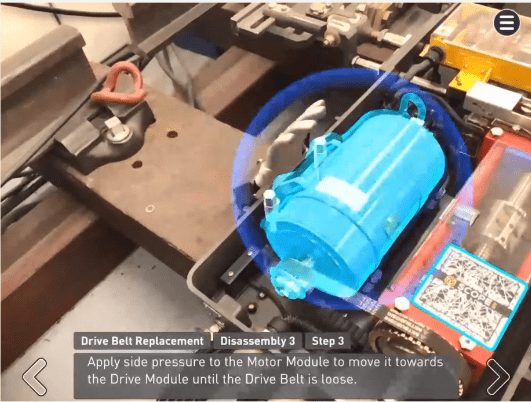
Get in touch.

Learn more about our talent transformation solutions.

Transformation doesn’t happen overnight if you’re doing it right. We continuously deliver measurable outcomes and help you stay the course – choose the right partner for your journey.

Our suite of offerings include:

  • Managed Learning Services
  • Learning Content Design & Development
  • Consulting
  • AI Readiness, Integration, & Support
  • Leadership & Inclusion Training
  • Technical Training
  • Learning Technologies & Implementation
  • Off-the-Shelf Training Courses


Distance Learning: 5 Ways to Keep Engaging Your Audience

This blog article was written prior to LEO Learning becoming part of GP Strategies.

In this blog post, Learning Designer Victor Verster gives us his views on distance learning during lockdown. Victor explores five learning design methodologies that can be embraced to maintain learner engagement while delivering effective learning journeys at distance.

A Human-Centric Approach to Learning Design Is More Important Than Ever

The coronavirus pandemic has emphasized the need for widespread, well designed, and engaging distance learning, perhaps unlike anything else in history. We are all depending on each other’s humanity and compassion more than ever before. It follows, then, that digital learning materials need to become more human-centric in tandem.

No doubt this presents learning designers with an opportunity to innovate, but it’s a unique challenge that we should respect. More than ever before, many learners are crying out for interesting content but, equally, they may be skeptical or even resent enforced lockdown measures. People are craving human interaction, but are largely aware of the risks this poses to health. And for many, distractions at home have never been more visceral and wellbeing concerns have never been more prevalent.

Before we jump into creating digital learning content, therefore, I believe that we need to embrace the spirit of our age and take a step back for a moment. We must first reflect on what learning design actually is and what it entails. I’m reminded of this quote from the late, great, Steve Jobs: “Design is not just what it looks like and how it feels. Design is how it works.”

Tailored to learners, I also include a modified version of The Three Levels of Design Appeal, as originally advocated by Design professor Don Norman1:

  • Visceral: I want to learn about this subject! It looks engaging.
  • Behavioral: I can master this subject! Then I can do better at work.
  • Reflective: I enjoyed that learning experience! Now I want to tell my colleagues about it.

So, to engage fully with learners during this period, we need to call on the expertise of various disciplines outside the traditional learning and development sphere that focus primarily on behavioral change.

5 Ways to Create and Sustain Engagement in Distance Learning

As an example methodology, and with reference to industry experts and academics, here’s a five-point program for creating and sustaining user engagement in distance learning.

1) Align Your Design With How Our Brains Learn

The interconnectedness between brain function and learner behavior cannot be overstated. For optimal cognitive retention, all lobes in both hemispheres of the brain should be involved in processing information.2

In essence, this means it’s a good idea to create a wide variety of tasks for your learners—ones that enable learners to at least be expressive, receptive, rational, and emotional. So get them to create, to process information, to apply logic, and to invest emotionally in your training.

This list is by no means exhaustive, but for example, a module could comprise the following learning events:

  • A reflective task, such as filling in an action plan or workbook (Expressive)
  • A bite-size digital tutorial (Receptive)
  • An assessment where the learner needs to assess priorities and then make a decision (Rational)
  • A snappy introductory video with a warm, reassuring message from a business’ CEO (Emotional)

According to Dr Andre Vermeulen, CEO of Neuro-Link: “It is becoming quite clear that organizations will do well by aligning offerings with natural brain functioning. Doing so will ultimately drive more sales, enhance wellness, and increase productivity.”3

2) Apply a User Experience (UX) Mindset When Designing

According to the Nielsen Norman Group, “UX encompasses all aspects of the end-user’s interaction with the company, its services, and its products.”4

For the purposes of this article, we’ll focus on interaction with learning. At its essence, UX can be distilled into seven key components. We need to consider all of them when creating distance learning in the age of the pandemic.

It would be impossible to list all of the UX factors you need to consider when designing distance training in the pandemic age, but I believe these seven questions cover the headline points:

  • How is this training going to add value?
  • How will this training improve the way people do their jobs?
  • How easy is the training to navigate?
  • Where will the learner find this training?
  • How will SMEs review the training to ensure content veracity?
  • How much do learners want to complete more training right now?
  • How will learners with accessibility requirements complete the training?

And remember, UX principles continue to apply even after the learner completes that last task or receives their final summative quiz score. If you were a restaurant manager, for example, you wouldn’t suggest that a customer’s experience ends after they’ve eaten the last bite of their meal. This is because you know that the customer will probably talk to their friends about their experience, or perhaps post a review on a website. We shouldn’t treat our distanced learning solutions any differently. Here are some key questions to consider:

  • What are the key takeaways from the training? To optimise engagement, they need to be eminently applicable to the user’s job.
  • Who should the user talk to about the training and how? Is it their colleagues, their manager, their family? And via video call or a forum chat on an LMS?
  • What should the learner do next? Keep your users hungry for content, and always leave them wanting more.

3) Appeal to Learners’ Emotions

The COVID-19 pandemic has, in some ways, ruptured the emotional connections we share with our families, friends, and loved ones. The risks we incur during face-to-face contact and our duty to protect each other override our individual desires. This does, however, antagonize us to a certain degree. Connecting with your learner emotionally, therefore, is highly important at this point in history.

Stating upfront the training’s ‘what’s in it for me’ factor is advisable in various contexts, but perhaps particularly now, amidst a backdrop of increased individual skepticism and community tension. This could take the form of a snappy introductory animation that quickly summarizes the benefits the training will bring to the learner. In a climate where our attention spans are perhaps lower than usual, engaging a user early is pivotal to achieving your objectives. Incorporating a reflective task into your learning campaign can offer your learner an appropriate emotional and creative outlet.

As emotional design is particularly pertinent to creating distance training, consider exploring the interrelation of human emotions using Robert Plutchik’s Wheel of Emotions5.

A facilitator can still deliver virtual workshops with a human face. They could consider turning on their camera so that the learner can see them—even if it’s just for a moment or two, if they’re concerned about logistical/bandwidth issues. Alternatively, they can send personalized emails if the learner cohort is an appropriate size. This can instill a sense of trust within the learner. Teaser banner emails can create a sense of anticipation for upcoming tasks or assignments.

Be judicious, of course, with inserting learning events or details designed to surprise. They can easily distract from the core learning content if handled inappropriately. Seductive details might seem engaging at a superficial level, but ultimately they can inhibit learning.

4) Share Inspiring Stories

Storytelling is a key part of the human experience. Our ancestors told stories around fires and painted them on walls, Medieval balladeers traveled from village to village, passing on wisdom from the cities, and the contemporary hip hop artist tells stories of survival in impoverished conditions. The great thing about a story is that everyone has one to tell and everyone loves hearing them. As learning content creators, we can, and should, tap into this primal spring of inspiration, particularly when learners are perhaps accessing streaming services such as Netflix, Amazon Prime, etc. more than usual.

The plot needs to advance tightly and efficiently. This doesn’t mean it has to be a heart-stopping rollercoaster—in fact, in most cases it won’t be. But exposition and character development should be minimal. Always try to select the approach that communicates your learning messages accurately and consider the motivations of your learner group. What are their likes and dislikes? It can be really powerful to build on what the learner already knows.

For example, scenario-driven assessments can be really effective. Putting the learner in control of their character’s destiny offers them a sense of escapism that allows them to fail without fear of reprisal. I personally like to use Freytag’s Pyramid of dramatic structure as a guide to scaffold my stories. It’s not necessarily appropriate for all narratives, but it contains the skeleton of a great story.

5) Gamify Training in a Sociable Way

Most of us like to play games for a sense of enjoyment and escapism, and it seems like we’re playing more games than ever right now—and for longer periods. According to British game designer Richard Bartle, there are broadly four types of video game players: the killers, the achievers, the socializers, and the explorers. We can conceive these player types in a quadrant model as such. The X-axis represents inclination for interacting with other players vs. exploring the game’s world and the Y-axis represents preference for collaboration vs. unilateral action6.

Bartle’s research found some intriguing results. Broadly speaking:

  • ~80% of players are socializers
  • ~10% are explorers
  • ~10% are achievers
  • ~1% are killers

In the age of the coronavirus pandemic, we can use this to our advantage. The socializer loves to collaborate to achieve bigger and better things as part of a team than they could as an individual. This is an important thought to consider in the age of the pandemic and what lies thereafter, where cooperation with our neighbors and key workers is at the forefront of public discourse. It perhaps goes some way to explaining why Animal Crossing, an eminently uncompetitive game with social interaction at its core, has broken all kinds of digital sales records.

Encourage your learners to collaborate to complete tasks via video platforms. The virtual ‘pub quiz’ has perhaps never been more popular, for example. It’s a low-fidelity summative assessment style with which most learners will be familiar. So why not use it to assess your learner’s competence in a particular area while keeping the tone of delivery light? You can even record this as a webinar for your learners who can’t make the call due to other commitments.

You could also consider designing two different digital banked assessments to give to a pair of learners. While the content will be similar, the answers will be different. After answering each question correctly, the user unlocks a certain piece of a jigsaw puzzle, or maybe a token. The learners then need to communicate together to share the answers, puzzle pieces, tokens etc. that they’ve received and complete the puzzle.

Conclusion

The pandemic has created a sense of global solidarity like no other event in recent history. Keeping learners engaged while at a distance is a huge challenge, but it’s not impossible. Indeed, it’s only through learning and developing technologies that we will find a way out of this crisis.

For now, however, we’ve got to use distance learning as a way to navigate the pandemic as best we can and mitigate some of its insidious effects on job performance. As learning designers, I believe that this is our civic duty. Remember that it’s not just the modality of digital learning solutions that needs to change to better engage the pandemic-afflicted learner; it’s the tone of the content within these solutions too.

Here are five final key tips to take away from this article to keep your learners engaged during the age of the coronavirus pandemic:

  • Offer your learners a variety of tasks to keep them motivated and their brains active, remaining courteous to neuroscience
  • Revise and iterate on your designs against the seven key UX principles: value, usefulness, usability, findability, credibility, desirability and accessibility
  • Prioritize bite-sized content that elicits positive emotions from users
  • Hook your learners in with compelling stories light on exposition, heavy on action, and filled with layered characters
  • Harness the power of social gaming to get your learners talking to each other, solving problems, and refining their virtual teamwork skills

If you would like to explore how these learning engagement methods can be used in your learning program, our learning experts are here to help. Contact us today.

About the Authors

Victor Verster

Get in touch.

Learn more about our talent transformation solutions.

Transformation doesn’t happen overnight if you’re doing it right. We continuously deliver measurable outcomes and help you stay the course – choose the right partner for your journey.

Our suite of offerings include:

  • Managed Learning Services
  • Learning Content Design & Development
  • Consulting
  • AI Readiness, Integration, & Support
  • Leadership & Inclusion Training
  • Technical Training
  • Learning Technologies & Implementation
  • Off-the-Shelf Training Courses


The Future Is Ours: Pivot-Adjust-Engage

Digital disruption has been the buzzy term for the past few years, however, the first half of 2020 has forced that concept to become reality. Many businesses have embraced digital disruption overnight and have proven that they can shift and adapt when the status quo gets rocked. Not only have the last four months tested our resilience, but they have also caused many of us to reflect on the enormity of the abrupt changes and how we can be more present, decrease a bit of the noise, and simplify our lives. Simplify…hmmm…seems like it should be easy to do but in reality, we struggle with this every day, personally and professionally.

These days, so many people remark on how everything has become so complex and that this complexity is causing overwhelm and exhaustion. This makes me wonder, can simple and complex coexist to enable success in all aspects of our lives? If so, what role does the organization, its leadership, and culture play in this?

Gone is the classic division between employee, customer, and competitor. In the digitally connected, globalized, and unpredictable world in which we live, the people that make up organizations are those who get the work done, those that are the consumer, and those that are part of the network that could be competitors or collaborators.

That delineation that we used to have – that separateness – supports linear thinking which has always defined our work lives.  Now, regardless of what role we have at work or in our personal lives, everything has become interconnected within interdependent ecosystems. This interconnectedness will continue to challenge the linear thinking in organizations as the need for fluidity and divergent thinking expands. In reality, our work and personal lives should mirror each other allowing for a more integrated and harmonious coexistence.

If we agree that there needs to be a conscious shift to balance company goals of profit with the wellbeing of people, organizations must rethink how they deliver a meaningful people experience. If that is cared for properly, it will intrinsically drive the desired customer experience and desired societal impact within these very complex, joined ecosystems.

But how do we do that? How do we reduce complexity to create a meaningful people experience?

We start by embracing complexity.

Complex systems such as the human brain, the power grid, the universe, and open social networks (just to name a few) are all around us. These systems create interconnections shaped by history and fueled by progress. If we try to restrain them, they resist, snarl, or break. In our digital (and connected) age, we can no longer take a linear approach and assume that what works today will work next week.

When we lose that linear way of thinking, or our ability to predict an outcome, it is our adaptability, agility, and resilience that become the keys to successfully surviving, navigating, and transforming. To that end, we embrace complexity by building, supporting, and transforming.

Here are a few things you can implement today that will create a more meaningful people experience by embracing complexity.

  • Clearly define and articulate purpose
    • Give your people the “why” of their purpose. Why does their role matter? It may matter to the company, their colleagues, and the customer. The key is that their role matters. They matter.
  • Promote cognitive diversity
    • Nurture the practices that bring diverse views and expertise together. Invite your team to challenge each other in order to drive stronger decisions and innovations and support a culture of inclusion.
  • Create development opportunities
    • Create a culture that demands and empowers new mindsets and skills with topics that help reduce complexity and increase the innovation, like:
      • Critical thinking
      • Empathy and inclusion
      • Trust/transparency
      • Cognitive agility
      • Emotional intelligence
  • Build momentum
    • Demand sponsor support for meaningful initiatives. Enable those sponsors with prescribed actions they can take to demonstrate their support. Charters, communication plans, and remits all help to drive sponsor support with simplicity. More than ever, our people at all levels need to see leaders “walk the walk”.

These are just a few things that you can implement to help you pivot, adjust, and reengage that allows simplicity to emerge from the complexity.

To sum this up, yes, I believe that simplicity and complexity can coexist, if….

If we keep the human at the center of everything we do and if we acknowledge that common sense does not necessarily equate to understanding.

The future is ours to create. If we leverage the unique human abilities of intuition and experimental mindset, we create a future of opportunity, innovation, and meaningful experiences.

About the Authors

Kerry Hearns-Smith
Kerry joins GP Strategies with over 20 years of experience in senior roles working with Fortune 100 companies around the globe on engagements - transforming organizational culture, learning, and the employee experience. She is a life-long learner herself and her current sweet spot includes taking L&D from yesterday’s organizational driven formal learning to the future with learner driven digital, on-demand, and adaptive learning ecosystems.

Get in touch.

Learn more about our talent transformation solutions.

Transformation doesn’t happen overnight if you’re doing it right. We continuously deliver measurable outcomes and help you stay the course – choose the right partner for your journey.

Our suite of offerings include:

  • Managed Learning Services
  • Learning Content Design & Development
  • Consulting
  • AI Readiness, Integration, & Support
  • Leadership & Inclusion Training
  • Technical Training
  • Learning Technologies & Implementation
  • Off-the-Shelf Training Courses