Why Your Organization Needs a Continuous Technical Training Program

If we don’t keep up with the latest knowledge in our fields, we risk falling behind in this competitive global economy. And as the pace of technological development accelerates, job-specific technical training has become particularly important.

Seasoned professionals with years of experience and robust educational backgrounds are finding themselves on the precipice of a formidable challenge—the skills gap. Continuous technical training programs are indispensable to solving this problem.

What Is Technical Training?

Technical training is the process of helping your workforce improve the knowledge, skills, and abilities they use to perform their daily jobs. This training ensures your employees achieve health, safety, compliance, and business performance metrics.

Unlike soft skills, such as leadership development, creativity, or communications, technical skills include operating heavy equipment, maintenance, troubleshooting, and repair—focusing on operating a workplace that’s safe for workers and compliant with industrial and environmental regulations while maintaining cost-effective availability and reliability of capital assets.

Essentially, technical training can’t just be a one-time event; it must be a continuous, ongoing effort.

The Importance of Continuous Technical Training

Nearly every occupation needs periodic or continuous training. Whether you’re a developer learning the latest programming language or a marketing professional learning how to leverage artificial intelligence for more successful advertising campaigns, there are always ways each employee can improve their job-related skills by making the most of the latest information at their disposal.

Providing technical training to your staff may seem like an abstract and hard-to-quantify expense, but it should be considered an essential investment. For example, leading industrial organizations with significant capital assets and high facility costs view training as critical to ensuring their staff can effectively and safely operate and maintain expensive equipment while avoiding unexpected costs. Manufacturing companies and those focused on production output in all industries need their workforce ready and able to perform. When combined with proper asset strategies, training can result in higher equipment availability, ultimately resulting in less downtime so they can achieve production goals.

1. Close Your Skills Gap

The discrepancy between what skills are needed and what skills many professionals are actually proficient in is evolving at an unprecedented pace, outpacing the skill sets they can acquire through conventional education and prior work experiences.

According to the World Economic Forum’s “The Future of Jobs Report 2023,” companies believe that 44% of their employees will require significant reskilling and upskilling over the next five years to meet the demands of emerging job roles. This signals an apparent disconnect between the skills employees possess and those required to thrive in an increasingly digital and interconnected world.

The repercussions of the skills gap extend far beyond individual professionals, permeating the very fabric of organizations and industries. Professionals grappling with an outdated skill set find themselves less equipped to handle the demands of contemporary job roles. It jeopardizes their career trajectories and hampers the overall productivity and innovation potential of the organizations they serve.

In 2021, McKinsey & Company reported that 83% of companies across the globe were aware they had a skills gap or would in the immediate future. The ripple effect of this phenomenon is felt across all industries as different sectors struggle to keep pace with the evolving landscape and the demands of an increasingly tech-driven marketplace.

Maintaining a robust technical training program is a sure-fire way to help close the skills gap your organization is likely experiencing.

2. Improve Employee Retention

In addition to the criticality of having staff able to meet production demands, studies show that employees who receive training are more likely to stay in their jobs. According to a 2018 study by Work Institute, employees listed that the main reason for leaving their jobs was the lack of opportunities to develop their skills further.

Aside from having a more loyal workforce, there are other benefits to having a well-trained staff. Trained workers are more productive and efficient at their jobs, and as a result, there are fewer errors in their work. In fact, an engagement poll from Gallup in 2016 showed that properly trained employees are 17% more productive than their untrained counterparts.

3. Mitigate Risk

Technical training also reduces business risks by ensuring that skills, production standards, and quality controls are updated and relevant. In the worst-case scenario, a lack of proper training could harm employees, customers, or other on-site personnel. Employees not adequately trained on the latest safety procedures and techniques may be underqualified to operate dangerous machinery. This lack of training could even be ruled as negligence by the employer, subjecting them to fines, expenses, or even liability.

Technical skills are central for all staff but are especially critical for frontline and mid-level managers. If managers don’t know how to complete a task themselves, how can they guide their team or effectively evaluate their subordinates when it comes time for performance reviews?

Measuring Your Continuous Technical Training for Continued Success

The evolving skills gap underscores the critical need for professionals to adapt swiftly to emerging demands. Far from a one-time event, technical training is a linchpin in the journey toward sustained success.

The tangible benefits of continuous training—enhanced productivity, improved retention, and effective risk mitigation—underscore its status as a strategic investment. But only through intentional measurement efforts before, during, and after training delivery can organizations prove ROI and make the right ongoing decisions about combatting the skills gap. In measuring the business impact of technical training programs, organizations hold the key to unlocking a future of growth, innovation, and safety.

About the Authors

GP Strategies Corporation
GP Strategies is a global performance improvement solutions provider of sales and technical training, e-Learning solutions, management consulting and engineering services. GP Strategies' solutions improve the effectiveness of organizations by delivering innovative and superior training, consulting and business improvement services, customized to meet the specific needs of its clients. Clients include Fortune 500 companies, manufacturing, process and energy industries, and other commercial and government customers.

Get in touch.

Learn more about our talent transformation solutions.

Transformation doesn’t happen overnight if you’re doing it right. We continuously deliver measurable outcomes and help you stay the course – choose the right partner for your journey.

Our suite of offerings include:

  • Managed Learning Services
  • Learning Content Design & Development
  • Consulting
  • AI Readiness, Integration, & Support
  • Leadership & Inclusion Training
  • Technical Training
  • Learning Technologies & Implementation
  • Off-the-Shelf Training Courses


Credible Measurement: The Key to Elevating Learning Initiatives in Your Organization

In the ever-competitive scramble for resources, learning and development (L&D) departments often struggle to demonstrate their value. Learning leaders want to show their impact on the business, but most don’t know precisely how. They know their initiatives have merit, but in the rest of the enterprise, they’re sometimes seen as a necessary expense rather than as an investment.

Learning organizations can turn the tables on that problem by adopting a measurement strategy—one that’s credible and convincing to the internal business partners they serve. Three crucial elements of this strategy are a measurement framework, alignment with the business, and strong partnerships with our business stakeholders. At GP Strategies, we align with the business and build relationships using our proprietary Measurement Map®. But first, a framework.

The Value of Measurement Frameworks

A measurement framework allows us to think about how we approach measurement. It gives us a common language that makes communication easier and helps us bring consistency and rigor to each initiative we want to measure.

Many of us in the training world are familiar with Kirkpatrick’s 4 Levels of Training Evaluation. Introduced over sixty years ago, it’s been by far the most widely adopted framework across the learning industry. The labels and language in the Kirkpatrick model resonate with L&D but not so much with their business colleagues.

Jack Phillips added a valuable element by including return on investment (ROI) calculations as a fifth level in the framework. This framework has been the basis for evaluating a wide variety of human resource initiatives. Some, however, have found the ROI calculations to be cumbersome, and, from a business perspective, both the Kirkpatrick and Phillips frameworks presented results more in a “learning language” than a “business language.”

More recently, the Center for Talent Reporting—working with thought leaders in the measurement space like Jack and Patti Phillips at the ROI Institute—has developed a more business-friendly model called Efficiency, Effectiveness, Outcomes, or EEO. Metrics naturally fall into one of the three groups. For example, “Efficiency” metrics might include common training metrics like the number of students served or the total hours of training provided. “Effectiveness” metrics could focus on things such as the percentage of students applying the information on the job. “Outcomes” metrics are where what’s important to the business can shine and where you can show true impact on the business (like improvements in sales and reductions in safety issues).

The International Organization for Standardization (ISO) adopted the EEO framework and added a robust reporting section. In June of 2023, ISO published the first edition of standards for human resource management L&D metrics, ISO/TS 30437. Internal business partners are often well acquainted with ISO standards as they follow them in such wide-ranging aspects of the business as environmental management, food safety, and accounting. Therefore, adopting the ISO framework can allow the L&D function to instantly gain a measure of credibility.

The Power of Measurement Mapping®

With a credible framework in place, we can now turn our attention to the other two elements of a measurement strategy: aligning with the business and building strong partnerships with business stakeholders. GP Strategies accomplishes both using our proprietary Measurement Mapping® process

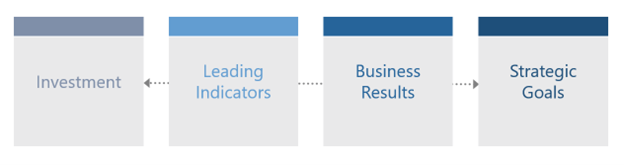
To ensure that initiatives are aligned with business goals—and that measurement efforts are appropriately focused—L&D has to fully understand the business challenge it’s being asked to help solve. We invite business owners to join our L&D people in a half-day stakeholder meeting to gain alignment and consensus on the goals of the proposed program. In this meeting, we clarify the business results we hope to impact through the program and connect those business results to the organization’s strategic goals. Our business stakeholders help us identify leading indicators that’ll be early evidence of success—or early signs that we need to adjust course.

When properly positioned, after business stakeholders have helped shape the proposed program, we begin to build a causal chain of evidence from the investment to the business results and strategic goals of the organization.

We cannot overemphasize the value of the relationships we build in this process. Not only do we see the business partners’ respect for the L&D department grow, but they invariably become more supportive of the program that’s developed. When involved in this process, business partners often become:

  • Truly invested in the success of the L&D initiative in question.
  • Motivated to ensure it gets the support it needs.
  • Eager to see reports of its progress.
  • More interested in analysis and recommendations for improvement.

Additionally, when it comes time to measure, they can become invaluable resources in helping you get data. What was an expense has now become an investment, and the dividends are eagerly anticipated.

Embedding the L&D Function into the Business

When learning leaders adopt a framework and alignment process as we’ve described here, the L&D function becomes more deeply embedded in the life of the wider business enterprise. They’re more often invited to weigh in on possible solutions to business challenges. And when an L&D program is proposed as part of a solution, it’ll be the child of an integrated team from its very inception.

After the failed Bay of Pigs invasion of Cuba in 1962, JFK ruefully paraphrased Tacitus by saying, “Success has a thousand fathers, but failure is an orphan.” With this strategy, we hope your L&D initiatives will be blessed with many fathers.

About the Authors

Paul Flynn
Paul Flynn works in GP Strategies’ Innovation Group as a Principal Innovation and Performance Consultant. With over 20 years’ experience in the learning and performance improvement space, his work has focused on improving business results by identifying the innovative practices of high performers in critical roles and promoting the role of measurement and evaluation. Paul is a faculty member of our Measurement Academy, a role that’s close to his heart.   

Get in touch.

Learn more about our talent transformation solutions.

Transformation doesn’t happen overnight if you’re doing it right. We continuously deliver measurable outcomes and help you stay the course – choose the right partner for your journey.

Our suite of offerings include:

  • Managed Learning Services
  • Learning Content Design & Development
  • Consulting
  • AI Readiness, Integration, & Support
  • Leadership & Inclusion Training
  • Technical Training
  • Learning Technologies & Implementation
  • Off-the-Shelf Training Courses


Navigating the Crisis of Trust in Sales: 3 Strategies for Salespeople

Artificial intelligence (AI) has blurred the lines of human communication so profoundly that it is no longer always clear if the emails in your inbox are authentically human or merely appear authentically human.

Nowhere is this struggle more palpable for salespeople than in the prospecting phase. The enormous amount of digital content that bombards us has made establishing credibility and trustworthiness an uphill battle.

A truly pressing question has emerged from these new circumstances: How do salespeople build trust—the linchpin that propels business relationships forward—in this age of AI and automated marketing?

The Trust Imperative in Sales

Building trust is a dynamic interplay (not a one-way street), requiring both parties to be trustworthy and willing to trust. This dual commitment forms the bedrock of successful interactions, yet our current landscape makes this nearly impossible.

The Escalating Trust Crisis

What, exactly, is happening in the current sales environment? And how does it get in the way of customers and salespeople building trust?

1. Rising Noise Levels

Marketing automation has inundated the market with digital noise. Emails flood inboxes, SMS texts fill our phone’s notifications, and almost all transactional sales have migrated entirely online. Additionally, many offerings in the learning and development space have been turned into package deals and license subscriptions. These situations have transformed the role of many sales professionals from conversationalists and relationship-builders to order-takers, eliminating the chance of many salespeople ever making genuine human connections with potential customers.

2. Changing Sales Dynamics

The traditional one-size-fits-all methodologies of yesteryear are being overhauled. The need for individualized approaches in sales has never been more critical as generic strategies have begun to fall short of helping salespeople build the trust required to make meaningful connections in our current climate. Our challenge now lies in determining how to make each sales experience a personalized experience every single time.

3. The Continued Impact of AI

The continued maturation of AI content will also keep intensifying the ongoing trust crisis in sales. What impact does wondering if an actual human wrote an email have on a prospect’s willingness to interact with you and maybe even become a customer? At this point, AI-generated sales and marketing content can seem so human that unless something about the content is dramatically different than others like it, people likely won’t engage at all.  

Existing sales methodologies, many of which are rooted in a one-size-fits-all approach, are inadequate to address the nuanced demands of the modern sales environment. While offering efficiency and innovation, AI accentuates the need for more tailored, individualized strategies to foster trust and authenticity in every interaction. As we navigate the impact of AI on the trust dynamic, the imperative for adaptive and personalized approaches becomes more apparent than ever.

3 Strategies for Sales Professionals to Bridge the Trust Gap

Building trust in the current sales environment will require a lot of effort—not just from salespeople but enterprise-wide. We have to find ways to stand out and break through the noise. Here are three ways you can start to do just that.

1. Conduct an Internal Assessment

Does your organization deserve the trust you seek? This question can be very difficult to answer, and many organizations will have a knee-jerk response, “Of course!” But going on this introspective journey is critical if you want to stand apart. Ask the hard questions and conduct an internal assessment to identify and address any obstacles hindering trust-building within your team or processes.

2. Understand the Elements of Your Brand

Understanding your brand’s characteristics and being consistent enterprise-wide in how they are represented provides consistent messaging that builds trust with potential clients, allows prospects to determine if your brand is aligned with their values, and generally cultivates a sense of authenticity and transparency. Be familiar with your brand’s values and preferred tone and style so you can consistently pull that into client interactions.

3. Consistently Give More Than You Get

You must be a reliable voice that your prospects are willing to turn to for questions, especially during disruption. When prospects do look to you, be prepared—as often as possible—with valuable insights, pieces of intelligence, and by lending a listening ear. By offering more than you seek, you establish a foundation of genuine interest, which can foster organic trust over time.

Building Trust in Sales Takes Time

In a world where technology is both a boon and a challenge, navigating the crisis of trust in sales and creating meaningful relationships with clients is increasingly complex. Just remember that building trust is a journey, not a destination. A commitment to authenticity, consistency, and innovation will set you apart and help you build trust over time.

About the Authors

Ann Roesener
Ann is a Growth Executive at GP Strategies. She was at GP previously working in the Leadership Practice and managing one of the top ten accounts. In her current role, she works closely with clients to determine how to impact their business and performance through training and human performance solutions. While away from GP, Ann worked as a Go-to-Market Enablement Sr. Manager tending after a team that worked with Customer Success Managers, Account Executives, and the APJ region. In addition, she worked with training partners while selling a learning solution SaaS platform. Ann has expertise in leadership, management, sales, partner sales, enablement, coaching, and career development. These were honed by working with MBA programs and establishing new programs and solutions to help MBA students find jobs. When not working, she’s spending time in Seattle with her dog Charles Barkley and going to hear live music.

Get in touch.

Learn more about our talent transformation solutions.

Transformation doesn’t happen overnight if you’re doing it right. We continuously deliver measurable outcomes and help you stay the course – choose the right partner for your journey.

Our suite of offerings include:

  • Managed Learning Services
  • Learning Content Design & Development
  • Consulting
  • AI Readiness, Integration, & Support
  • Leadership & Inclusion Training
  • Technical Training
  • Learning Technologies & Implementation
  • Off-the-Shelf Training Courses


3 Ways to Strengthen Your Technical Training

The technical workforce is often saddled with the responsibility of the most difficult—and often the most dangerous—jobs in the world today. And for decades, technical organizations have faced a widening skills gap. This is a problem that cannot be ignored.

Ensuring that your workforce has the skills to perform at its highest potential is vital to the success of your organization and to the safety of each individual worker. Here are several ways you can create more impactful and relevant training for your technical workforce.

The Keys to Better Technical Workforce Training

There’s an old aphorism: To a hammer, every problem looks like a nail. To illustrate the metaphor, someone trying to sell your organization an off-the-shelf, one-size-fits-all training program will likely identify many ways their solution will help you improve. Just because you can potentially improve certain job functions by using a solution doesn’t mean it’s the right fit for you. On the other hand, customized training isn’t always the solution either, especially since training budget dollars are typically precious. It’s impossible to choose the right training solution unless you understand exactly what you need and for whom.

1. Understand Your Learners with a Needs Analysis

The first step to developing training programs that address widening skills gaps should be to compare where your workforce currently is to where you need it to be. Beginning your transformation with an understanding of the specific job duties, and the skills necessary for individual roles, will allow you to put in place tools that truly support those roles. Beginning with an understanding of the work will also help you to align your training to your overall organizational vision.

Analyzing the situation will help ensure you select the right tools, modalities, and solutions to properly fit the specific needs of your workforce. All solutions should support the learner in the moment of need and be scalable to various personas. A typical learning assessment can also include a design session, allowing your organization to workshop solutions for a full project or workforce life cycle.

2. Choose a Solution Aligned to Real Business Needs

It is also critical to align training solutions to fit your specific business needs. Offering more and more training often does not solve the root cause of organizational misfires. In environments where new technology seems to be introduced daily, training budgets have never been tighter. The first step to ensuring that you are maximizing your budget, time, and resources is to identify your current business state and the skills gap that you need to address to make a real impact.

Sometimes training isn’t the only solution—modality, frequency, and innovation help drive change, too. To avoid chaos from making too many changes at once, be sure to communicate business goals and objectives with all stakeholders.

3. Determine the Right Learning Modality

Many organizations seek ways to further innovate and provide blended solutions to meet their specific workforce needs. Hands-on learning in the field is valuable but can take a lot of time, so it’s important to consider which training (as a whole or in part) can be self-paced or virtual. Because learning needs differ from person to person, and position to position—organizations can absolutely provide some professional development opportunities via a virtual or hybrid model.

Hybrid work is here to stay, and that means hybrid learning is here to stay. However, virtual learning is not appropriate for every position, especially in technical environments. Maintenance training, for example, should typically be hands-on with the use of simulations and field exercises, or it can even be part of a learning experience that uses virtual reality or extended reality.

Keeping Your Technical Training Relevant

Strengthening your technical workforce’s training is essential to bridge skills gaps and ensure the success and safety of your technical workforce. A customized and strategic approach is necessary to address the root causes of the skills gap, to really understand your learners, and to make efficient use of your resources. This approach will empower your technical workforce—and your organization—to excel.

For more information about creating great technical talent, check out our recent eBook, Crafting Technical Talent: Best Practices for Building and Maintaining a Technical Workforce.

About the Authors

Ashley Johnson
Ashley specializes in global performance improvement strategies using technology-based solutions and technical resources to reduce cost, eliminate waste, and improve safety, efficiency, and overall performance of the organization. Ashley works to provide customers with strategies for achieving operational excellence and measurable changes to help promote growth, and in some cases, overall transformation.

Get in touch.

Learn more about our talent transformation solutions.

Transformation doesn’t happen overnight if you’re doing it right. We continuously deliver measurable outcomes and help you stay the course – choose the right partner for your journey.

Our suite of offerings include:

  • Managed Learning Services
  • Learning Content Design & Development
  • Consulting
  • AI Readiness, Integration, & Support
  • Leadership & Inclusion Training
  • Technical Training
  • Learning Technologies & Implementation
  • Off-the-Shelf Training Courses


3 Ways AI Is Shaping the L&D Future

The possibilities for artificial intelligence (AI) tools are almost limitless, from AI-powered language translation to immersive virtual learning experiences. And this AI-powered future is not theoretical; it’s our reality. The learning and development (L&D) industry is abuzz with this excitement, but what AI tools are the front-runners right now? Which applications are leading the charge?

#1: AI-Driven Translations

As organizations strive to expand their global reach, translating content accurately and efficiently has become paramount, and traditional methods are often costly and time-consuming. AI’s generative capabilities and large language models (LLMs) provide real solutions that address these challenges.

Not surprisingly, different companies are approaching the adoption of AI-powered translation in different ways. Established translation companies are leveraging AI to enhance their capabilities while maintaining high-quality standards. Emerging tech startups are building user-friendly platforms that connect users to LLMs. Some provide self-service tools for efficient translations, and others offer a hybrid solution, combining machine translation with human translators for refined results.

Some organizations are also setting up their translation departments to be powered by LLMs. This approach allows them to use their own data and create a customized translation history. It offers more control but requires a deep understanding of AI and a commitment to managing it effectively.

But AI’s impact on L&D goes beyond text translation. Some tools can generate videos from text and seamlessly translate them into multiple languages, offering a dynamic and efficient solution for creating multilingual content.

#2: AI-Generated Video

The potential of AI-generated video is exciting. But as our industry’s experience with it matures, our standards for quality and effectiveness also continue to mature. For example, some AI-generated avatars provide compelling voiceovers, but the lip-syncing is off-balance. This can significantly disrupt a viewer’s experience.

Let’s pretend we’re using AI to help generate a dishwasher loading tutorial video. We fed the AI tool a script, and then AI provided a library of clips to illustrate the steps to properly load a dishwasher. While the AI system sequenced the steps well, the video didn’t explain why tableware should be placed just so and how, if it is not, it won’t get cleaned properly. This is because AI does not grasp the full scope of human knowledge and experience.

This is where human intervention becomes invaluable. Video producers can step in to refine and polish the video, aligning it with their creative vision and expertise—and, in this situation, adding critical information to explain why we do things a certain way. This collaborative human + AI approach leverages AI to handle repetitive tasks and automate production while preserving the essential human touch that defines a well-crafted video.

#3: Personal Productivity Bots

The concept of productivity bots is generating a lot of excitement. These bots have the potential to become indispensable assistants that help us avoid meeting fatigue. One of the most remarkable aspects of productivity bots is their capacity to reduce the burden of repetitive tasks. They allow you to focus on what you do best while providing a valuable safety net, ensuring no task slips through the cracks.

Imagine this scenario: you find yourself in a back-to-back meeting schedule, and while you may take your own notes, it’s a relief to have an extra set of digital eyes and ears, an AI productivity bot, to assist you. This productivity bot accompanies you from one meeting to the next, listening in, transcribing discussions, summarizing key points, and even identifying action items.

But it doesn’t stop there. These bots can integrate seamlessly into your workflow, making appointments on your calendar and sending you reminders to follow through on your commitments. For instance, if you promised to deliver a report by Friday in a meeting on Tuesday, your trusty productivity bot will ensure you stay on track by sending you nudges throughout the week.

The AI-Powered L&D Future

Just a decade ago, many of the ideas—AI-generated translations and videos and personal productivity bots—would have sounded like science fiction. Yet here we are today, at the cusp of a new era in learning and talent development driven by the power of AI.

The magic in all these AI solutions lies in our ability to collaborate with them. They complement our capabilities, augmenting our work rather than automating it entirely. While they excel at handling the mundane, we, as human experts, contribute creative touch, critical thinking, and empathy.

About the Authors

Matt Donovan
Chief Learning & Innovation Officer
Early in life, I found that I had a natural curiosity that not only led to a passion for learning and sharing with others, but it also got me into trouble. Although not a bad kid, I often found overly structured classrooms a challenge. I could be a bit disruptive as I would explore the content and activities in a manner that made sense to me. I found that classes and teachers that nurtured a personalized approach really resonated with me, while those that did not were demotivating and affected my relationship with the content. Too often, the conversation would come to a head where the teacher would ask, “Why can’t you learn it this way?” I would push back with, “Why can’t you teach it in a variety of ways?” The only path for success was when I would deconstruct and reconstruct the lessons in a meaningful way for myself. I would say that this early experience has shaped my career. I have been blessed with a range of opportunities to work with innovative organizations that advocate for the learner, endeavor to deliver relevance, and look to bend technology to further these goals. For example, while working at Unext.com, I had the opportunity to experience over 3,000 hours of “learnability” testing on my blended learning designs. I could see for my own eyes how learners would react to my designs and how they made meaning of it. Learners asked two common questions: Is it relevant to me? Is it authentic? Through observations of and conversations with learners, I began to sharpen my skills and designed for inclusion and relevance rather than control. This lesson has served me well. In our industry, we have become overly focused on the volume and arrangement of content, instead of its value. Not surprising—content is static and easier to define. Value (relevance), on the other hand, is fluid and much harder to describe. The real insight is that you can’t really design relevance; you can only design the environment or systems that promote it. Relevance ultimately is in the eye of the learner—not the designer. So, this is why, when asked for an elevator pitch, I share my passion of being an advocate for the learner and a warrior for relevance.

Get in touch.

Learn more about our talent transformation solutions.

Transformation doesn’t happen overnight if you’re doing it right. We continuously deliver measurable outcomes and help you stay the course – choose the right partner for your journey.

Our suite of offerings include:

  • Managed Learning Services
  • Learning Content Design & Development
  • Consulting
  • AI Readiness, Integration, & Support
  • Leadership & Inclusion Training
  • Technical Training
  • Learning Technologies & Implementation
  • Off-the-Shelf Training Courses


The Transformative Leader: Leveraging Emotional Intelligence to Create Psychologically Safe Workplaces

Leaders today must constantly evolve to remain effective and relevant. A divide is forming between those who simply lead and those who lead at a higher level. How can today’s leaders and tomorrow’s aspiring ones bridge the gap to become transformative leaders?

Because a leader’s role is no longer confined to decision-making, setting goals, and managing people, those in leadership positions must learn and embody a vital skill that, when applied consistently and engrained culturally within a team, division, or even across an entire organization, can yield transformative results. This skill is emotional intelligence (EQ).

How Is Emotional Intelligence Transformative?

To comprehend the true value of EQ as a transformative tool, we need to understand the essence, the foundational etymology, of the word “transformative.” Derived from the Latin prefix “trans,” meaning “across” or “beyond,” and the verb “formare”, meaning “to form,” “transformative” means “to form beyond” or “to form across.”

If you are setting goals, making decisions, and managing a team, you are leading on one side of the divide. If you use EQ as a part of your leadership ethos, you are going “beyond” or “across” that chasm. You facilitate greater change by benefitting individuals, teams, and your larger organization. But what exactly is EQ, and why is it so important?

The Importance of Emotional Intelligence

EQ is a set of emotional and social skills that influence how we see and express ourselves, recognize the emotions of others, and manage relationships. As byproducts of these foundational skills, we are better able to handle adversity, cope with challenges, resolve conflict, communicate with empathy, and use emotional information productively and purposefully.

Because of the evolving nature of today’s business landscape, from the global interconnectedness of organizations to seemingly endless advancements of technological capability, rapid change, and uncertainty, leaders who wish to become transformative must embody a holistic approach that prioritizes both organizational success and the well-being of their people.

Being present with team members, harboring an awareness of who they are, listening intently to the stories they share, and using that awareness to cultivate healthy relationships marks the success of a transformative leader who models and practices EQ skills.

3 Elements of Emotional Intelligence

1: Self-Awareness

Transformative leaders must harbor the will to learn and practice EQ skills for their own benefit as well as the benefit of others. They must come to know their own triggers and how those triggers influence their behavior. Furthermore, leaders must cultivate the ability to be aware of their emotions, both good and bad, and balance those emotions and thoughts. We call this self-awareness. It is the foundation of healthy EQ. Without it, one cannot go “beyond” oneself.

2: Self-Management

The next component for the transformative leader to master is self-management. As we seek to manage our emotions, we need to understand the science of how emotions affect us. The prefrontal region of our brain is our “thinking” brain and controls our executive functioning (i.e., complex planning, problem-solving, decision-making, etc.). On the other hand, the limbic system, or our “feeling” brain, guides us moment to moment throughout each day (i.e., our emotional memory epicenter and sensations of appetite and thirst, etc.). From the moment we wake up to the moment we go to sleep, our limbic system constantly scans our environment and surroundings; it is an open-loop system since we rely on connections with others for our emotional well-being.

If you imagine the various feelings that you encounter on a day-to-day basis, you might imagine the limbic system to look like a roundabout in chaos—some vehicles refusing to yield as they enter, some reversing course in the middle of the flow of traffic, and some entering in the wrong direction entirely! When we are first aware of that emotional chaos, we can then complete the important work of managing it.

Self-reflection practices such as journaling, mindfulness, meditation, and seeking feedback from others are helpful in this regard. Likewise, reframing one’s thoughts is a powerful skill that can empower emotional self-management. When we do these things effectively, our chaotic roundabout becomes an organized interstate freeway with clearly defined boundaries, lanes, and entrance and exit ramps. The flow of the system is in check and running smoothly.

3: Social Awareness

Once a leader’s self-awareness is cultivated and they have firm control of their emotions, they need to develop an awareness of others’ emotions and the ability to effectively manage those relationships. Being aware of the emotions of others, which we can call social awareness, requires practice and a concerted daily effort to improve.

Being empathetic and practicing empathetic listening improves communication, strengthens relationships, allows room for innovation with conflict resolution, and creates an atmosphere of psychological safety. Imagine a leader demonstrating these skills instead of simply delegating or making the decision for the team. Social awareness accelerates crossing the leadership gap, and knowing how to manage relationships lands them safely on that transformative side where they can lead with a higher sense of purpose.

Realizing the Benefits of Developing Emotional Intelligence

So, what does this all mean for leaders today? The bridge from conventional to transformational leadership begins with an unwavering commitment to self-awareness, learning to navigate the emotional chaos within, and cultivating self-management.

As leaders master their internal emotional landscape, they unlock the ability to extend their reach into the emotional landscapes of others, nurturing relationships, fostering innovation, and leading with a higher sense of purpose. By embracing EQ, leaders are not just leading; they are transforming by pioneering beyond the ordinary to forge new paths toward growth and success. In the journey from simply leading to becoming a transformative leader, EQ is the compass, guiding the way across the divide.

About the Authors

Stuart Bonner Jr
Stuart is a former educator and leadership advisor who now works as a consultant in the leadership division of GP Strategies. He is certified in the EQ-i 2.0 & 360 assessments and is the subject matter expert on all things emotional intelligence. His other interests include coaching theory, narrative coaching, and anything having to do with bicycles.

Get in touch.

Learn more about our talent transformation solutions.

Transformation doesn’t happen overnight if you’re doing it right. We continuously deliver measurable outcomes and help you stay the course – choose the right partner for your journey.

Our suite of offerings include:

  • Managed Learning Services
  • Learning Content Design & Development
  • Consulting
  • AI Readiness, Integration, & Support
  • Leadership & Inclusion Training
  • Technical Training
  • Learning Technologies & Implementation
  • Off-the-Shelf Training Courses


Unveiling the Perfect Training Suite: 9 Steps to Identify Your Ideal Fit

In today’s fast-paced and dynamic job market, staying competitive and relevant is a top priority for both professionals and job seekers. One of the most effective ways to achieve this is through ongoing training and development. But just as one-size-fits-all clothing rarely fits everyone perfectly, the same goes for training.

Identifying the right training suite for an individual or a team can make all the difference in career success. Let’s explore the steps that can help you determine the kind of training that suits you best.

Step 1. Know Your Goals

Before embarking on your training journey, it’s crucial to have a clear understanding of your goals. Are you looking to upskill in your current role, switch careers, or explore a completely new field? Identifying your objectives will guide you in choosing the most relevant and effective training. If you’re uncertain about your goals, take some time for self-reflection and research to align your aspirations with the right training opportunities.

Step 2. Assess Your Current Skills, Knowledge, and Industry Needs

To choose the right training suite, you need to understand where you stand today. Evaluate your current skills, knowledge, and competencies, as well as industry trends and technological advancements. What are your strengths? Where do you need improvement? An honest self-assessment can help you determine whether you need basic training, intermediate courses, or advanced training programs. Consider researching industry-specific certifications and qualifications that can also enhance your professional profile and employability.

Step 3. Consider Your Learning Style

We all have unique learning styles and preferences. Some people thrive in structured classroom environments, while others prefer self-paced online courses. Some are hands-on learners, and others excel in theoretical or conceptual settings. Recognizing your preferred learning style ensures your training is engaging and effective. If you’re not sure about your learning style, consider trying different formats to see which one suits you best.

Step 4. Seek Guidance and Mentoring

Reaching out to mentors or industry experts can provide valuable insights. They can help you identify the training programs that have been most beneficial to them and offer guidance on what suits your unique needs. Networking and mentorship can open doors to opportunities you might not have discovered otherwise.

Step 5. Identify Your Time and Commitment Ability

Training can be time-consuming, and it’s essential to consider how much time you can realistically commit. Full-time professionals may find attending extensive in-person training programs challenging, whereas part-time learners might prefer a more flexible approach. Your schedule will play a significant role in determining the type of training that’s feasible for you.

Step 6. Explore Your Budget and Resources

Different training programs come with various price tags. It’s crucial to establish your budget for training and seek out opportunities that align with your financial resources. Additionally, explore options for financial aid, scholarships, or employer-sponsored training programs that can help reduce the financial burden.

Step 7. Read Online Reviews and Testimonials

The internet is a treasure trove of information. Explore online platforms, forums, and social media to read about other professionals’ experiences with various training programs. Gather insights into the quality, effectiveness, and reputation of different training providers.

Step 8. Set Milestones and Measure Progress

Once you’ve embarked on your training journey, it’s essential to set clear milestones and regularly assess your progress. This will help you stay motivated and adjust your training as needed. If you’re not seeing the expected results or experiencing significant improvements, it may be time to reevaluate your training choices.

Step 9. Embrace a Continuous Learning Mindset

The world is in a constant state of change, and your training journey should reflect this reality. Continuous learning is no longer a luxury but a necessity. When choosing your training, consider programs that offer flexibility and adaptability, allowing you to adjust to new opportunities and challenges as they arise. Also, to stay competitive and relevant in your career, you must be committed to lifelong learning and adapt your training suite accordingly. Adapting to changing circumstances and emerging trends is a valuable skill in today’s professional landscape.

Whether you’re a recent graduate, a mid-career professional, or someone looking to make a career change, the path to the perfect training for you starts with self-discovery and a commitment to continuous learning, and investing in the right training suite can be the key to unlocking new opportunities, achieving career success, and fulfilling your professional aspirations.

About the Authors

Rajdeep Dutta
With 25 years of diverse professional experience, Rajdeep is a seasoned manager and operations expert who is deeply passionate about people, learning and development, and leadership growth. His career has spanned across renowned organizations like GE, HSBC, as well as smaller enterprises. His roles have ranged from operations and capacity management to analytics and learning & development. Rajdeep is passionate about his work and views his team and the individuals within it as his greatest assets, prioritizing their growth and well-being above all else. His personal and professional development are intricately linked to their progression, making their success his ultimate goal. Beyond his professional life, he proudly plays the role of "Mr. Bean" to his 21-year-old daughter and a four-legged feline friend. He’s a certified herpetologist, driven by a passion for reptiles, particularly snakes. This passion has taken him to some extraordinary places, creating indelible memories and even a few bites along the way. In addition, he is an amateur photographer who captures the beauty of the natural world.

Get in touch.

Learn more about our talent transformation solutions.

Transformation doesn’t happen overnight if you’re doing it right. We continuously deliver measurable outcomes and help you stay the course – choose the right partner for your journey.

Our suite of offerings include:

  • Managed Learning Services
  • Learning Content Design & Development
  • Consulting
  • AI Readiness, Integration, & Support
  • Leadership & Inclusion Training
  • Technical Training
  • Learning Technologies & Implementation
  • Off-the-Shelf Training Courses


3 People Initiatives to Future-Proof Your Organization

New sources of uncertainty, disruption, and volatility are shaking traditional assumptions about business strategy and effective leadership. Every enterprise function is under pressure to respond strategically and provide real value to stakeholders. And we can no longer rely on familiar solutions to these fresh challenges.

Traditional Models of Learning No Longer Suffice

Corporate learning has survived largely on a diet of program design and delivery. Business leaders, confident in their problem diagnosis, have accepted this approach. In response to the pace of change, we need richer and more varied options. Our research, in collaboration with Fosway Group, identifies the top three people initiatives to future-proof organizations to 2025:

  • Skills and capability bridging and enablement
  • Empowering all talent and liberating all potential
  • Lifelong learning and resilience

These solutions indicate a scale and complexity beyond a program-led approach. Reaching all sources of talent and potential calls for insight and a personal touch across organizational boundaries. Continuous skilling and reskilling of the workforce require a toolset to benchmark current skill levels and target gaps in potential. And organizations need support as their people learn together.

Corporate learning demands a coherent and consistent mindset to rise above the “design and deliver” model. The chosen method must offer a true people-development service—one that responds quickly to current needs, is fit for the future, and flexes enough to sustain business impact in the long term.

Multiple Sources of Disruption Create Deep Uncertainties

Volatility and uncertainty are constants for business leaders. But rarely have such a range and depth of pressures arisen simultaneously and in such quick succession. Added to the intense pressures of competition, pandemic recovery, and sustainability are supply chain disruption, energy insecurity, and price inflation.

In people terms, the nature of work itself continues to shift. Workforces expect more of their employers while the range of skills needed to compete grows. Digital fatigue is persistent. Research from Microsoft suggests that some workers spend as much as two days per week managing email and in meetings. Fosway Group’s research echoes this, with 40% of learning professionals stating that digital learning fatigue is a growing problem.

As digital transformation continues, the onrush of powerful artificial intelligence technologies shows disruptive potential as well as great promise. While precise impacts are too early to call, the speed of change is accelerating.

For More on This Topic

This summarizes a section of our article Steering Your Learning Strategy Through Volatile Terrain, written in collaboration with Fosway Group.

Read the full article with more insights on what you should do as a strategic learning leader.

About the Authors

GP Strategies Corporation
GP Strategies is a global performance improvement solutions provider of sales and technical training, e-Learning solutions, management consulting and engineering services. GP Strategies' solutions improve the effectiveness of organizations by delivering innovative and superior training, consulting and business improvement services, customized to meet the specific needs of its clients. Clients include Fortune 500 companies, manufacturing, process and energy industries, and other commercial and government customers.

Get in touch.

Learn more about our talent transformation solutions.

Transformation doesn’t happen overnight if you’re doing it right. We continuously deliver measurable outcomes and help you stay the course – choose the right partner for your journey.

Our suite of offerings include:

  • Managed Learning Services
  • Learning Content Design & Development
  • Consulting
  • AI Readiness, Integration, & Support
  • Leadership & Inclusion Training
  • Technical Training
  • Learning Technologies & Implementation
  • Off-the-Shelf Training Courses


2023 Career Perspectives: A Study in Paradox

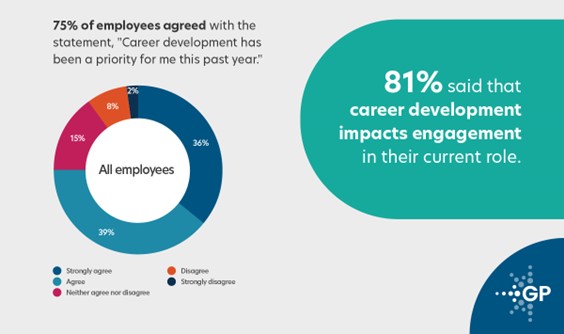
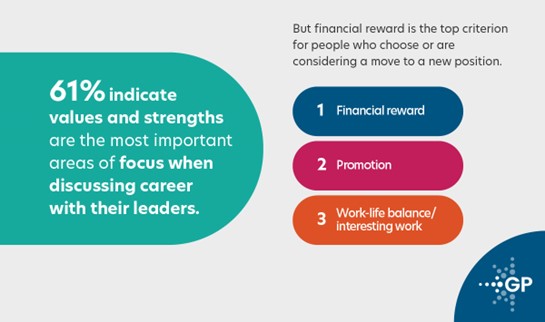
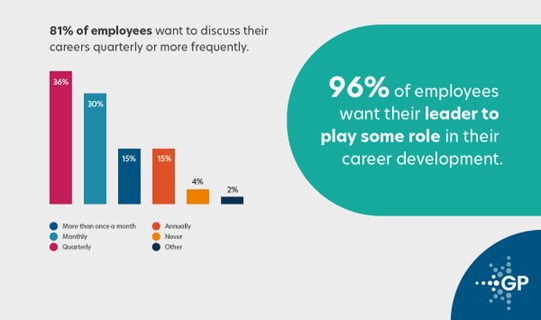
Our 2023 career research polled over 2,000 leaders and individual contributors about their career development perspectives. The results? The emergence of four paradoxical themes with seemingly contradictory messages—all of which are true.

Paradox #1

I’m more engaged in my current job when talking about my next job or my future.

Paradox #2

Values and strengths are important in my current job, and financial reward will be important for my next job.

Paradox #3

Ask me what I want—often—and tell me what the organization wants.

Paradox #4

I want to prioritize my career development, but my current responsibilities prevent it.

The critical impact of career development and career conversations between leaders and their employees is not new; the need for career discussions with a focus on what’s important to employees has not changed. What has changed is the way employees are looking at what they want out of their careers.

Download the full report to get more insights into what employees really want.

About the Authors

GP Strategies Corporation
GP Strategies is a global performance improvement solutions provider of sales and technical training, e-Learning solutions, management consulting and engineering services. GP Strategies' solutions improve the effectiveness of organizations by delivering innovative and superior training, consulting and business improvement services, customized to meet the specific needs of its clients. Clients include Fortune 500 companies, manufacturing, process and energy industries, and other commercial and government customers.

Get in touch.

Learn more about our talent transformation solutions.

Transformation doesn’t happen overnight if you’re doing it right. We continuously deliver measurable outcomes and help you stay the course – choose the right partner for your journey.

Our suite of offerings include:

  • Managed Learning Services
  • Learning Content Design & Development
  • Consulting
  • AI Readiness, Integration, & Support
  • Leadership & Inclusion Training
  • Technical Training
  • Learning Technologies & Implementation
  • Off-the-Shelf Training Courses


Investing in DEI: Unlocking the Potential of Your Budget

As the year-end budget crunch approaches and the challenges of a financially demanding upcoming year loom, numerous Diversity, Equity, and Inclusion (DEI) leaders are pondering ways to get the best out of their waning 2023 spends and maximize their budget allocation for 2024. But when it comes to DEI spends, your budget is more than a financial commitment. It’s an investment in your employees’ future and your organization’s potential, so we need to ensure every dollar counts. This blog post is for those looking to stretch your dollar and truly make a difference.

1. Intellectual property subscriptions bring external expertise, inhouse.

Not all organizations possess in-house DEI specialists, but specialized DEI training providers do. Considering the financial challenges brought about by the pandemic, training organizations worldwide are collaborating, offering their resources and expertise to clients like you at a fraction of the cost. By embracing training subscriptions and course licensing, you gain access to well-established courses for a fixed monthly or annual fee. This cost-efficient approach eliminates the need for extensive design efforts and external facilitators and also represents an investment in your internal trainers and their professional growth. Moreover, course licensing frequently includes “train the trainer” accreditations, ensuring the quality of program delivery, nurturing your in-house talent, and underscoring that DEI is not only a priority for your organization but is represented by your internal team.

2. Digital resources extend your training reach further than the classroom.

Instructor-led training can be incredible, but it can also be costly for those organizations on a small budget with a large headcount. Thankfully, in our post-pandemic world, we are all used to digital learning approaches–and thank goodness, I don’t just mean the click and read of yesteryear. Digital learning has come a long way and can be just as impactful as an instructor-led event, thanks to video learning, experiential scenarios, and behavioral nudge offerings, in the flow of work videos providing behavioral reminders. The truth is that digital learning is accessible, convenient, repeatable, and far more cost effective than your one off half day training events. Not to mention that despite incredible facilitators and well-designed training experiences being rolled out across the globe–synchronous learning isn’t for everyone–this can be due to various barriers such as time constraints or discomfort with group discussions. Investing in alternative digital learning pathways offers a less intimidating and more flexible way for individuals to engage with DEI content.

3. Point of need catalogues are available long after the trainer has turned off the lights.

Many organizations now recognize that the traditional classroom training event is a little outdated when used in isolation. We live in an era of immediate information, and regardless of how effective your instructor-led training sessions may be, they can’t address every curiosity during their limited timeframe. DEI issues are ever evolving and require immediate assistance, and yet no budget would stretch to having a trainer on standby five days a week. Point of need digital resources are a worthy investment that can be accessed anytime, anywhere–and repeatedly done so. It means learners can own their own development and seek out resources to bridge that knowledge gap. This convenience changes how DEI is ‘owned’ in your organization and eliminates the need to wait painstakingly for the next scheduled training session or SME availability.

4. Partner your authentic humans with artificial intelligence (AI) for training evolution.

There has been plenty of AI discussion in 2023. It will continue to gain momentum in 2024. So, for those of you creating your own training content, consider how to partner up your human specialists with artificial intelligence. To be clear, AI, like the one-off classroom event, will not answer all of your problems, and it cannot be a replacement for your subject matter experts, but it can provide them with tools to enhance the training experience and stretch your budget further. Video production tools enriched by AI tools enhance video production through diverse representation and rapid authoring. Internal algorithms and programming mean personalized learning paths and recommended reading lists that can be compiled with just a few clicks of the learner’s mouse. Chat tools can be used during virtual delivery to transcribe training notes, highlight key points, capture shared slides, and assign action items to participants. It is important to remember that while AI is already expanding the scope of our training efforts, AI-generated content should be regarded as a starting point for critical thinking. Harness this technology to liberate human resources. Allow them to do what they do best–be human and apply their expertise to making a difference to your workforce.

5. Break development out of L&D and use your champions to infuse it throughout the organization.

DEI efforts are not short-term endeavours but rather enduring commitments. It is vital to earmark financial resources for continuous learning opportunities, including workshops, forums, and mentorship programs. Consider investing in the establishment and support of Employee Resource Groups (ERGs). Your ERGs provide a platform for underserved communities to convene, voice their concerns, collaboratively tackle unique challenges, and extend mutual support. Although it may seem initially unconventional to invest your DEI training budget outside of training efforts, do not underestimate the significant contributions of employees who voluntarily lead these groups and naturally champion your messages of inclusion. This financial commitment demonstrates a deep appreciation for their dedication and underscores your commitment to fostering a diverse and inclusive workplace.

The reality for 2024 is that budgets will continue to tighten, and DEI teams are expected to do more with less. We can’t continue to do what we have always done because the world today is unlike any we have known before–so start to think differently. Value the deliveries of yesteryear, but get excited for new ideas, approaches, and technologies that will make a difference when it comes to DEI transformation within your business.

About the Authors

Nic Girvan
A leader of impactful and unique learning innovations, Nic Girvan is GP Strategies DEI, Director of Learning and Delivery. With over 20 years’ experience working within Learning & Organizational Development, Nic blends her expertise in adult learning theory and general psychology to create hard hitting and inspirational interventions, that promote culture change and transform working environments. As a previous award winner for innovative instructional design, Nic is driven by the desire to lead her learning services to deliver truly impactful and ground-breaking DEI interventions. Not one to shy away from ‘unusual yet successful’ learning shake ups, Nic inspires her services to break industry boundaries and move beyond ’tick box training’. A truly inclusive and authentic leader, Nic works closely with both instructor-led and digital design teams to ensure her services offer not only return on investment but go beyond client expectation. A committed thought leader for effective training efforts, she regularly publishes blogs, articles, and thought pieces to promote the importance of effective training investment and transformative DEI upskills.

Get in touch.

Learn more about our talent transformation solutions.

Transformation doesn’t happen overnight if you’re doing it right. We continuously deliver measurable outcomes and help you stay the course – choose the right partner for your journey.

Our suite of offerings include:

  • Managed Learning Services
  • Learning Content Design & Development
  • Consulting
  • AI Readiness, Integration, & Support
  • Leadership & Inclusion Training
  • Technical Training
  • Learning Technologies & Implementation
  • Off-the-Shelf Training Courses