Design Techniques to Create Engaging Scenarios in Digital Learning

Learning scenarios are an effective tool that uses storytelling and context to help learners practice and develop their skills. Stories have deep roots in human learning and have been used for centuries to pass on knowledge, wisdom, and learning. As learning has evolved, the use of scenarios has evolved with it to become a critical component of digital learning and development. Most importantly, scenarios can be used to create situations in which learners can develop and rehearse critical skills and knowledge through effective practice. In this blog we look at several key techniques learning designers use to create effective scenario-based learning.

What Is Scenario-Based Learning?

Scenario-based learning commonly uses examples of real-life situations to support decision-based learning. Learners are immersed in a story that allows them to see and interact with challenges and make decisions in a virtual and safe “practice” mode. This provides learners with realistic and challenging behavioral situations that may often be difficult to replicate in other learning modes.

Scenario-based learning often uses and adds aspects of gamification, such as scoring, levelling, and time pressure to present decision-making challenges that lead to specific outcomes, in a realistic way. A scenario-based game can reflect decisions and interactions that learners will encounter in their day-to-day jobs. This makes it possible to link scenarios to your learners’ real-time learning needs.

Many scenario-based eLearning modules incorporate branching structures to help develop critical thinking skills. These branched scenarios are an interactive form of learning that connects the learner’s decisions to a range of alternative consequences. This makes them a great environment to work through the “gray areas” of decision making since learners can experiment and fail safely, while gaining deep insights into the impact of their decisions.

Understanding Your Learning Goals Before Building Scenarios

When developing scenario-based learning, there are several repeatable steps that are useful in constructing reliable, engaging, realistic, efficient, and effective learning experiences. The first step, as with all learning, is to be clear about the purpose of the scenario and the learning goals. These will not necessarily be the same for all learners, so it is also critical to define the personas that the learning is targeting.

Begin by asking questions that help identify your audience and create scenarios that align with the reality of their learning needs. Find out as much as you can about your intended audience by asking key questions like:

  • What is their role and experience level?
  • Where, and how, do they work?  
  • What do they already know about this subject, problem, or challenge?
  • What opinions are they likely to hold regarding this kind of issue?

Determine the Best Authoring Tool or Language for Your eLearning Scenarios

Once you have analyzed your audience and matched their needs to your goals, it is time to select an authoring tool or language that will suit the type of scenario you plan to construct. For example, if you want to create a scenario with branching paths, you need a tool that will manage a series of variables well. Integrating video or creating an immersive environment will require a tool that allows you to accommodate video, create storylines, and provide you with adequate control of the interface. Depending on your audience, you may also need a tool that can provide translations as well.

How to Write a Successful Learning Scenario

Focus on Authenticity, Pace, and Emotion

Once you have defined your project’s scope and delivery technology, it is time to start designing the scenarios themselves. When scripting a scenario, the acronym APE can help you build an impactful learning model. APE stands for authenticity, pace, and emotion, all of which are essential to helping your scenario connect with learners.

Successful scenarios use authentic dilemmas and situations to reinforce learning. If your scenario is unrealistic or too simple, it will fail to challenge your learners. Pace is important to hold your audience’s attention and create a sense of dynamism that helps them engage with the story you are telling. Try to create scenarios that can elicit an emotional response, as this will help learners remember what you have taught them. Effective scenarios also need things like error and success models, story-based coaching, and visible and clear consequences.

Incorporate Multi-Sensory Learning Combinations into Your Scenarios

Engaging learners through multiple senses is another effective method of connecting with your learning audience. Combinations and sequences of media produce better absorption and recall. Some effective combinations include spoken audio and supporting documents, animated illustrations and audio, and dramatic video and compelling graphics. Stimulating multiple senses will not only make it easier to replicate real-life situations, helping learners engage with the story you are telling, but it can also help them to better learn and retain valuable lessons.

Using Artificial Intelligence (AI) in Learning Scenarios

AI offers a wealth of new possibilities for scenario-based learning. At its simplest, AI makes a useful brainstorming tool. Using a simple prompt like, “Create some realistic scenarios about a difficult conversation,” can provide you with ideas for creating dilemmas, responses, and potential branching pathways. Following this up with another prompt like, “What should I include in a conversation with an employee who is displaying a negative attitude? I want to address their behavior and help them adopt a more positive outlook,” could generate a suggested conversation structure and best practice areas to explore. On a more advanced level, AI can also help assist you in coding and testing your scenarios.

As with all AI, it is important not to share sensitive or confidential information with a large language model (LLM). Be transparent about your use of AI by acknowledging sources and respecting the intellectual property rights of contributors. You should also remember that while AI is a valuable tool, it cannot yet replicate human creativity or curiosity.

Measure Learner Response

Measuring learner responses plays a vital role in improving and shaping an eLearning program. In the same way that you analyze your audience before creating your scenarios, it is equally important to assess how your learners are responding to scenarios after they have been completed. Use measurement techniques such as question response level analytics to measure your learners’ responses and uncover areas where learners made frequent errors or poor choices. This data can be used to help you clarify and refine scenarios to better fit the learner’s needs in the future.

What Scenario-Based Learning Can Do for Your Learners

Scenario-based learning generates immersive, impactful, and memorable experiences for learners. These virtual everyday situations enable learners to fail safely as they navigate the gray areas of their roles. Learn more about the award-winning learning scenarios our team has created to address many different complex behavioral situations for a wide variety of organizational needs.

About the Authors

Geoff Bloom
Geoff is a Principal Consultant for the Learning Experience team and has worked in learning technologies and learning design and delivery since 1980. Geoff has worked with a comprehensive range of clients across industries to deliver learning content and define and evaluate a variety of learning strategies. Geoff holds an MBA. He enjoys watching rugby, swimming, and going to see live music.

Get in touch.

Learn more about our talent transformation solutions.

Transformation doesn’t happen overnight if you’re doing it right. We continuously deliver measurable outcomes and help you stay the course – choose the right partner for your journey.

Our suite of offerings include:

  • Managed Learning Services
  • Learning Content Design & Development
  • Consulting
  • AI Readiness, Integration, & Support
  • Leadership & Inclusion Training
  • Technical Training
  • Learning Technologies & Implementation
  • Off-the-Shelf Training Courses


Tailored Technical Training: Why One Size Does Not Fit All

When it comes to training, many organizations try to save time and money by running workers through nearly identical technical programs. Unfortunately, this approach rarely delivers the kind of learning necessary to drive long-term change. Successful organizations understand that there are multiple types of learners, each with their own needs. If your organization is serious about upskilling its workforce, you need to invest the time to create a training program that provides tailored learning journeys to match the variety of different roles, responsibilities, and learning styles of individuals within your organization.

6 Essential Steps to Develop a Successful Technical Training Plan

When creating an industrial training program, these strategies should be top of mind.

1. Review Orientation and Safety Training

Use the first phase of your industrial training to review your organization’s safety essentials. This should cover all corporate and regulatory standards, including plant operations and safety protocols, as well as any emergency procedures and compliance standards. Be sure to mandate participation from all your technicians, regardless of their skill level.

Remember that orientation and safety training can still be tailored to the specific roles and responsibilities of the individual. In a power plant, for instance, there are diverse roles, each requiring specific safety training.

Safety training for control room operators could focus on the operational aspects of the power plant and include managing control systems, responding to system alerts, and executing emergency shutdown procedures. Training should include simulation-based exercises to mimic real-life scenarios, enhancing their decision-making skills in critical situations.

Maintenance technicians, responsible for the upkeep of power plant equipment, require safety training tailored to their exposure to high-voltage machinery and hazardous materials. Key areas of their training should include electrical safety, lockout/tagout procedures, and the correct use of personal protective equipment. Regular hands-on workshops are crucial, allowing technicians to apply safety principles in real-life scenarios.

2. Cover All Relevant Skills

When creating a curriculum for craft skills, it is important to tailor training to the specific needs of various craft positions. Each craft role, such as electrician, welder, or carpenter, requires a unique set of skills and knowledge. Your curriculum should include a wide array of courses that cater to these distinct skill sets. For example, electricians would need courses focused on electrical systems and safety, while welders would benefit from training in welding techniques and metallurgy. This role-specific approach ensures that craft workers are equipped with the precise skills they need to excel in their specific trade, enhancing both individual and organizational effectiveness.

3. Build Varying Levels of Complexity

Effective learning builds over time. When creating your curriculum, structure it in a way that advances logically, allowing learners to build from simple to more advanced concepts as they move forward through courses.

For example, when creating a training course for oil refinery instrumentation and electrical (I&E) technicians, trainees would start with the fundamentals of electrical systems and basic instrumentation used in an oil refinery. This includes understanding electrical safety, basic circuitry, and standard refinery instruments. The course would then progress to more complex electrical concepts and instrumentation diagnostics, such as advanced electrical components, process control systems, and troubleshooting common instrument issues. At the most advanced level, the training could involve in-depth study of refinery-specific control systems, complex electrical configurations, and advanced diagnostic techniques. Trainees would engage in real-world scenarios, like managing system outages or optimizing instrument performance, to apply their advanced knowledge in practical settings.

4. Assess Your Workers’ Skill Levels

Not all employees operate at the same level. It is important to assess the skills, knowledge, and competencies of each of your technicians. Use a combination of tests, interviews, and skills evaluations to determine what type of operator training each technician requires.

In the context of craft skills, recognize that technicians have varying levels of expertise. By assessing each technician’s skills, knowledge, and competencies you can customize training programs that meet their specific needs. Utilizing a mix of assessments such as practical tests, interviews, and skill evaluations can help identify each technician’s proficiency level. This approach ensures that all your operators, mechanics, instrument technicians, welders and other craft professionals receive training that fills their particular skill gaps and builds upon their existing competencies, leading to a more skilled and efficient workforce.

5. Adopt a Tiered Approach to Technical Training

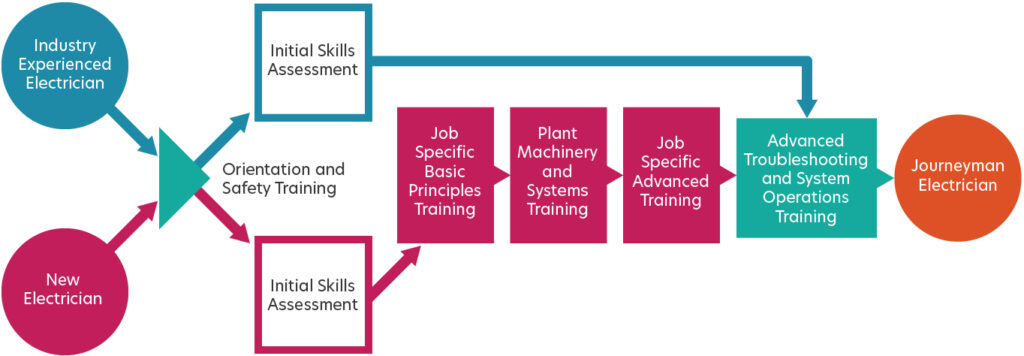
Using identical skills training courses can waste valuable time and frustrate individuals at a more advanced level of their careers. Create a tiered approach to learning with each level building on previous lessons. Then, use your assessment data to start everyone’s training at the tier matching their current knowledge and experience. This will connect learners at each level with what they need to know, while avoiding unnecessary repetition.

Build Learning Paths to Fit Your Learners


Testing for skills at the start of the training journey gives you the insight to direct experienced technicians to skip introductory and mid-level courses and move right into advanced upskilling. This minimizes unnecessary time away from their daily work and improves the learning experience for both new and experienced workers.

6. Integrate Hands-On Experiences

Balancing hands-on training with theoretical learning is essential for effective skill development in various roles at any facility. By utilizing specialized training stations (or industrial training aids), employees can practically apply theoretical knowledge gained in classroom settings. Stations focused on electrical troubleshooting, process control, power transmission, and hydraulics/pneumatics offer immersive experiences where employees engage in real-world tasks.

This approach solidifies their understanding of theoretical concepts and enhances their practical skills, ensuring they are well-prepared for the demands of their roles. Building synergy between hands-on and theoretical learning fosters a more comprehensive and effective training program. It drives problem-solving and critical thinking skills, which are vital in technical fields where technicians must regularly deal with ambiguity.

How Blended Learning Can Improve Your Learning Experience

No two individuals learn alike. To truly connect with its audience, industrial training should adopt a blended approach to learning, which utilizes a mixture of different techniques, tools, and content to help employees learn faster and more efficiently. When building your curriculum keep the following things in mind:

  • Use a range of training methods, including online training materials, microlearning, lab sessions, and three-dimensional exploratory models to accommodate various learning preferences.
  • Conduct face-to-face sessions led by an instructor who can facilitate discussions and address learner questions.
  • These help you track their progress and tailor the learning experience to individual needs.
  • Provide your learners with feedback on their progress through written comments, one-on-one discussions, and/or group meetings.
  • Ensure that learning materials are accessible on a variety of devices and platforms. This will allow workers to learn anytime, anywhere.
  • Regularly update your learning content to keep up with all technological and industry advancements.

Investing in Technical Training is Cost-Effective

At the beginning of this article, we mentioned how many companies use identical programs for their entire technical staff. While this approach may promise upfront savings, the savings quickly break down when lessons fail to connect with their audience. Ineffective curriculums often lead to repeat training—which incurs additional cost—and longer time to proficiency.

It is also important to factor in the enormous cost resulting from worker errors and accidents. If your technicians fail to learn the skills they need, mistakes will happen. This can lead to safety issues, regulatory noncompliance, and equipment downtime, which can open you up to potential lawsuits and have grave repercussions for your budget and reputation. Training should never be an afterthought; it is what makes or breaks the performance of your workforce.

Reach out to us if you would like to discuss your goals and build a training program that provides technicians the resources they need to perform at their best.

About the Authors

Ryan Weatherwax
With over 25 years of diverse professional experience, Ryan is a seasoned training and development expert, passionate about getting the best from people, their learning, development, and personal and professional growth. His career has spanned across the military, commercial power generation, emergency services, public safety, and waste management sectors with a focus on workforce training and development. As a forward-thinking training professional, Ryan specializes in integrating creative training methodologies and techniques (i.e. gamification, experiential learning, microlearning, scenario-based learning) to enhance learning experiences. Ryan's approach is centered on developing engaging, interactive training programs that boost engagement, motivation, and retention. 

Get in touch.

Learn more about our talent transformation solutions.

Transformation doesn’t happen overnight if you’re doing it right. We continuously deliver measurable outcomes and help you stay the course – choose the right partner for your journey.

Our suite of offerings include:

  • Managed Learning Services
  • Learning Content Design & Development
  • Consulting
  • AI Readiness, Integration, & Support
  • Leadership & Inclusion Training
  • Technical Training
  • Learning Technologies & Implementation
  • Off-the-Shelf Training Courses


Navigating Uncertainty and Embracing Authenticity in Leadership

The world, and the world of work, continues to bring a maelstrom of uncertainty—from political concerns to economic anxiety. Trust in organizations is low, and employees are trying to discern what is real, what is authentic, and what they can rely on. By recognizing the forces that feed into this uncertainty leaders can begin understanding how they can lead through it.

This blog explores five factors impacting the role of leaders in the coming years.

1. Generational Influences

Each generation of leaders is influenced by the generations that came before them, who created a blueprint for leadership that they often modified, but largely followed.

Now, the paradigm is shifting with the rise of Millennials and Gen Zers in the workplace, who will constitute 74% of the workforce by 2030. Their impact is already changing the way work gets done and the definition of career success. Theirs is a generation for whom technology is part of their DNA, and they embrace that technology to help them be more efficient, stay connected, manage their investments, or take on a side gig. Because of this, we have seen a significant shift in the way employees think and feel about career success. There is an increasing focus on working to live, not living to work, and viewing a job as a means to an end, to live the life they want and be fulfilled in their role. The result? A workforce that feels increasingly empowered to define their jobs, job conditions, and career success on their own terms.

2. Distributed Workforce

The second challenge or issue that continues to persist is the tug-of-war over distributed work, leaving organizations grappling with the optimal combination of on-site, remote, or hybrid structure. Debate quietly rages on about what the “right” scenario is to support productivity and connection. And while each organization is vested in their chosen position, many employees are calling out the inconsistencies in how hybrid work success is managed and measured. Hybrid work is a complex and ongoing puzzle, and getting clear on the rationale for the organization’s chosen model is key. The fact is that regardless of location, leaders must redouble efforts to stay connected with their people and combat fatigue and burnout.

3. Artificial Intelligence (AI)

Awareness of AI’s influence looms large, but clarity over its impact is elusive for many leaders. While 75% of organizations say they will adopt AI in the next five years, 50% say it will add jobs, and 25% say it will eliminate jobs. The truth is the precise impact is murky, and that murkiness is stoking fear. When leaders do talk about AI, much of the conversation revolves around its danger and how to regulate its use. Even murkier than the regulation of AI is the impact it will have on people leadership skills.

4. DEI Metamorphosis

An ongoing area of focus for leaders and organizations and one that is going through a metamorphosis is Diversity, Equity, and Inclusion (DEI). Despite the fact that 67% of job seekers consider a company’s DEI policies when determining where to work, organizations are slow to take a comprehensive approach to DEI. Skepticism about the appropriateness and effectiveness of prior efforts has caused some organizations to retreat from their commitment and has slowed future plans. Some organizations have backtracked on their investment in DEI-related roles, failing to provide support or deprioritizing DEI. With increasing pressure to measure their efforts, those who remain committed are re-evaluating their training, policies, and structures to take a more systemic approach to garner ongoing support.

5. The Need for Upskilling and Reskilling

The Organization for Economic Cooperation and Development (OECD) predicts that AI and machine learning will transform 1.1 billion jobs over the next decade. Because of this, organizations will begin to experience wide skills gaps that their employees currently can’t fill unless they implement upskilling and reskilling programs now. There will also be an increase in functions that become obsolete due to the emergence of technologies like AI. By identifying those now, leaders can help reskill the individuals that currently hold these positions and prepare them for new roles rather than just laying them off. Reskilling and upskilling efforts that demonstrate a commitment to employee growth also enhance job satisfaction, contribute to positive organizational outcomes, and help build a strong talent pipeline.

Implications for Leaders: A Multifaceted Approach

Against the backdrop of these significant pressures, leaders need to shift how they show up for their people, but they already have the tools they need at their disposal. By thinking “head, heart, hand, and soul,” leaders can implement small changes that demonstrate they are focused on what organizations, and their teams, need today and in the future to be successful. With all these trends swirling, leaders can focus on:

  • Head: Audit your thinking, understand AI’s implications, and work on highlighting cognitive skills of critical thinking in the age of automation. Shift your mindsets on the definition of career success and understand the complexities of hybrid job conditions rather than fight to “get back to normal.”
  • Heart: Connect with your people. Leaders must lead with their hearts, embracing authenticity and regrouping on core concepts like trust. Employee well-being goes beyond surface-level gestures. Address burnout’s underlying causes by evaluating priorities and workloads and by making genuine connections between work and people.
  • Hand: Offer a helping hand by coaching employees so they feel accountable and empowered regardless of where they work. Help your people grow and develop, and factor AI into the equation when you do.
  • Soul: Connect to a larger purpose, values, and social responsibility. Leaders can inspire teams by sharing about their own motivators and stories, fostering a sense of shared purpose, and by cultivating a positive vision for the future.

Charting a Course Beyond Uncertainty

As we navigate the uncharted waters of this year and beyond, no doubt we are asking a lot of our leaders. They need to be agile, empathetic, and visionary all at the same time. But despite the rapid acceleration of new technology and uncertain times, it is the authentic leader that will emerge as successful.

To learn more about these trends, watch the on-demand webinar Leading with Impact: Trends Shaping Leadership Dynamics in 2024.

About the Authors

Leah Clark
Leah Clark is the Leadership Practice Lead at GP Strategies, as well as an author and the founder of LeaderConnect. With over 28 years of experience in her field, Leah brings a unique perspective on the mindsets and skillset that are critical to leadership success to her coaching and consulting. Her clients benefit from her collaborative approach to crafting a well-connected and thoughtful leadership development strategy. Leah holds a Master of Arts; Organizational Psychology, Columbia University and a Bachelor of Arts; English and Sociology, Boston College.

Get in touch.

Learn more about our talent transformation solutions.

Transformation doesn’t happen overnight if you’re doing it right. We continuously deliver measurable outcomes and help you stay the course – choose the right partner for your journey.

Our suite of offerings include:

  • Managed Learning Services
  • Learning Content Design & Development
  • Consulting
  • AI Readiness, Integration, & Support
  • Leadership & Inclusion Training
  • Technical Training
  • Learning Technologies & Implementation
  • Off-the-Shelf Training Courses


The Benefits of Outsourcing DEI Training & Consulting for Companies in 2024

A recent report indicates that Diversity, Equity, and Inclusion (DEI) initiatives have moved from second to seventh place in terms of HR priorities, however, an HR Trends Report 2024 from McLean & Company indicates that “organizations that are highly effective in their approach to DEI are 1.9 times more likely to have a highly productive workforce.” With budgets dwindling and priorities shifting, now is a critical time to consider external subject matter expertise to support your social impact and DEI activities in 2024.

From culture assessments to Employee Resource Group (ERG) support and learning & development opportunities, looking to external vendors can garner more team trust, alleviate pressure on HR business partners, increase capacity, and deliver targeted solutions through multiple SMEs. The result? A customized solution that offers relevant training and consulting cost savings at scale.

Before diving right into outsourced solutions, let’s explore what makes this year different for DEI and HR professionals.

For one, the political climate and gradual polarization in the US have been intensifying since the pandemic. Given that it is an election year, companies and DEI leaders are struggling to decide if they can manage to keep political ideology out of the workplace or find the proper approach to addressing the issues while remaining neutral. According to a 2020 survey by SHRM “compared to previous years, 44 percent of HR professionals report intensified political volatility at work.” Further to that point “eighty percent of HR professionals say their organizations have not set guidelines on communicating about politics at work.”

And that’s just what’s going on in the US. Taking a more global view, the wars in Ukraine and Gaza risk sparking workplace conflict. In addition, according to a CNN report “economic and political stability is threatened by massive migration flows, fears of recession, and the broadening impacts of climate change.” These are all concerns of everyday people and there’s a looming risk of these external issues coming up in casual workplace discussion. It would be naïve for DEI and HR professionals to ignore what’s going on globally and its impact on their team. The point is, approaching how to properly address these topics in the workplace can feel like treading on thin ice.

Not aligned, but still top of mind for employees, is the uncertainty of how AI technology may disrupt business across most industries and what the implications are on job displacement. While we’re in the nascent stages of understanding the depth of this technology’s potential impact, Tyna Eloundou of OpenAI told The Economist “around 80% of the US workforce could have at least 10% of their work tasks affected by the introduction of LLMs.”

The accuracy of these predictions doesn’t matter. People are concerned about their job status now and in the near future. PwC released the results of their “Global Workforce Hopes & Fears Survey” which reveals that nearly 30% of workers harbor concerns that their jobs might succumb to technological replacements, particularly from advancements like AI, in the next three years.

Taking a wholistic view of society can help DEI and HR professionals decide what conversations and training are worth investing in this year. The one size fits all company-wide solutions for policies, practices, and training are becoming a thing of the past.

What can external subject matter experts (SMEs) provide in terms of support in 2024?

#1. An externally run (and anonymous) pulse check on employee sentiment can provide increased insights into how your team is feeling this year:

Sourcing an external data consultant and electing an anonymous data collection process increases the likelihood of employee participation. Vendors often bring an unbiased perspective and specialized tools for assessing and collecting DEI data. Employees may feel more comfortable sharing their thoughts and experiences with an external party, which can lead to more accurate and honest results. Trust is crucial for obtaining meaningful insights into the organizational culture and identifying areas that need improvement. We suggest in 2024 that DEI leaders consider adding a question that will highlight potential employee concerns that can then be addressed through a strategic communication plan that includes targeted workshops and top-down reassurances.

#2. External DEI experts can protect internal employees from having to address sensitive subjects:

Sensitive topics related to DEI can be challenging for internal DEI leaders to address, especially in the current socio-political climate where discussions can be extremely polarized. Historically, the goal was to leave our political views at the door, but this is becoming less likely in 2024. In crisis management, being proactive and preventing conflicts is often more effective than reacting to them after they’ve erupted. External DEI experts can play a crucial role in foreseeing potential conflicts, particularly in situations where sensitive subjects intersect with broader societal issues.

External DEI experts provide an unbiased and professional perspective, reducing the burden on internal staff to navigate potentially contentious conversations. This external observation allows for a more objective evaluation of the organization’s strengths and weaknesses in DEI.

#3. Going external enables you to access a variety of SMEs, which is especially relevant in approaching sensitive topics:

DEI encompasses a wide range of topics, from cultural assessments to ERG support and learning & development. Instead of hiring a generalist who may not have expertise in all these areas, external vendors provide access to a diverse pool of SMEs. This ensures that each aspect of DEI is addressed in a bullseye targeted way by professionals with specific knowledge and experience, resulting in a more comprehensive, effective, and ROI driven approach.

In addition, trainers specializing in DEI are typically well-versed in facilitating difficult conversations. They possess the skills to guide discussions in a constructive and inclusive manner, minimizing the risk of misunderstandings or conflicts that could lead to backlash. External trainers often come with established credibility and expertise in DEI.

This credibility can lend weight to the importance of the topics being discussed and may reduce resistance from employees who might be skeptical about internal initiatives. In addition, sensitive topics can evoke strong emotions. External trainers are trained to handle these emotional responses effectively, ensuring that discussions remain constructive and respectful.

#4. Choosing an L&D partner saves time on developing content that is available to be licensed and customized to your organizations’ specific needs:

Creating DEI content internally can be time-consuming and resource-intensive. External vendors often have a team of experts who continuously research and update their content. By leveraging externally developed content, organizations can benefit from the vendor’s ongoing commitment to staying current with DEI principles, saving internal teams the time required for extensive research. Pre-developed content from external vendors is often designed to be customizable. However, since it already encompasses foundational principles and best practices, the time spent tailoring the content to fit the organization’s needs is significantly reduced compared to creating content from scratch.

Given the 2024 landscape, we know that DEI initiatives are going to continue to be imperative to the success of organizations. But it must be done well, and with the trust of your people. Understanding this, it’s important to leverage already proven approaches and methodologies to not only drive inclusion, but remind colleagues to act with respect and integrity in heightened moments throughout the coming year.  

About the Authors

Suzanne Zudiker
Suzanne Zudiker is a global diversity and inclusion consultant at GP Strategies. She has more than 15 years’ experience of diversity, equity and inclusion (DEI) and management consulting, through organizational culture change work in a variety of different sectors. Suzanne has an in-depth knowledge of how organizations express their ethos – from an external corporate social responsibility lens as well as how that is reflected internally through employee engagement and sustained DEI commitments. She specializes in conducting quantitative and qualitative analyses of the DEI culture at organizations to inform strategic planning, implement learning and development initiatives, and support embedding equity throughout client organizations.

Get in touch.

Learn more about our talent transformation solutions.

Transformation doesn’t happen overnight if you’re doing it right. We continuously deliver measurable outcomes and help you stay the course – choose the right partner for your journey.

Our suite of offerings include:

  • Managed Learning Services
  • Learning Content Design & Development
  • Consulting
  • AI Readiness, Integration, & Support
  • Leadership & Inclusion Training
  • Technical Training
  • Learning Technologies & Implementation
  • Off-the-Shelf Training Courses


Maximizing Technology User Adoption: 5 Key Benefits of Building Your Training Team

Staff augmentation can be a lifeline to ongoing project teams and organizations with large transformations underway. It provides an opportunity to access the wealth of knowledge and experience that exists outside of your organization. The ever-changing technology landscape has led to a general rise in outsourcing of roles across IT and L&D departments, and while every organization follows its own digital transformation journey, there is a tremendous opportunity for your employees to learn new skills when paired with individuals from outside of your organization. This includes sharing best practices gained from projects, organizations, and industries with which your staff may not have experience.

If you are looking for an effective way to transform your organization’s approach to technology implementations, staff augmentation could be the answer.

5 Key Benefits of Building Your Training Team with Staff Augmentation

Although there is no one-size-fits-all approach for most large enterprises, there are economies of scale to staff augmentation. In many cases, staff augmentation can be an effective solution to a short-term requirement for experienced and skilled employees.

1. Experienced Professionals for All Stages of a Project

Most digital transformation projects or system implementations are subject to extremely tight deadlines and typically have an aggressive go-live date established before the project starts. Stakeholders expect to meet all milestones and deadlines agreed upon during the planning phase. To meet those expectations, an organization must consider the time it will take to prepare their employees who have varied levels of experience. In some cases, employees have no experience working on a digital transformation or system implementation project and are learning the intricacies of a new system and approach in real time.

Given the length of time it could take to train employees and get them up to speed, organizations are finding value in augmenting their team with experienced professionals who can join a project at any point and get up to speed quickly. Individuals with this expertise can help alleviate the pressure on your internal team and foster an environment for knowledge transfer, allowing for better success on an overall project.

2. Specialized Skillsets for Each Implementation

During the implementation phase, organizations need a project team that combines individuals with business expertise and those skilled in using specific systems or technologies. However, in many cases, the required system experience is simply not available internally. Staff augmentation offers a significant advantage by bringing in individuals with specialized project expertise.

This approach enables you to review the industry and select individuals to support your project based on their skillset and experience with a particular system or software. It enhances the knowledge base of your existing team and addresses any potential gaps. Consequently, this helps to upskill your existing employees, ensuring they can seamlessly transition to business-as-usual post-implementation.

3. Minimizing Business Disruption

The aim of minimizing disruption can be achieved by spreading the workload across various individuals and teams. An implementation or transformation of any kind causes disruption throughout an organization, regardless of how much effort is put into minimizing it and adhering to the project plan.

Each person involved in the project, whether directly or indirectly, faces increased demands, adding to already stretched workloads. Bringing in temporary colleagues to provide additional support facilitates a smooth transition from one system to another, without overloading your employees during an already stressful period.

4. Effective ROI Through Short-Term Colleagues

Ultimately, all projects and investments are judged by their return, and the best way to maximize ROI is to reduce all additional expenditure. Hiring on a project-by-project basis is an effective way of managing your bottom line.

The idea of one-off costs for staff augmentation can be daunting for a business, and many people question whether it would make more sense to hire a full-time employee who will remain on staff post-implementation. However, this may not always be the best solution, given that internal organizations likely have IT and L&D teams that, upon project completion, will have gained a significant amount of experience. Every project operates within an overall project budget and substantial investments in learning and talent solutions may limit the funds available to support long term learning programs with full-time IT and L&D teams.

5. Recruiting Top International Talent

One thing we have observed in recent years is the flexibility that remote working provides, not only to individuals, but also to the business. We have begun to embrace this and the value that it brings us in reaching the best individuals in their field and across the globe. We are no longer restricted to a specific location and instead we have the luxury of identifying the best candidate for the project, regardless of where they are based. This provides the opportunity to learn from individuals spread geographically, who we may never have encountered in the past, and gain best practices from projects across the globe.

Staff augmentation can be an incredibly useful way of supporting a business through any significant change, and in particular, through technology and system implementations.

To learn more about this topic or hear how GP Strategies has supported staffing needs on large systems transformation initiatives, contact us.

About the Authors

Nakita Pattni
Nakita is the EMEA Business Development Manager at GP Strategies, within Platform Adoption. Over the last 7 years, her focus has been to support clients and their employees thrive in their workplace by creating people strategies that align with business outcomes. In particular, improving user adoption of processes and technology platforms, to enable client business results. She works with clients to understand the overall business challenges and supports organizations with building effective solutions, to increase performance and improve business outcomes.

Get in touch.

Learn more about our talent transformation solutions.

Transformation doesn’t happen overnight if you’re doing it right. We continuously deliver measurable outcomes and help you stay the course – choose the right partner for your journey.

Our suite of offerings include:

  • Managed Learning Services
  • Learning Content Design & Development
  • Consulting
  • AI Readiness, Integration, & Support
  • Leadership & Inclusion Training
  • Technical Training
  • Learning Technologies & Implementation
  • Off-the-Shelf Training Courses


Maximize Engagement: Key Factors for Planning Employee Learning Journeys

The success of any organization is closely tied to the growth and development of its employees. As the saying goes, “The only thing worse than training your employees and having them leave is not training them and having them stay.” Thus, planning a well-structured learning journey for employees is essential for organizational success. However, in this age of data-driven decision-making, it’s equally important to measure the return on investment (ROI) of employee learning initiatives. In this article, we’ll delve into the key factors to consider when planning the learning journey for an employee and explore strategies for measuring ROI.

The Importance of Employee Learning

Employee learning is a strategic investment. It directly impacts an organization’s productivity, innovation, competitiveness, and long-term success. Employee learning needs to be a top priority for four key areas.

1. Skill Development and Adaptation

In a world where the pace of change is accelerating, employees need to continuously update and expand their skills. Learning ensures that employees remain adaptable, making it possible for organizations to respond to new challenges and opportunities effectively.

2. Employee Engagement and Retention

Providing learning opportunities signals to employees that their growth and development are valued. Engaged and motivated employees are more likely to stay with an organization, reducing turnover and the associated costs.

3. Improved Performance and Productivity

A well-structured learning journey enhances employee performance. When employees acquire new knowledge and skills, they are more likely to come up with fresh ideas and solutions that they can apply to their roles, leading to increased productivity and better outcomes.

4. Leadership Development

Learning programs can identify and develop future leaders within the organization. These individuals are crucial for the long-term sustainability and growth of the company.

Key Factors for Planning the Learning Journey

To ensure that your employee learning initiatives yield a strong ROI, you must carefully plan and design the learning journey.

1. Identify Learning Objectives

Clearly define the learning objectives and desired outcomes of the program. What specific skills or knowledge should employees acquire, and how will these benefit the organization? Setting clear goals is essential for measuring ROI.

2. Tailor Learning Paths

Recognize that one size does not fit all. Employees have different learning preferences and needs. Tailor learning paths to individual and team requirements. Consider the use of blended learning, which can include in-person training, eLearning, microlearning, and on-the-job learning experiences.

3. Accessible Learning Resources

Provide easy access to learning resources, whether in the form of online courses, mentorship, or relevant books and articles. Ensure that employees are informed about what is available and how they can access resources when and where they need them.

4. Engage and Motivate Learners

Make learning engaging and motivational. Use gamification, peer learning, and real-world projects to keep employees invested in their learning journeys. A motivated learner is more likely to apply newly acquired knowledge.

5. Measure Progress

Implement ongoing assessments and feedback mechanisms to track employee progress. Regular evaluations help in identifying areas where employees may be struggling and need additional support.

6. Offer Support and Feedback

Encourage a culture of continuous learning by providing support and constructive feedback. Managers and mentors play a vital role in this process, as they can guide employees and provide insights for improvement.

7. Evaluate Learning Outcomes

At the conclusion of the learning journey, evaluate the extent to which learning objectives have been met. This evaluation can take the form of exams, practical assessments, or performance reviews.

Measuring the ROI of Employee Learning

Once you’ve planned and implemented your employee learning program, it’s crucial to measure the return on investment to ensure that the resources invested are generating the desired outcomes.

1. Pre- and Post-Assessments

Conduct pre- and post-assessments to quantify the knowledge and skills gained by employees. This data will help you determine the effectiveness of the learning journey.

2. Productivity Metrics

Analyze changes in productivity, such as increased output, efficiency, or reduction in errors, to gauge the impact of the learning program with their on-the-job performance.

3. Employee Performance Reviews

Incorporate feedback from managers and supervisors during employee performance reviews. Assess whether employees who completed the learning journey are now performing at a higher level.

4. Employee Surveys

Gather feedback from employees through surveys to understand their perception of the learning program’s impact on their skills, job satisfaction, and career progression.

5. Cost-Benefit Analysis

Compare the costs of the learning program, including training materials, instructor fees, and employee time, to the benefits in terms of improved performance, reduced turnover, and increased revenue or savings.

6. Retention Rates

Examine employee retention rates to determine if learning opportunities have a positive impact on retaining talent. A lower turnover rate can result in significant cost savings.

 7. Feedback from Customers and Clients

Gather feedback from customers and clients to gauge the impact of improved employee skills and knowledge on their satisfaction and loyalty.

8. Calculate ROI

Assess the long-term impact of the learning journey and calculate the ROI by comparing the overall benefits of the learning program to the total cost.

By considering these key factors and using various methods to measure ROI, organizations can ensure that their investment in employee learning is a wise and strategic one.

Planning an effective learning journey for employees is vital for organizational growth and success. It enhances employee skills, engagement, and innovation while supporting leadership development. To maximize the return on investment, organizations should carefully design their learning programs, measure progress, and evaluate outcomes. By doing so, they can continue to adapt and thrive in an ever-changing business environment. Remember, the most valuable asset in any organization is its people, and investing in their growth is an investment in the future.

About the Authors

Rajdeep Dutta
With 25 years of diverse professional experience, Rajdeep is a seasoned manager and operations expert who is deeply passionate about people, learning and development, and leadership growth. His career has spanned across renowned organizations like GE, HSBC, as well as smaller enterprises. His roles have ranged from operations and capacity management to analytics and learning & development. Rajdeep is passionate about his work and views his team and the individuals within it as his greatest assets, prioritizing their growth and well-being above all else. His personal and professional development are intricately linked to their progression, making their success his ultimate goal. Beyond his professional life, he proudly plays the role of "Mr. Bean" to his 21-year-old daughter and a four-legged feline friend. He’s a certified herpetologist, driven by a passion for reptiles, particularly snakes. This passion has taken him to some extraordinary places, creating indelible memories and even a few bites along the way. In addition, he is an amateur photographer who captures the beauty of the natural world.

Get in touch.

Learn more about our talent transformation solutions.

Transformation doesn’t happen overnight if you’re doing it right. We continuously deliver measurable outcomes and help you stay the course – choose the right partner for your journey.

Our suite of offerings include:

  • Managed Learning Services
  • Learning Content Design & Development
  • Consulting
  • AI Readiness, Integration, & Support
  • Leadership & Inclusion Training
  • Technical Training
  • Learning Technologies & Implementation
  • Off-the-Shelf Training Courses


Training Delivery: What It Is and How to Do It Effectively

A recent survey found that only 23% of employees worldwide are engaged at work (Training Industry Magazine Trends 2024). Given this, and the fact that employees want more development opportunities, learning and development (L&D) specialists must ensure that their training programs hit the mark.

Effective training delivery equips employees with the knowledge and skills required to remain competitive and engaged. By researching the diverse array of training delivery options available, your organization can determine the best approach for your learning needs.

What Is Effective Training Delivery?

At its simplest, training delivery describes how an organization presents learning to its employees. It can refer to the entire L&D process—including the methods and technologies used throughout the enterprise—or the execution of a particular learning event.

Another crucial aspect of training delivery is the strategic management of instructor resourcing. This service provides a pool of instructors and oversees the logistics and administration of live classes, whether in-person or virtual. For example, we recently supported a client in launching an enterprise-wide DEI program comprising 600 sessions that needed to be completed within nine months. We helped the client locate additional instructors, matched them to the organization’s needs, and handled all additional training, certification, and onboarding, ensuring the successful implementation of the training.

Types of Training Delivery Methods in the Workplace

When evaluating which training delivery method to use, it is crucial to consider various factors, including the audience, subject matter, and level of complexity. This ensures that the method chosen is the most effective for the chosen learning need.

Some of the most common training delivery methods that organizations use include:

Digital tools have redefined what is possible in the world of L&D and have helped to support the idea of blending different training delivery methods into a learning program. When used together in a meaningful learning journey, learning programs can excel by introducing, demonstrating, and reinforcing knowledge and skills over time, all while creating a cohesive learner experience.

4 Ways to Integrate Effective Training Delivery into Your Business Strategy

When you are creating or updating a training delivery program, keep the following concepts in mind:

  1. Make learning a continuous part of your culture. Think of learning as a continuous journey rather than an annual event. Taking a continuous approach to learning helps your enterprise remain competitive by upskilling employees continually and gradually over time.
  2. Prioritize the learner experience. Remember, everyone learns differently. When building a program, prioritize different learners’ needs by adopting a strategy incorporating various training delivery methods.
  3. Create learning that is relevant. Learners today face many distractions. If your training delivery efforts do not feel relevant, they will almost certainly fail to engage your audience. Take the time to align with your audience’s needs and focus on how your training will help make their lives easier.
  4. Design and deliver learning that is flexible. Training delivery must align with how and when employees can learn. Create programs that can be consumed in small doses over time and at the point of need. Doing so allows employees to learn during their downtime instead of interrupting crucial work for lengthy training sessions.

The Advantages of Outsourcing Your Training Delivery

Many organizations simply do not have the capacity to execute a sizable program on their own, so a common reason that organizations outsource training is due to initiatives that require scalability. For example, one of our clients faced a challenging hiring-target goal that had to be completed by the end of the year. The task was beyond what their delivery team could manage. So, they partnered with us to help augment their team for six months to meet their hiring goals.

As companies grow and change, internal L&D resources can become strained or outmoded over time, requiring outside help to bridge the gap. Organizations will also outsource their training delivery when they roll out initiatives that require specific skill sets or expertise that currently do not exist within their group. Organizations find it beneficial to partner with an instructor-resourcing firm to fill this need, especially if it is for a temporary or set period. 

Aside from instructor resourcing, other common reasons to outsource training delivery include:

  • Gaining a Fresh Perspective: Outsourcing can bring new ideas and innovative approaches that your internal team might not consider.
  • Access to a Broad Range of Expertise: External training providers often have a team of specialists with varied backgrounds, ensuring comprehensive coverage of the knowledge and skills you need.
  • Customized Training Solutions: Outsourcing allows for bespoke training programs tailored to your organization’s unique needs and goals.
  • Cost Efficiency: By outsourcing, companies can avoid the overhead costs of hiring and training full-time staff, focusing resources on other critical areas.
  • Scalability and Flexibility: Training needs can fluctuate, and outsourcing provides the flexibility to scale up or down quickly based on current demands without long-term commitments.
  • Reduced Time to Implementation: With experienced trainers and ready-made programs, outsourcing can significantly reduce the time it takes to roll out new training initiatives.
  • Enhanced Focus on Core Business Activities: Internal teams can concentrate on their primary tasks by delegating training responsibilities, improving overall productivity and effectiveness.

Outsourcing your training delivery can provide the support and resources needed to ensure that your organization remains competitive and capable of achieving its goals, no matter how ambitious.

Transform Your Learning Organization with Effective Training Delivery

Delivering training effectively can challenge any organization with varying teams and regional needs. When the right facilitators deliver a meaningful learning journey for a workforce full of different learning styles, organizations see improvement in productivity and employee morale.

About the Authors

Megan Bridgett
Megan Bridgett, a leader in training and talent development for over a decade, helps organizations implement, optimize, and increase capabilities in their learning management initiatives.

Get in touch.

Learn more about our talent transformation solutions.

Transformation doesn’t happen overnight if you’re doing it right. We continuously deliver measurable outcomes and help you stay the course – choose the right partner for your journey.

Our suite of offerings include:

  • Managed Learning Services
  • Learning Content Design & Development
  • Consulting
  • AI Readiness, Integration, & Support
  • Leadership & Inclusion Training
  • Technical Training
  • Learning Technologies & Implementation
  • Off-the-Shelf Training Courses


Strategies for Developing the Technical Skills of Nontechnical Workers

There are more technical job openings than people qualified to fill them.

People entering the workforce commonly opt out of trade work, even though many technical jobs can pay as well—or better than—administrative jobs. At the same time, technical experts with decades of experience and institutional knowledge are reaching retirement age, leaving the workforce without enough incoming trained workers to backfill their positions.

With too many open roles and a talent pipeline too small to fill them, how can organizations solve this gap?

At GP Strategies, our philosophy for building a competent technical workforce involves embracing the following key concepts:

  1. People naturally desire to learn, and fostering continuous learning keeps them highly engaged and motivated.  
  2. Technical skills can be taught and developed, even among those who come from nontechnical backgrounds.  
  3. Implementing strategic technical training and self-guided learning can lead your organization to success. 

With the current skills gap crisis and our philosophy in mind, developing technical skills in nontechnical workers is now crucial for organizational success. By adopting our philosophy and implementing the following key strategies, organizations can empower their nontechnical workers to thrive in technical roles and contribute effectively to the ever-changing demands of the modern workforce.

Key Strategies for Developing Skills in Nontechnical Workers

1. Provide Comprehensive Training Programs with Real-World Applications

Offer a mix of classroom instruction, hands-on training, and self-guided learning to provide workers transitioning to technical roles with a well-rounded education covering fundamental skills and industry-specific knowledge. Our expert facilitators can help with instructor-led training and GPiLEARN+ online training content can support self-guided learning to complete your program.  

As workers transition into technical roles, they need opportunities to apply their newly acquired skills in real-world scenarios. Practical, hands-on experiences allow your people to consolidate their learning and gain a deeper understanding of the applications and implications of their new skillset. These experiences might include job shadowing, on-the-job training, or participation in collaborative projects directly using their new technical skills.

2. Promote Continuous Learning and a Growth Mindset

Encourage workers transitioning to technical roles to continue learning and refining their skills, even after they have completed their initial training. Promoting a culture that values learning, adaptability, and resilience can help workers successfully navigate the challenges of transitioning into technical roles.   To do this, provide opportunities for your people to attend workshops, conferences, and other professional development events to help them stay current on industry trends, expand their knowledge, develop new skills, and foster a growth mindset. Encourage them to perceive challenges as opportunities for personal and professional development. They should savor their learning journey as an ongoing process wherein they continuously acquire new skills and improve existing ones.

3. Incorporate Assessments, Feedback Loops, and Performance Metrics

Regularly evaluate workers’ progress as they transition to technical roles by providing constructive feedback to help them grow and improve. This ongoing support and feedback can help your people feel supported during what might feel like a vulnerable time in their careers. It can also help make them more confident in their abilities and ensure that they continue to develop the skills needed for their new roles. 

To effectively track workers’ progress transitioning to technical roles as they develop their new skills, establish feedback loops and business performance metrics that provide tangible data on their growth. These tools can help employees and their supervisors identify areas of strength and weakness, tailor training programs to address individual needs, and gauge the effectiveness of various learning strategies. 

Consistently monitoring and assessing employee performance is how organizations can ensure that their workforce remains agile, skilled, and prepared for the demands of an ever-evolving technical landscape.

The Role of Soft Skills in Technical Transformation

Soft skills are notoriously overlooked when training technical talent, but by cultivating a balanced skillset that combines technical with soft skills, learning leaders can help workers transitioning to technical roles contribute meaningfully to the organization’s success. 

In addition to fundamental technical skills, soft skills such as communication, teamwork, adaptability, and time management are critical for success in technical roles because they facilitate collaboration, enable effective problem-solving, help people lead teams and projects, convey complex problems and solutions to stakeholders, and promote a positive work environment.

Leadership training can be particularly valuable, especially in the instance when the most competent frontline worker is promoted to a leadership position. Organizations experience a tangible benefit from formally investing in their leaders—a well-trained manager is better prepared to lead important conversations with their people and encourage high performance.

Teaching soft skills to technical workers requires a tailored approach that recognizes the unique needs and challenges of individuals in their specific fields, and providing abundant contextual relevance, interactive workshops or simulations, customized training programs, and plenty of coaching and mentoring are all excellent ways to help technical works develop soft skills.

Crafting Technical Talent for the Future

A workforce armed with both technical capability and well-honed soft skills is not only better equipped to tackle complex challenges but also becomes a valuable asset in driving innovation, collaboration, and sustained success. Ultimately, the journey toward skilled technical excellence is a shared one, with organizations and individuals working hand-in-hand to cultivate a culture of continuous learning and evolution. 

To learn more about how to develop and maintain your technical workforce, download our eBook, Crafting Technical Talent.  

About the Authors

GP Strategies Corporation
GP Strategies is a global performance improvement solutions provider of sales and technical training, e-Learning solutions, management consulting and engineering services. GP Strategies' solutions improve the effectiveness of organizations by delivering innovative and superior training, consulting and business improvement services, customized to meet the specific needs of its clients. Clients include Fortune 500 companies, manufacturing, process and energy industries, and other commercial and government customers.

Get in touch.

Learn more about our talent transformation solutions.

Transformation doesn’t happen overnight if you’re doing it right. We continuously deliver measurable outcomes and help you stay the course – choose the right partner for your journey.

Our suite of offerings include:

  • Managed Learning Services
  • Learning Content Design & Development
  • Consulting
  • AI Readiness, Integration, & Support
  • Leadership & Inclusion Training
  • Technical Training
  • Learning Technologies & Implementation
  • Off-the-Shelf Training Courses


Nurturing Professional Growth: A Shared Responsibility

Professional growth is a dynamic journey that extends throughout an entire career. It includes acquiring new skills, knowledge, and experiences, as well as developing personal and interpersonal competencies. But who is responsible for our professional growth?

The answer is multifaceted and involves a shared responsibility among leaders and individual contributors. Each party plays a distinct role in fostering professional growth, and a careful balance between them can lead to a more effective and fulfilling professional journey.

I. The Role of Leaders in Professional Growth

The responsibilities of a leader go beyond merely supervising and delegating tasks; they should also act as mentors and enablers of growth.

There are several ways a leader can contribute to the professional development of people on their team:

  1. Providing Personalized Feedback: Constructive feedback is an invaluable tool for growth. Leaders should regularly offer feedback, point out strengths and areas for improvement, and guide team members in their developmental journey on an individual level.
  2. Encouraging Risk-Taking: A nurturing environment that encourages calculated risks fosters innovation and growth. Leaders should empower their team members to take on new challenges, even if it means making mistakes.
  3. Setting Clear Expectations: Leaders should define their expectations and goals for their team members, helping them understand what is required for success. Clarity in expectations provides a roadmap for professional development.
  4. Recognizing and Rewarding Achievement: Acknowledging and rewarding team members’ accomplishments reinforces their commitment to professional growth.
  5. Creating a Culture of Mentorship and Coaching: Leaders should lead by example by mentoring their team members and fostering a culture of mentorship within the organization. This helps in the transfer of knowledge and expertise.

And, of course, one of the best ways leaders can facilitate professional growth is by encouraging participation in meaningful learning opportunities like training, workshops, conferences, and seminars.

II. The Role of Individual Contributors in Professional Growth

While leaders provide the framework for professional growth, individual contributors have a significant role in their development. Fostering your professional growth means taking the initiative, developing self-awareness, and embracing the idea of lifelong learning.

As an individual, taking the initiative to develop yourself is critical—it cannot be done through your leader alone. Take time to evaluate your current skills, strengths, and areas where you might need improvement and to then set your own clear, achievable goals. These goals should align with your career aspirations and reflect both your and your organization’s short-term and long-term objectives.

You can also take initiative and show your commitment to growth by proactively seeking challenging projects, volunteering for new roles, and proposing innovative ideas. You should also build your own strong professional network by engaging both within and outside your organization.

Finally, it’s critical to embrace the mindset of a lifelong learner, which means actively seeking out new opportunities, engaging in self-study, seeking feedback from peers, mentors, and leaders, being amenable to constructive feedback, and embracing change and new situations. Only by taking ownership of your own development, you can make the most of the opportunities provided by your leaders and organization.

Shared Responsibility and Synergy

This dichotomy of leaders versus individual contributors in terms of professional growth is actually a simplified perspective. In reality, a collaborative synergy between the two parties is really needed to truly enable growth.

A shared responsibility model acknowledges that leaders and individuals have unique roles to play, and their combined efforts can be greater than the sum of their contributions. Here are some examples of how this synergy can manifest:

  1. A Two-Way Feedback Loop for Development Plans: Leaders provide feedback to team members, but individual contributors should also provide feedback to leaders about the support they need for their development. This dialogue helps in fine-tuning growth strategies. Likewise, individual employees should actively participate in shaping the plans for their development with their leaders to ensure alignment with organizational goals and personal aspirations.
  2. Mentorship and Motivation: Leaders can act as mentors, but individuals can also mentor their peers, creating a network of knowledge-sharing and growth support. Likewise, while leaders can recognize achievements, employees can also motivate their peers, creating a positive and supportive work environment.
  3. Collaboration and Knowledge Transfer: Encouraging  individual contributors to work together on challenging projects fosters a culture of collaborative learning and development. And when people actively seek knowledge transfer from more experienced colleagues and leaders; they facilitate the exchange of expertise within their organization and encourage their own professional growth.

In this shared responsibility model, both leaders and individual contributors recognize that they have complementary roles in fostering professional growth. This approach encourages open communication, trust, and a collaborative culture that empowers individuals to reach their full potential.

Professional Growth Fuels Success

Leaders should provide the framework, guidance, and opportunities for growth, while team members must actively participate, take ownership, and drive their development.

This balanced approach to professional development recognizes that leaders should provide the framework, guidance, and opportunities for growth, while team members must actively participate, take ownership, and drive their development.

The shared responsibility model ensures that growth is not confined to a top-down or bottom-up perspective but rather a collaborative endeavor that maximizes the potential of both individuals and the organization. By embracing this approach, organizations can create a culture of continuous development, where everyone is committed to unleashing their full potential and contributing to the collective success.

About the Authors

Rajdeep Dutta
With 25 years of diverse professional experience, Rajdeep is a seasoned manager and operations expert who is deeply passionate about people, learning and development, and leadership growth. His career has spanned across renowned organizations like GE, HSBC, as well as smaller enterprises. His roles have ranged from operations and capacity management to analytics and learning & development. Rajdeep is passionate about his work and views his team and the individuals within it as his greatest assets, prioritizing their growth and well-being above all else. His personal and professional development are intricately linked to their progression, making their success his ultimate goal. Beyond his professional life, he proudly plays the role of "Mr. Bean" to his 21-year-old daughter and a four-legged feline friend. He’s a certified herpetologist, driven by a passion for reptiles, particularly snakes. This passion has taken him to some extraordinary places, creating indelible memories and even a few bites along the way. In addition, he is an amateur photographer who captures the beauty of the natural world.

Get in touch.

Learn more about our talent transformation solutions.

Transformation doesn’t happen overnight if you’re doing it right. We continuously deliver measurable outcomes and help you stay the course – choose the right partner for your journey.

Our suite of offerings include:

  • Managed Learning Services
  • Learning Content Design & Development
  • Consulting
  • AI Readiness, Integration, & Support
  • Leadership & Inclusion Training
  • Technical Training
  • Learning Technologies & Implementation
  • Off-the-Shelf Training Courses


Revitalize and Adjust Your ERG for Intersectionality

Employee Resource Groups (ERGs) can be a fantastic tool for organizations to create a safe space for different people to share and grow, to test new inclusion initiatives, to hear what really matters to its people, and to encourage diversity and inclusion initiatives.

The CIPD Good Work Index 23 links ERGs to decreasing staff turnover, driving productivity, and developing productive business connections. However, if not led correctly, ERGs can become a place where dominant groups monopolize the conversation and overall agenda. This can lead to stagnation and less engagement from would-be active members.

Once an ERG reaches this point, the only way to revitalize it is to address intersectionality.

What Is Intersectionality?

According to Kimberlé Crenshaw, intersectionality is defined as “the interconnected nature of social categorizations such as race, class, and gender, regarded as creating overlapping and interdependent systems of discrimination or disadvantage.​” Often, diversity and inclusion agendas and ERGs focus on specific aspects of an individual such as gender, ethnicity, or sexuality. To cultivate a truly inclusive and diverse culture, ERG groups must acknowledge that member identities encompass various interconnected components.

By embracing intersectionality, the ERG members can recognize that focusing on just one dimension of its members’ lived experiences can lead to exclusion.

Instead, the group must acknowledge that each member’s identity is composed of various intersecting aspects. The group recognize and celebrate those diverse aspects to create a truly safe space. It’s also important to recognize that identities change over time (people can become parents or disabled, for example).

Intersectionality in ERGs

To acknowledge intersectionality, a disability ERG must recognize that if you are a Black disabled woman, you can’t separate those different identities. It’s understandable that a disability ERG would want to build a voice and access related to the disability identity but to do so, the ERG members need to understand that the lived reality of being disabled is different from person to person. If they don’t recognize this, they risk creating change only for the individuals who traditionally have more power.

The intersectionality wheel provides us a reference point for intersectionality. By looking at the wheel from different angles, we can visualize what intersectionality really means. At the core of the wheel is power. As we move further from the center of the wheel, power declines, which often leads to marginalization.

The levels of power and exclusion shift depending on the specific area you examine. This shift illustrates that each person’s experience is unique and influenced by their position within the wheel.​

By embracing both intersectionality and the complexity of multiple identities, your ERG group can foster a truly inclusive environment where all members feel seen, heard, and supported. This inclusive approach nurtures a sense of belonging, fosters meaningful connections, and enhances the overall experience of your group members.​

3 Ways ERGs Can Promote Intersectionality

So, what can an ERG do in practice to recognize and embrace the intersectional needs of its members?

#1: Recognize the Importance of Intersectionality

Talk about the fact that the ERG does and should consider the different identities of its members and that they want people to truly bring their whole identity to the group. That means not shying away from talking about power and privilege and acknowledging that some people have advantages that others don’t have. That doesn’t mean that they won’t have experienced any disadvantages, just not as much as others.

#2: Acknowledge Past Mistakes and Address the Balance of Power

If this is the first time the ERG is discussing the subject of intersectionality, then it may not have been a safe space for all its members up until this point. To move forward, your ERG needs to own that past and be able to address previous power imbalances. First, the ERG committee needs to have an honest conversation about who is not represented and actively seek representation of other lived experiences. The committee should represent the diverse identities that it serves. To ensure equity of power, the committee should also address the ways it interacts and makes decisions.

#3: Make a Commitment to Recognize Intersectionality in the Future

Moving forward, let your ERG members know exactly how you will recognize intersectionality in future activities and initiatives. Just as the ERG should check any of its events or activities for accessibility and inclusion, there should also be a check that it considers intersectionality. A great way to ensure this balance of power is to collaborate with other ERGs. Invite them to provide feedback on your plans and to invite their members to your future meetings.

ERGs Should Commit to Inclusive Behaviors

It’s important for ERGs to create a safe and inclusive space for all of its members. Everyone within the ERG should commit to inclusive behaviors by being authentic, curious, self-aware, collaborative, and empathetic. It’s okay to make mistakes as a member or as a network, but we must acknowledge our mistakes with humility, learn from them, and move forward.

By creating this inclusive space for the different identities within our ERGs, we create safe channels for different people to be able to share their lived experiences. We also improve the well-being, productivity, and engagement of the ERG members, which helps to educate the business on how to create an inclusive culture for the many, not the few.

About the Authors

Eleanor Goichman Brett
Inclusion is not just El’s profession but her passion. She holds the key belief that successful inclusion initiatives need to be embedded in every aspect of an organisation and its culture. Whilst working for Virgin Media, Ciklum and Alzheimer’s Society, El developed an approach of creating DEI strategies and plans that were embedded within the wider business models, not just people strategies. She now brings this embedded approach to global organisations working with GP Strategies and ensures blended training solutions that support that aim. El also builds training and strategic plans for global charities and NGO's. 

Get in touch.

Learn more about our talent transformation solutions.

Transformation doesn’t happen overnight if you’re doing it right. We continuously deliver measurable outcomes and help you stay the course – choose the right partner for your journey.

Our suite of offerings include:

  • Managed Learning Services
  • Learning Content Design & Development
  • Consulting
  • AI Readiness, Integration, & Support
  • Leadership & Inclusion Training
  • Technical Training
  • Learning Technologies & Implementation
  • Off-the-Shelf Training Courses